
We are a general contractor for home renovations in Langley, with our office in the Township at Suite 351, 505-8840 210 Street. On a whole-home or major renovation you sign one contract with us. We hire and schedule the trades, apply for the permits, book the inspections and keep the work in the order the inspectors need. We work in the Township of Langley and the City of Langley, two separate municipalities with their own permit offices and rules.
- Our role
- General contractor, one contract
- WorkSafeBC Notice of Project
- Jobs over $100,000
- Treated as a new home
- When 25% or less of the structure stays
- Builders lien holdback
- 10%
What a home renovation with us can include
- Whole-home renovations of the main floor, upper floor and basement
- Moving or removing walls, with engineered beams where the structure changes
- New kitchens and bathrooms
- Basement finishes and secondary suites
- New plumbing, wiring, heating and cooling, done by licensed trades
- New windows and exterior doors
- Home additions
- Renovations done in phases so you can keep living in the house
- Hazardous material testing and abatement, arranged before demolition
Recent work
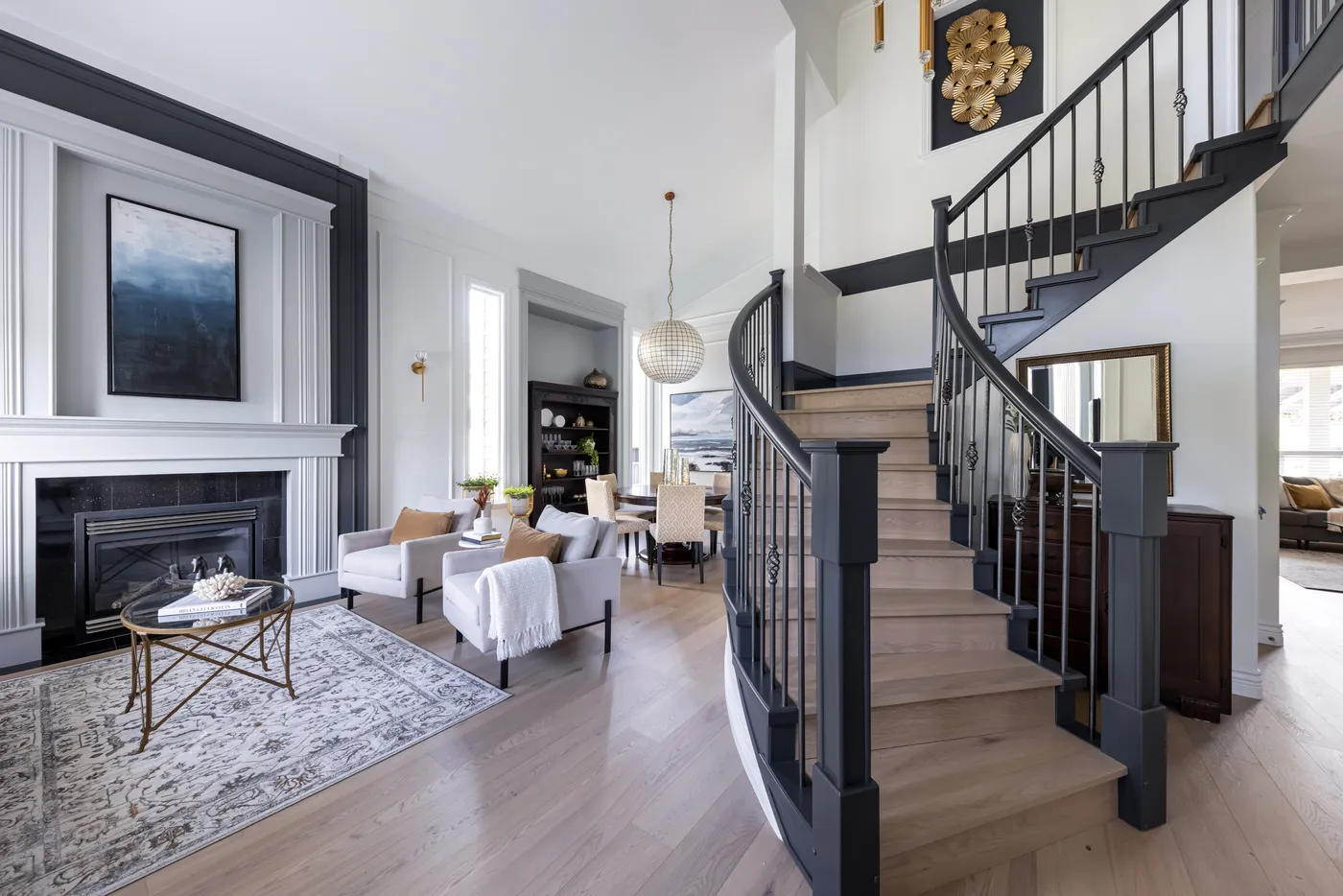
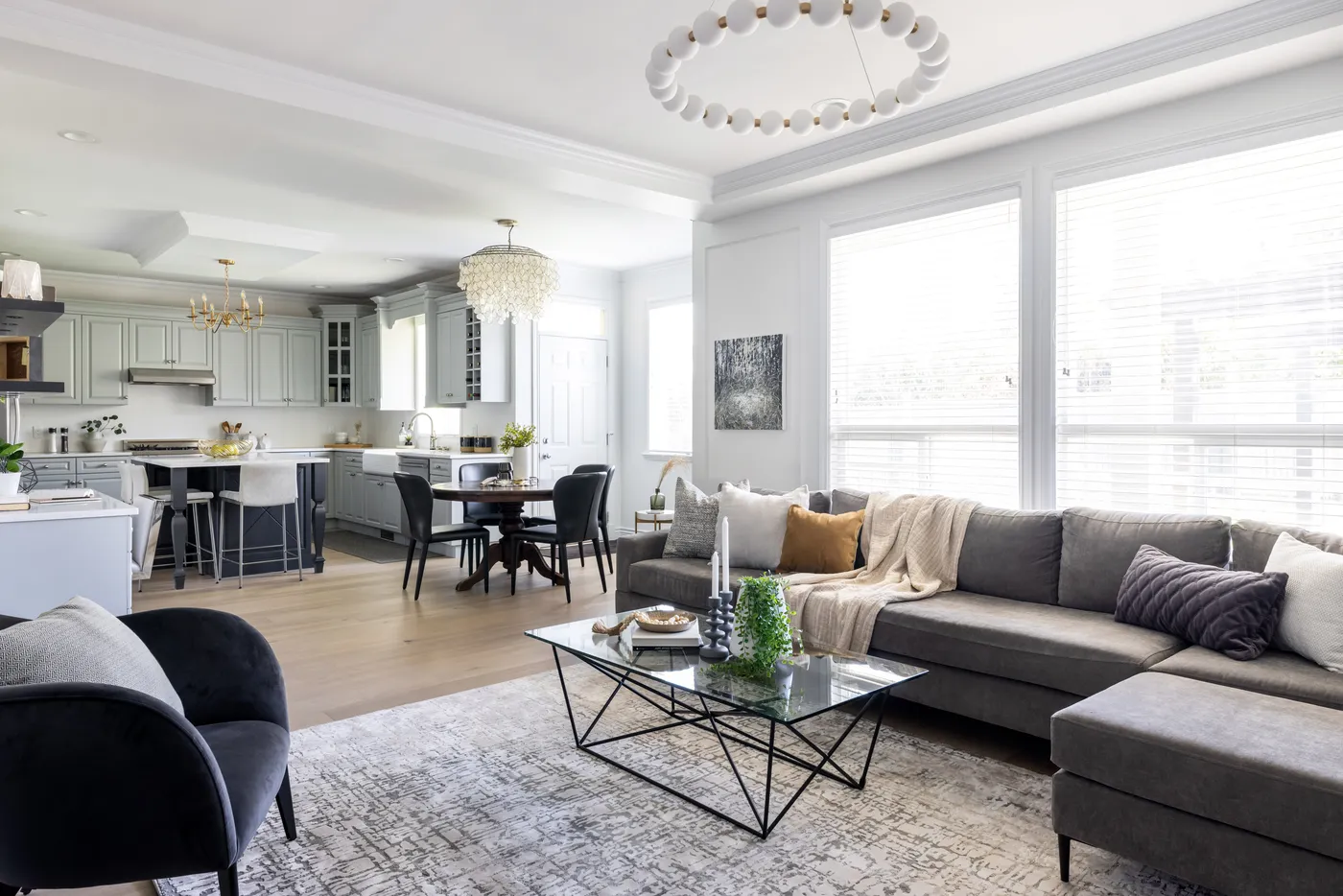
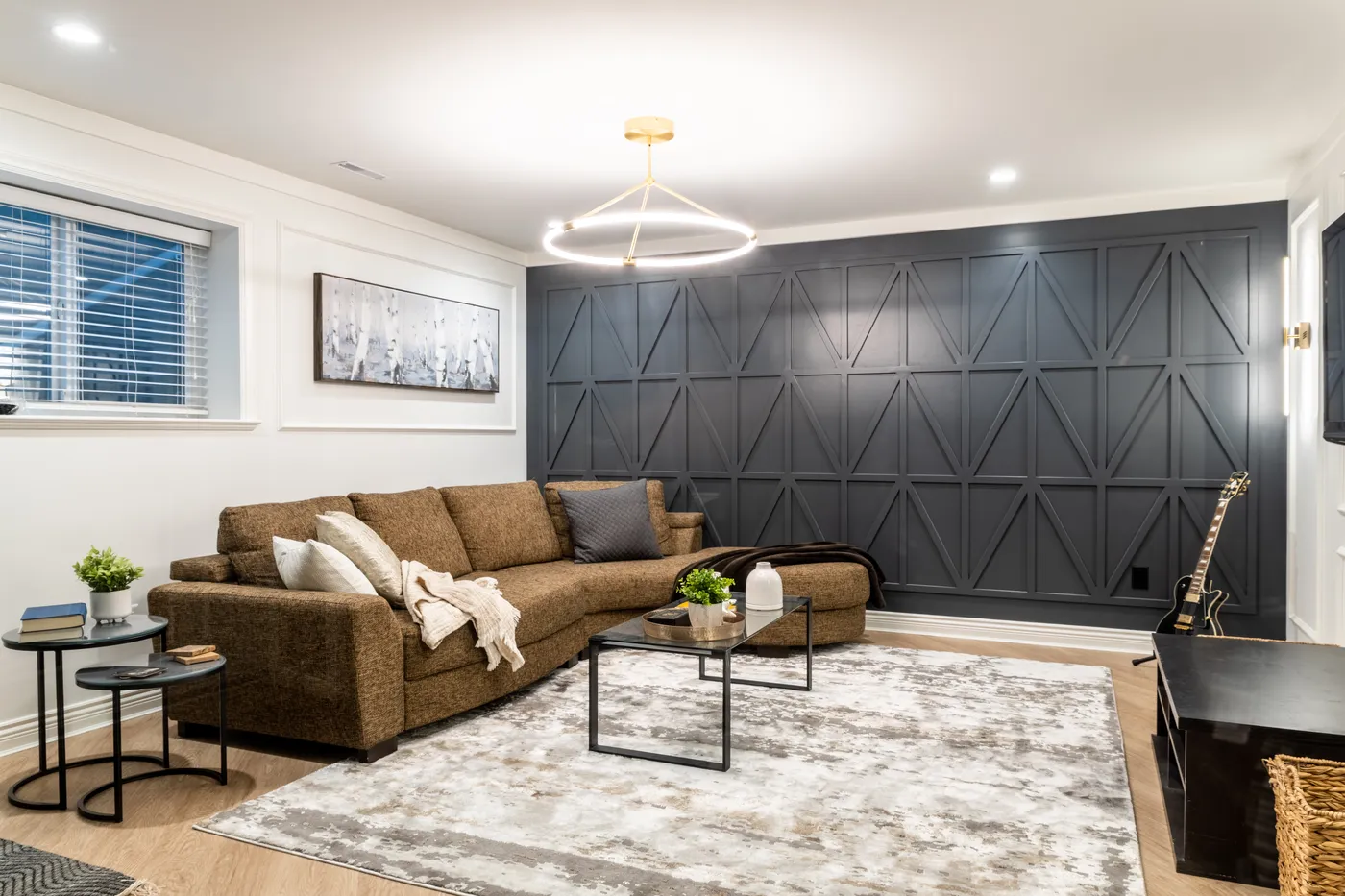
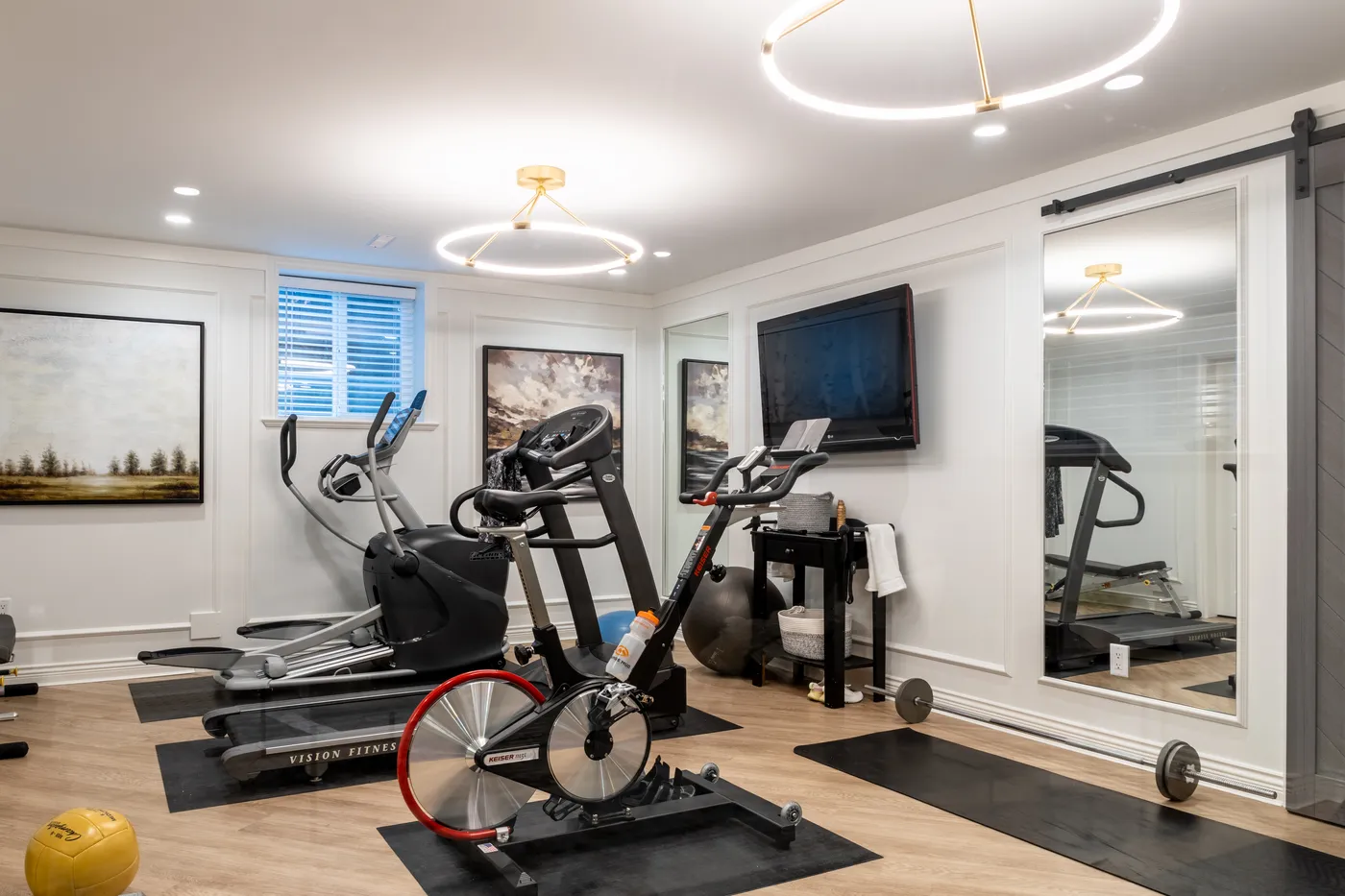
Parisian Elements is a whole-home renovation we finished in Rosemary Heights, Surrey. It covered the main floor and the basement, took 6 months, and was done in two phases so the owners could keep living in the house. It was a 2022 HAVAN Awards finalist for Best Renovation ($200,000 to $399,999).
See the Parisian Elements renovationIn short, Venture Pacific is a general contractor for whole-home and basement renovations in the Township of Langley and the City of Langley, with one contract covering trades, permits and inspections. Township renovations need a building permit for alterations, basement finishes, suites and new plumbing, and inspections are booked through MyTownship. BC Housing treats a renovation as a new home when 25% or less of the original structure above the foundation remains, and homes built before 1990 may need a hazardous material survey.
What a whole-home renovation with us covers
A whole-home renovation usually touches more than one room and needs more than one trade: walls moved or taken out, a new kitchen, new bathrooms, new floors, a finished basement, new wiring and plumbing, and sometimes new windows or an addition. As the general contractor, we hold the contract with you and the contracts with the trades. Plumbers, electricians, framers, drywallers, tile setters and finishers all work to one schedule that we set.
Our part starts before any drawing. We visit the house and check which municipality it is in, how old it is, whether it is on sewer or septic, and what its zone allows. Then we coordinate the designer and, where the structure changes, the engineer who seals the plans. We apply for the building permit, and the licensed electrician applies for the electrical permit through Technical Safety BC. During the work we book each inspection, and the next stage starts after the previous inspection passes. You get daily logs, schedules and live budget updates during the job.
Parisian Elements, in the photos below, is a whole-home renovation we finished in Rosemary Heights, Surrey. The work covered the main floor and the basement and took 6 months. We did it in two phases so the owners could keep living in the house.
If you need one room done, see our page on bathroom renovations in Langley. We take bathroom-only jobs.
Township of Langley renovation permits and inspections
The Township's renovation guide (January 2025) says a building permit is needed to alter, repair, renovate, move or add to a house, to finish a basement or build a secondary suite, to install new plumbing fixtures or re-arrange piping, to build a chimney or put in a wood stove, and to build a retaining wall over 1.2 m tall. Electrical and gas permits come from Technical Safety BC.
Applications go in online. The guide asks for a title search no older than 30 days, a site plan that shows any rights-of-way, easements and watercourses, scaled drawings, plans sealed by a structural engineer where the structure changes, a soil declaration and an erosion and sediment control form. The Township's checklist for additions and alterations also asks for the contractor's business licence number, and for a tree cutting and removal declaration on land outside the Agricultural Land Reserve. On a septic lot, a Registered Onsite Wastewater Practitioner (ROWP) adds the Fraser Health paperwork.
Inspections are booked online through a MyTownship account by 3:30 pm on the business day before. The Township does not promise next-day visits, and the business licence number of the trade doing the work goes in the booking notes. Once the permit is issued, and before any work starts, an inspector checks the waste bins, the tree protection fencing and the silt control on site. After that, work must not go past an inspection stage until the inspector clears it.
The Township does not publish permit processing times. Its guides say timing depends on the number of applications, how complex the project is, and whether the application is complete.
- 01
Check the house and lot
Township or City, zone, the year the house was built, sewer or septic, flood level and trees.
- 02
Drawings and application
Scaled plans, a title search under 30 days old, engineer's sign-off for structural changes, the contractor's business licence number, and septic paperwork from a ROWP. Applied for online.
- 03
Before work starts
Hazardous material survey for a house built before 1990, a WorkSafeBC Notice of Project for jobs over $100,000, then the Township's site check of bins, tree fencing and silt control.
- 04
Demolition and rough-in
Walls opened, framing, plumbing and wiring. Each inspection is booked by 3:30 pm the business day before, with the trade's business licence number.
- 05
Close-in and finishes
Insulation, drywall, cabinets, tile and trim go in only after the earlier stages are cleared.
- 06
Final inspection
The inspector accepts the finished work and approves occupancy in writing.
Source: Township of Langley, Residential Construction Guide: Additions, Alterations and Accessory Buildings (January 2025) and Additions and Alterations checklist; Township of Langley, Building Inspections and Building Inspection Request Guide; WorkSafeBC, OHS Regulation Part 20
City of Langley renovations: a separate permit office
The City's guide for an addition or alteration to a single-family house (April 12, 2022) lists the permit work that comes up on a large renovation: repairing, renovating or adding to a house, removing, moving or building interior walls, finishing an unfinished area, building or removing a secondary suite, enclosing a porch or deck, turning a carport into a garage or living space, and installing new plumbing fixtures. It lists window replacement, re-roofing, replacing exterior finishes, new cupboards and painting as work that needs no building permit.
Our bathroom renovation page explains the City's utility review for houses over 30 years old or renovations worth more than $100,000. A whole-home job can pass that dollar figure on its own, and the guide says the applicant asks the Engineering Department for an estimate of any upgrade. The guide also sets site rules: storm drainage connects to the City storm sewer, or to an engineered infiltration gallery where there is no connection, and sanitary or storm lift pumps are not allowed in single-family areas.
South Langley has its own rule. Where a lot there has no City storm sewer, an addition needs an integrated rainwater management plan, unless it adds 25 m² of roof or less. The City's guide places South Langley south of Grade Crescent and 50 Avenue, between 196 Street and 210 Street, and its Design Criteria Manual maps the exact lots.
City inspections follow the stages in its guide: forms, service connection, before backfill, rough plumbing, floor slab, framing, insulation and vapour barrier, and final. Which ones apply depends on the work. Additions must meet the current energy and ventilation rules of the BC Building Code, and every contractor and trade working in the City needs a City business licence.
Basement renovations and secondary suites in Langley
In the Township, a basement finish needs a building permit, with a scaled floor plan that labels every room and gives the total area being finished. The Township's basement guide says a room with a closet counts as a bedroom, and bedroom windows must meet the emergency exit size. The City's guide gives that size: an opening of at least 0.35 m², with no side shorter than 380 mm. When new bedrooms go into a house on septic, the ROWP signs a referral form and seals the floor plan.
A secondary suite takes its own permit. The Township limits a suite to 120 m² of finished living area, not counting shared laundry and exits, and its zoning allows one suite per house. The suite drawings must show the fire separation between the suite and the main house, the fire-resistance details of walls and floors, photoelectric smoke alarms and carbon monoxide alarms with their interconnection, and the heating and ventilation system. On a lot with a private well, the checklist asks for well water potability reports when a suite is added.
The 2024 BC Building Code also asks for cooling. The Township's bulletin on requirement 9.33.3.1(2) says a suite counts as its own dwelling unit, so it needs at least one living space that the cooling equipment can hold at 26°C or lower. The equipment must be permanently installed, which rules out portable and window air conditioners.
Suites in the Township carry a yearly Secondary Suite Infrastructure Fee of $145 from 2026, billed with property taxes. In the City of Langley, a suite can be up to 100 m² and no more than 40% of the building, and the owner must live on the lot.
Renovating an older house in Walnut Grove, Brookswood or Aldergrove
The Township's community plan says Brookswood and Aldergrove grew fast in the 1970s, and that Walnut Grove was established as a new urban community in the 1980s. Houses from both decades fall before 1990, the year the Township uses in its renovation guide: a hazardous material survey and a Notice of Project may be required for homes built before then.
WorkSafeBC says asbestos was widely used in BC building materials until the early 1990s, that homeowners need their home tested before a renovation or demolition, and that only qualified professionals can remove it. A licensed abatement contractor does that work before our demolition starts. For moderate or high risk asbestos work, WorkSafeBC must receive a notice at least 48 hours before it begins.
A large renovation brings a second WorkSafeBC rule. Section 20.2 of the Occupational Health and Safety Regulation requires a Notice of Project at least 24 hours before work starts when labour and materials are estimated to cost more than $100,000, or when a professional engineer designed the project. We plan it into the start date.
Older houses on rural and suburban lots add septic and well questions. The Township's community plan says rural areas are served by on-site sewer systems, and the Brookswood-Fernridge plan says many properties in its undeveloped south use private wells. A renovation that adds bedrooms or plumbing fixtures on septic goes to a ROWP first. The Township issues the permit once it has the Fraser Health record of filing, or a referral form when the system needs no work.
Renovate or rebuild on a Langley lot
Some houses are worth keeping. Others no longer fit the owner's plans, and a new house makes more sense. BC Housing's Regulatory Bulletin 6 (October 2023) says a renovation normally needs no new home registration. But when 25% or less of the original structure above the foundation remains, or 75% or more of the finished home is new, BC Housing treats the project as a new home. A licensed residential builder must then arrange home warranty insurance, or the owner needs a formal exemption such as an Owner Builder Authorization. An addition that creates a legal secondary suite needs no registration. The City of Langley's guide adds that when an addition or alteration exceeds 75% of the original building, the City may ask for that paperwork.
A rebuild follows the new house rules. Since April 1, 2025, every new house in the Township must meet Step 4 of the BC Energy Step Code and EL-3 of the Zero Carbon Step Code, and the Township issues the permit only after it receives the BC Housing warranty form. In the suburban (SR) and residential (R) zones, the old house must be demolished when a new one replaces it. On a rural (RU) lot, the Township may let the owner convert the old house into an accessory building, once the kitchen and bathroom fixtures, 220 volt appliances, furnace and hot water tank are taken out.
Near the rivers, the flood rules may decide which option works. Section 105 of Zoning Bylaw 2500 exempts a renovation with no addition, and an addition of less than 25% of the floor area, from the flood construction level. A new house near the Fraser, in Fort Langley for example, must put its living space at or above that level.
If a rebuild fits better, our page on the custom home builder in Langley covers lots, farmland rules and new house permits. We can price both options from the same site visit.
Major renovation
- Permit
- Building permit for alterations, plus plumbing and electrical permits as needed
- Home warranty
- Normally no new home registration, unless 25% or less of the structure above the foundation remains
- Energy rules
- New work must comply with the BC Building Code
- Flood construction level
- Exempt with no addition, or an addition under 25% of the floor area
- The old house
- Kept; a hazardous material survey may be required if built before 1990
Rebuild (new house)
- Permit
- New single-family dwelling permit, plus a demolition permit
- Home warranty
- 2-5-10 warranty through a licensed residential builder; the Township needs the BC Housing form first
- Energy rules
- Step 4 and EL-3 for every new Township house since April 1, 2025
- Flood construction level
- Living space at or above the flood construction level
- The old house
- Demolished in SR and R zones; may become an accessory building on an RU lot
Source: BC Housing, Regulatory Bulletin 6: Substantially Reconstructed Homes (October 2023); Township of Langley, Green Buildings: Builders; Township of Langley, Residential Construction Guide: New Single-family Dwellings; Township of Langley Zoning Bylaw 2500, Section 105; Township of Langley, Single Family Dwelling Conversion Restrictions
Hiring a general contractor in Langley: what you can check yourself
BC Housing licenses residential builders for new homes: a general contractor who wants to build a new home in BC must first hold that licence. BC Housing's separate licence for building envelope renovations lists buildings with only one or two units among its common exemptions. For a house renovation, these are the checks a homeowner can make:
- A WorkSafeBC clearance letter. WorkSafeBC says a homeowner who hires a business that is not registered and paying premiums could be held responsible for those premiums. The letter shows the business's registration and payment status.
- A business licence. The City of Langley requires one for every contractor and trade working in the City, and the Township asks for the trade's business licence number each time an inspection is booked.
- The permit. Ask to see it before work starts, and ask for the inspection results as each stage passes.
- The holdback. Under the BC Builders Lien Act, the owner keeps back 10% of the value of the work or of each payment. When the contract is worth $100,000 or more, the holdback goes into a separate holdback account, and the holdback period ends 55 days after completion. Our guide to [the builders lien holdback](/journal/builders-lien-holdback-bc-homeowners) explains how it works.
- Liability insurance. Ask for the certificate, and check its dates and the company it names.
What moves the cost of a Langley home renovation
We have found no named, credible source for Langley renovation prices, so we print none. Each job is priced from a site visit and a written scope of work, and where something behind a wall cannot be seen until it is opened, we set a documented contingency for it at the start. These change the price:
- How much of the house changes, and whether walls, beams or the foundation change
- Moving plumbing, and on a concrete slab, cutting it for new drains
- Electrical upgrades and new heating or cooling, including the cooled living space a new suite needs
- Finishes, cabinetry and millwork
- Hazardous material testing and abatement in a house built before 1990
- Septic review or changes, and well water tests on rural lots
- Permits, engineering, and any utility upgrade the City of Langley asks for
- Living in the house during the work, which can mean doing it in phases
Questions about home renovations in Langley
Are you a general contractor for home renovations in Langley?
Yes. Venture Pacific acts as the general contractor on whole-home and major renovations in the Township of Langley and the City of Langley. You have one contract with us, and we hire the trades, apply for permits and book the inspections. Our office is at Suite 351, 505-8840 210 Street.
Do I need a permit to renovate a house in the Township of Langley?
For most renovation work, yes. The Township's guide lists altering, repairing, renovating or adding to a house, finishing a basement, building a suite, and installing new plumbing fixtures or re-arranging piping. Electrical and gas permits come from Technical Safety BC.
Do I need a permit to replace windows in Langley?
In the City of Langley, the alteration guide lists window replacement as work that needs no building permit. A new window opening changes the wall. When it faces a neighbouring lot line, both the City and the Township guides ask for a drawing of that whole wall, and the City limits the size of openings there to what the BC Building Code allows. In the Township, we confirm the scope with the permit office before ordering windows.
Can I finish my basement or add a legal suite in Langley?
Yes, with a permit. In the Township, a suite can be up to 120 m² of finished living area, one suite is allowed per house, and the yearly suite fee is $145 from 2026. In the City of Langley, the limit is 100 m² and 40% of the building, and the owner must live on the lot. Bedroom windows must meet the emergency exit size, and under the 2024 BC Building Code the suite needs a living space that can be cooled to 26°C.
Should I renovate or rebuild my house in Langley?
It depends on how much of the house stays. BC Housing treats a project as a new home when 25% or less of the original structure above the foundation remains, and then home warranty insurance applies. A new Township house must also meet Step 4 and EL-3. We look at the structure, the lot and the flood level, then price both options. Our custom home builder in Langley page covers the rebuild side.
My Walnut Grove house was built in the 1980s. Does it need an asbestos test before a renovation?
Plan for one. Walnut Grove was established in the 1980s, and the Township's renovation guide says a hazardous material survey and Notice of Project may be required for homes built before 1990. WorkSafeBC says asbestos was widely used in BC building materials until the early 1990s, and that only qualified professionals can remove it.
How do I check a general contractor in BC before I hire one?
Ask for a WorkSafeBC clearance letter, which shows whether the business is registered and paying premiums. If the house is in the City of Langley, check that the contractor holds a City business licence. Keep the 10% holdback the Builders Lien Act requires, and ask for proof of liability insurance. BC Housing's residential builder licence is for new homes, so it matters when the project is a rebuild.
Can we live in the house during a whole-home renovation?
Sometimes. Our Parisian Elements renovation in Surrey was done in two phases so the owners could stay. It depends on which rooms are out of use and for how long. Our guide on living in your home during a renovation goes through the choices.
How much does a home renovation cost in Langley?
We have found no credible published price range for Langley, so we do not quote one. The amount of structural change, plumbing moves, finishes, hazardous material work, septic and well work, permits and phasing all move the cost. We price each job after a site visit.
What is the first step for a home renovation in Langley?
A free consultation. We check whether the house is in the Township or the City, its age, its zone, sewer or septic, and the flood level, and we talk through renovating or rebuilding before you pay for drawings. Book a free consultation.
Related services
Nearby build areas
Sources
- Township of Langley, Residential Construction Guide: Additions, Alterations and Accessory Buildings (January 2025)
- Township of Langley, Building Permit Application Checklist: Single-family Additions and Alterations (January 2025)
- Township of Langley, Building Inspections
- Township of Langley, Building Inspection Request Guide
- Township of Langley, Residential Construction Guide: Basement Finish (January 2025)
- Township of Langley, Residential Construction Guide: Secondary Suites (January 2025)
- Township of Langley, Secondary Suites
- Township of Langley, Overheating Protection: BC Building Code requirement 9.33.3.1.(2) (bulletin)
- Township of Langley, Single Family Dwelling Conversion Restrictions
- Township of Langley, Residential Construction Guide: New Single-family Dwellings (January 2025)
- Township of Langley, Green Buildings: Builders
- Township of Langley Zoning Bylaw 2500, Section 100 (including Section 105, Flood Control)
- Township of Langley, Official Community Plan Bylaw No. 1842 (consolidated, with 2025 update)
- Township of Langley, Brookswood-Fernridge Community Plan Bylaw No. 5300
- City of Langley, Addition or Alteration to a Single-Family Dwelling: guide and application (April 12, 2022)
- City of Langley, Building Permits
- City of Langley, Zoning Bylaw 2025 No. 3300
- Technical Safety BC, Homeowner Electrical Permits
- WorkSafeBC, Asbestos
- WorkSafeBC, Asbestos: Frequently asked questions for homeowners
- WorkSafeBC, OHS Regulation Part 20: Construction, Excavation and Demolition (sections 20.2 and 20.2.1)
- WorkSafeBC, Homeowners (insurance coverage and clearance letters)
- BC Housing, Regulatory Bulletin 6: Substantially Reconstructed Homes and the Homeowner Protection Act (October 2023)
- BC Housing, Builder and Developer Licensing
- BC Housing, Building Envelope Renovations
- BC Housing, Home Warranty Insurance: What Homeowners Need to Know
- Builders Lien Act, SBC 1997, c. 45 (sections 4, 5 and 8)
Let's talk about your property
A conversation, not a commitment.
Whether you're curious about the multiplex value of your land or looking to partner on a missing-middle build, we're here to start the conversation.