
Renovate the old house or take it down: how that decision actually gets made
The renovate versus demolish question rarely turns on one number. Here is the order a renovation contractor works through it, and the point where renovation stops making sense.
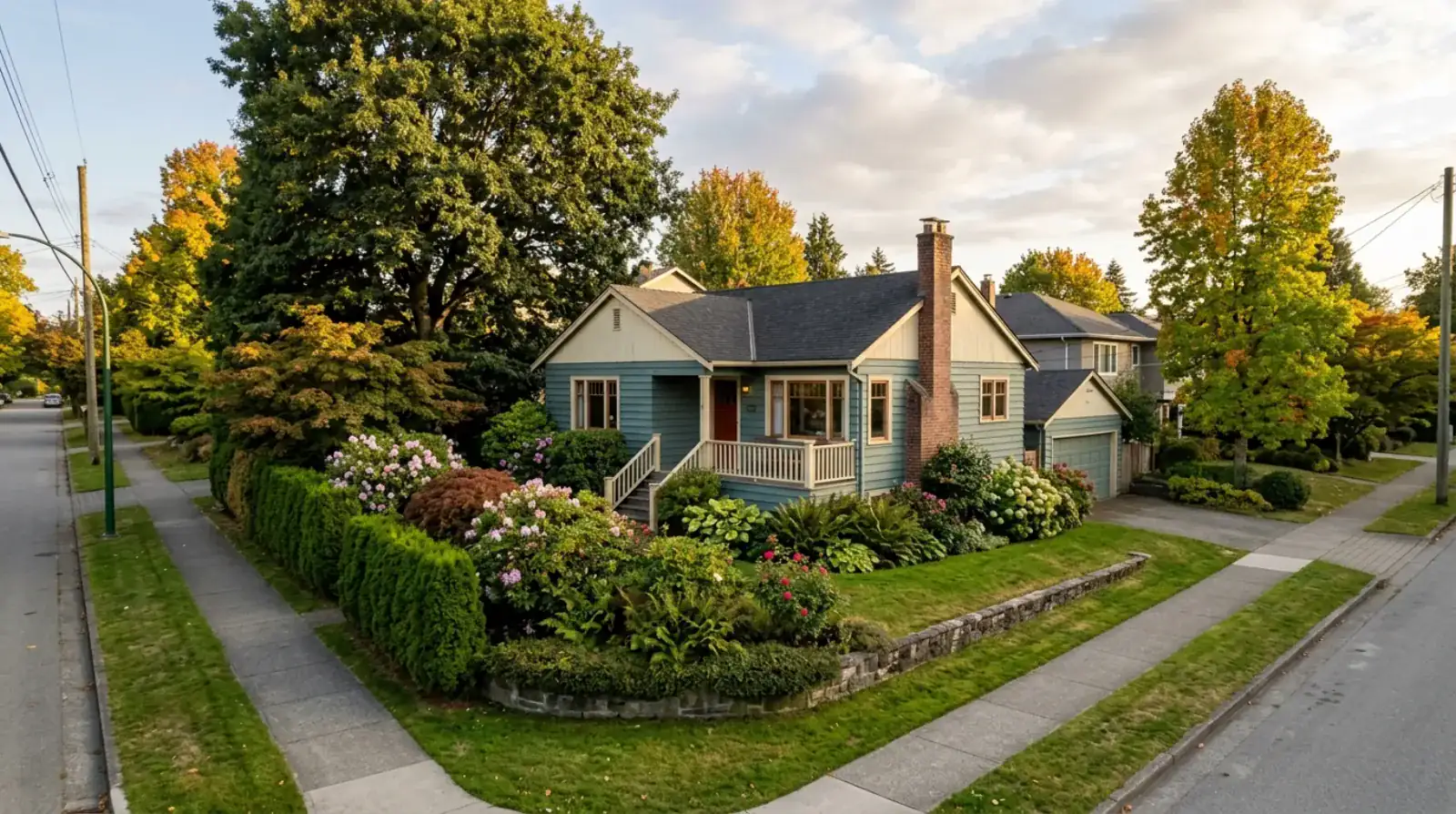
In short, The renovate versus demolish decision should be made in order: foundation condition first, then what turns up once walls are opened (wiring, plumbing, asbestos), then whether the desired end result fits the existing structure. Cost comparison comes last, once those three questions are answered.
I run a renovation company. You would reasonably expect me to argue that the old house should be saved.
I do not, and I want to explain why, because the renovate versus demolish decision gets made badly more often than almost any other decision in this business. Usually it gets made emotionally, by someone who loves the house. Occasionally it gets made on a single number from a single quote. Both routes produce regret.
Here is the order I actually work through it.
Nobody decides this on cost alone, and they should not
The tempting version of this decision is a straight comparison. Renovation costs this, a new build costs that, pick the smaller number.
It falls apart immediately, because the two options do not produce the same thing. A renovated 1958 house and a new house on the same lot are different products with different lifespans, different operating costs, different layouts and different resale positions. Comparing their prices without comparing what you get is like comparing two cars by weight.
So the cost comparison comes last, after three questions that are not about money at all.
Question one: what is the structure telling you
Foundation first, always.
If the foundation is sound, square and dry, renovation stays firmly on the table and a lot of good options open up. If the foundation is failing, cracked through, or sitting too low to give you useful basement height, the picture changes fast. Underpinning or replacing a foundation under a standing house is some of the most expensive work there is, and it is disruptive in a way that surprises people. At that point you are spending new build money to keep an old building.
Then framing. Houses built before about 1980 in this region frequently have framing that does not correspond to anything in a current code book. Not necessarily unsafe, but non standard, which means every subsequent trade has to work around it and every one of them charges for the trouble.
The structural question is not "is it standing." Almost everything is standing. The question is whether the bones are good enough that everything you build on top of them is straightforward.
Question two: what happens when the walls open
This is where budgets go to die, and it is worth being blunt about it.
Open up a pre 1980 house and the common findings are outdated wiring, galvanized plumbing that is at or past the end of its service life, asbestos containing materials in flooring, insulation or drywall compound, and the framing situation described above. Any single one of those is manageable. All four together is a different project than the one that was quoted.
Asbestos in particular has to be identified and abated properly before any demolition work proceeds. That is a legal requirement, not a judgment call, and it belongs in the plan from the beginning rather than as a mid project surprise.
The reason this question sits so high in the order is that it is the one you can partly answer before committing. A proper investigation, opening up a few strategic locations, testing for hazardous materials, getting eyes on the wiring and the plumbing, costs a fraction of one percent of the project and tells you most of what you need to know. Skipping it to save that money is the most expensive decision available on a project like this.
Question three: what do you actually want at the end
Now the part that decides most of these.
If what you want is the existing house with better finishes, more light and a modern kitchen, renovation is almost certainly correct and probably comfortably cheaper.
If what you want is a fundamentally different layout, different room count, different ceiling heights, a different relationship to the yard, or significantly more floor area, you are asking the old structure to become something it was not built to be. Every wall you move, every opening you widen, every level you change adds structural work, and structural work in an existing house is far more expensive than the same work in a new frame where nothing is holding anything up yet.
There is a point on that curve where you are replacing the structure, the systems and the envelope. When you reach it, you have built a new house at renovation prices, and renovation prices in this situation are not lower. A full home renovation commonly lands between $200,000 and $400,000, and a full gut of a large home can run past $700,000. Those are real numbers for real projects, and at the top of that range the honest comparison against new construction is much closer than most people assume.
The character question, which is real
Some houses are worth keeping for reasons that do not show up in a spreadsheet.
Original millwork, old growth fir that cannot be bought now at any sensible price, proportions and detailing that current construction does not reproduce, a streetscape that the house belongs to. These are legitimate reasons to renovate a building that a purely financial analysis would take down.
I would only add that this reason has to be named out loud. When someone tells me they are keeping the house because renovation is cheaper, and the numbers say otherwise, what is usually happening is that they love the house and have not said so. That is fine. It is a good reason. But it should be an explicit choice rather than a bad calculation, because the explicit version leads to better decisions about where the money goes.
The test
If the foundation is sound, the systems are serviceable or cheap to replace, and you want broadly the house you already have, renovate. It will be less expensive and less disruptive and you will be finished sooner.
If the foundation is compromised, or the walls are hiding several expensive discoveries, or you want a genuinely different building, stop trying to make renovation work. The numbers converge, and once they converge the new build wins on every measure that is not sentimental.
Most projects are not close to the line. The ones that are close are the ones worth investigating properly before committing.
If you are weighing a renovation against a rebuild on a Metro Vancouver or Fraser Valley lot, book a free consultation and we will walk the house with you before anyone commits to a direction.
Related guides: our process for structural renovations and home additions, and for restoring a heritage or character home when the house is worth keeping.
Frequently asked
How do I decide whether to renovate or demolish an older house?
Work through the decision in order: foundation condition first, then what turns up once the walls are opened (wiring, plumbing, asbestos), then whether the layout you actually want fits the existing structure. Cost comparison comes last, once those three questions are answered. Deciding on cost alone compares two different products, a renovated older house and a new house, as if they were the same thing.
What foundation problems mean a house should be demolished instead of renovated?
A foundation that is failing, cracked through, or sitting too low to give useful basement height changes the picture fast. Underpinning or replacing a foundation under a standing house is some of the most expensive work in residential construction, and it is disruptive. At that point, you are spending new-build money just to keep an old building standing, which usually tips the decision toward demolition.
What issues commonly turn up when you open the walls of a pre-1980 house?
Common findings in houses built before about 1980 include outdated wiring, galvanized plumbing at or past the end of its service life, asbestos-containing materials in flooring, insulation, or drywall compound, and non-standard framing. Any one of these is manageable on its own. All four together turn the project into something different than what was originally quoted.
Is asbestos abatement required before renovating or demolishing an older home?
Yes. Asbestos-containing materials have to be identified and abated properly before any demolition work proceeds. This is a legal requirement, not a judgment call, and it needs to be built into the plan from the start rather than discovered mid-project. A proper investigation before committing, opening a few strategic locations and testing for hazardous materials, costs a fraction of one percent of the project and answers most of the open questions.
When does renovating an old house cost about the same as building new?
The two options converge when a project requires replacing the structure, the systems, and the envelope all at once, moving walls, widening openings, or changing floor levels throughout the house. At that point you have effectively built a new house at renovation prices, and renovation prices at that scale are not lower than new construction. RealDream's published range for a full home renovation is $200,000 to $400,000, with a full gut of a large home running past $700,000.
Does wanting a different layout affect the renovate versus demolish decision?
Yes, more than almost any other factor. If you want the house you already have with better finishes and more light, renovation is almost always the right call and comfortably cheaper. If you want a different room count, different ceiling heights, or significantly more floor area, you are asking an existing structure to become something it was never built to be. Structural work in an existing house costs far more than the same work in a new frame, where nothing is holding anything up yet.
Is it worth renovating an old house for its character alone, even if the numbers favour demolition?
It can be, but the reason has to be named honestly rather than disguised as a financial argument. Original millwork, old-growth fir that cannot be bought today at any sensible price, and proportions current construction does not reproduce are legitimate reasons to keep a house that a purely financial analysis would take down. Making that an explicit choice, rather than a miscalculated one, leads to better decisions about where the renovation budget actually goes.
What is the average cost of a full home renovation in the Vancouver and North Shore area?
RealDream Contracting's published figure for an average full home renovation is $200,000 to $400,000, with a full gut renovation of a large home running past $700,000. Where a project lands in that range depends on the home's size, the condition found once walls are opened, and how much of the layout is changing. A detailed scope review is needed to price a specific house.