
Two Langleys, two rulebooks, and one adopted a new zoning bylaw this year
The Township caps small-scale housing at four units and licenses non-stratified extra units as suites. The City adopted an entirely new zoning bylaw in March 2026. Same name on the map, different projects.
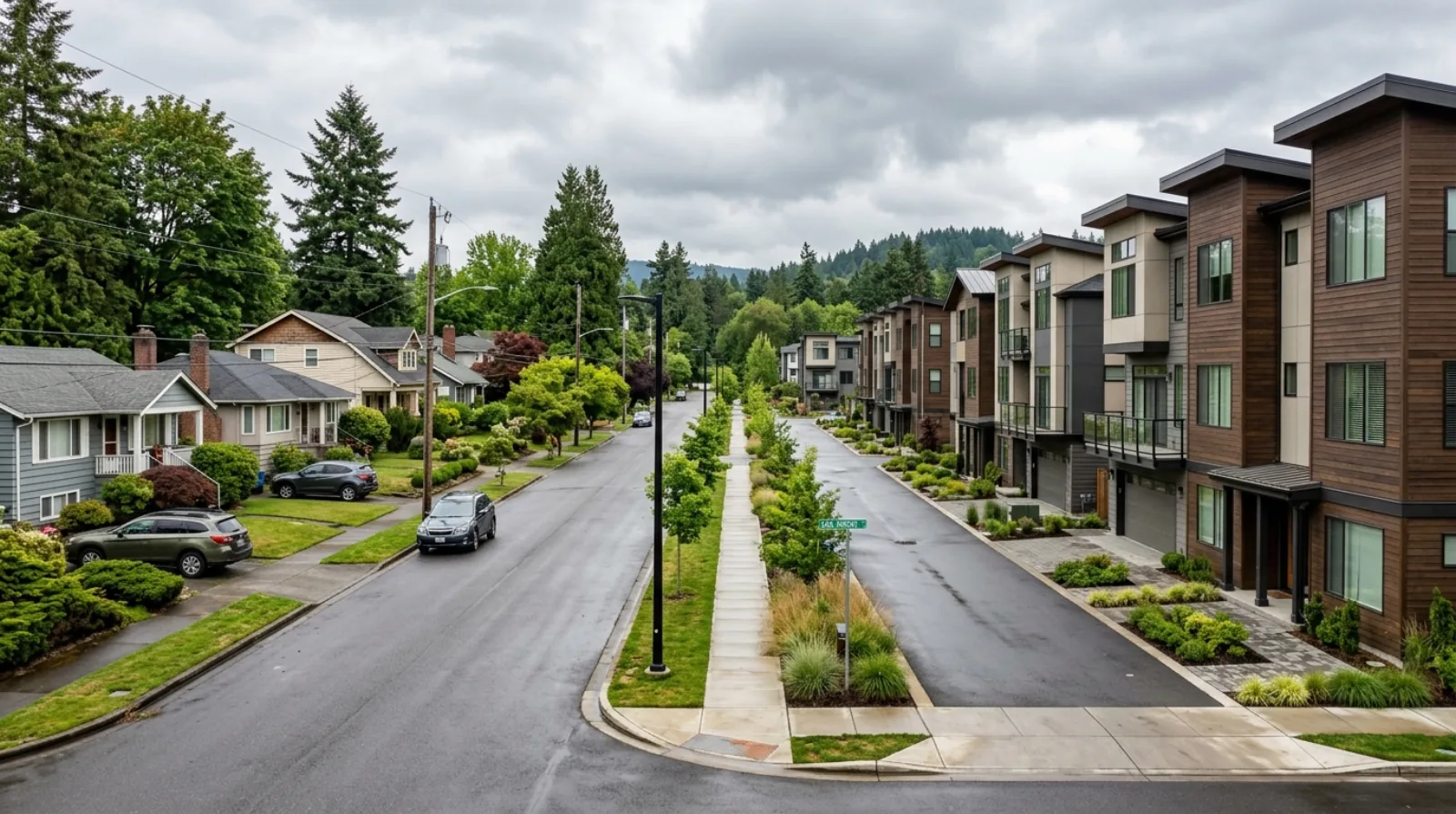
In short, The Township of Langley and the City of Langley are separate municipalities with different small-scale housing rules. The Township permits a maximum of three units on lots of 280 square metres or less and four above that, adopting the provincial minimums as maximums, and requires one parking space per unit with a minimum of two per lot. Its eligibility conditions include being within the Urban Containment Boundary, connection to municipal water and sewer, no heritage designation, not within a Transit Oriented Area, and not larger than 4,050 square metres. The City of Langley originally added a Plex-Homes use to its RS1 and RS2 zones and adopted a new Zoning Bylaw on March 9 2026 introducing an R1 zone with reduced setbacks and increased lot coverage.
Two municipalities share the name Langley. They have separate councils, separate zoning bylaws, and meaningfully different rules for small-scale housing.
A landowner who reads the wrong one gets the wrong answer on unit count, parking, eligibility, and setbacks. So the first question on any Langley property is which Langley it is in.
The Township adopted maximums where the province set minimums
The Township of Langley permits a maximum of three units on lots of 280 square metres or less, and a maximum of four on lots above that.
The framing in the Township's own report is worth noting. The province set those figures as minimums, meaning municipalities had to permit at least that many. The Township adopted them as maximums. That is a policy decision to hold the line at the floor rather than go beyond it, and it is stated plainly rather than left to be inferred.
A provincial minimum and a municipal maximum can be the same number. Knowing which one you are reading tells you whether there is any room above it.
Eligibility is where the Township narrows
The unit counts are only half the picture. The conditions for the framework applying at all do more work.
- Within the Urban Containment Boundary.
- Connected to municipal water and sewer.
- No heritage designation.
- Not within a Transit Oriented Area.
- Not larger than 4,050 square metres, and not in a zone with a minimum lot size larger than that.
The Township has estimated that roughly 55 percent of its single-family and duplex lots qualify, around 15,000 properties, and that the rate varies enormously by neighbourhood, from a small fraction in some areas to nearly all lots in others.
That range is the useful number. It means neighbourhood-level generalizations about Langley Township are unreliable, and the question has to be asked at the address.
The transit paradox
The Township produces the most counterintuitive result in the region on the six-unit question.
It states that it has one transit area meeting the frequent-service criteria, at the proposed Willowbrook SkyTrain station, and that lots within a Transit Oriented Area are excluded from small-scale housing eligibility.
So the single location in the Township with qualifying transit is the location where the small-scale framework does not reach. Those properties are not left without options, they fall under separate Transit Oriented Area rules with their own density provisions, but a landowner reasoning from the six-units-near-transit headline will reach precisely the wrong conclusion. We untangle how differently this provision lands across the region in the six-unit transit rule.
Parking, framed as a reduction
The Township requires one parking space per unit with a minimum of two spaces per lot.
Its report presents that against two reference points: the provincial policy manual recommends a maximum of one space per unit, and the Township's previous requirement in compact lot zones was three to four spaces per lot. Measured against the old rule this is a substantial loosening. Measured against the provincial recommendation, the two-per-lot floor sits above it at the small end.
Both readings are fair, which is why comparing a parking rule to what it replaced is often more informative than comparing it to a neighbour, a point we develop in parking requirements by city.
The licensing detail that affects operating cost
One Township-specific item worth raising because it is an ongoing obligation rather than a one-time approval.
Township staff recommended that all non-stratified dwelling units additional to the principal dwelling unit be considered a secondary suite under the current licensing program.
The practical effect is annual suite licensing on those units. That is an operating consideration for a project held as rental, and it belongs in the analysis alongside the tenure questions in strata or rental. Confirm how it applies to your specific configuration with the Township rather than assuming it does or does not.
The City rewrote its bylaw this year
The City of Langley is on a different trajectory, and it moved recently.
Its original approach implemented small-scale housing by adding a permitted use called Plex-Homes to its RS1 and RS2 zones, defined as a principal residential building including small-scale multi-family housing units in a duplex, triplex or fourplex configuration.
Then on March 9 2026, the City adopted a new Zoning Bylaw. Its explanatory memo describes the new R1 zone as essentially an updated RS1 zone, with smaller front and rear setbacks of 6 metres rather than the current 7.5, and higher lot coverage at 36 percent rather than 33, to accommodate additional dwelling units on a lot.
The memo also describes a third storey requirement, that it be smaller than the storeys below and stepped back, and a maximum height available for sloped roofs meeting a minimum pitch. Those shape the building form rather than the unit count, and on a small lot form requirements often decide what is buildable more than the unit maximum does.
What the City's memo does not say
Being straight about the gaps. The City's explanatory memo does not state the lot-area threshold splitting three units from four, does not state a frequent-transit distance for a six-unit case, and does not state the standard parking rate outside Transit Oriented Areas.
We are not going to supply those from the Township's rules or from a neighbouring municipality. They are different jurisdictions and the numbers do not travel. A City of Langley landowner should get all three from the City.
Where to start
Confirm the municipality first, from the property's actual address rather than the mailing address, since a Langley postal address does not settle which jurisdiction governs.
Then, in the Township, work through the eligibility list before anything else, because roughly 45 percent of lots do not pass it. In the City, get the current rules from the new bylaw rather than from any description written before March 2026.
Frequently asked
Are Langley City and the Township of Langley the same municipality?
No. They are separate municipalities with separate councils, separate zoning bylaws, and different small-scale housing rules. The City is a smaller urban municipality geographically surrounded by the Township. A landowner needs to know which one their property is in before reading any rule.
How many units does the Township of Langley allow?
A maximum of three units on lots of 280 square metres or less, and a maximum of four above that. The Township's own report notes that the province set these numbers as minimums and that the Township adopted them as maximums, which is a deliberate choice rather than a transcription of the provincial floor.
Can I build six units in Langley Township near transit?
In practical terms no. The Township states it has one transit area meeting the frequent-service criteria, at the proposed Willowbrook SkyTrain station, and that lots within a Transit Oriented Area are excluded from small-scale housing eligibility. So the one location with qualifying transit is the one where the framework does not apply.
What are the Township's eligibility conditions?
Being within the Urban Containment Boundary, connection to municipal water and sewer, no heritage designation, not within a Transit Oriented Area, not larger than 4,050 square metres, and not in a zone with a minimum lot size larger than 4,050 square metres. The Township has estimated that roughly 55 percent of its single-family and duplex lots qualify, varying widely by neighbourhood.
What is the Township's parking requirement?
One parking space per unit with a minimum of two spaces per lot. The Township's report presents this as a reduction, noting the provincial policy manual recommends a maximum of one space per unit and that the change replaces a previous requirement of three to four spaces per lot in compact lot zones.
What did the City of Langley change in 2026?
The City adopted a new Zoning Bylaw on March 9 2026. Its explanatory memo describes a new R1 zone as essentially an updated RS1 zone, with smaller front and rear setbacks of 6 metres instead of 7.5, and higher lot coverage of 36 percent instead of 33, to accommodate additional dwelling units. It also describes third storey stepping requirements and a maximum height for sloped roofs of sufficient pitch.
What are Plex-Homes in the City of Langley?
That was the City's original mechanism for implementing small-scale housing: a new permitted use added to its RS1 and RS2 zones, defined as a principal residential building including small-scale multi-family housing units in a duplex, triplex or fourplex configuration. The new zoning bylaw has since restructured the City's residential zones.
Why does the Township treat some units as secondary suites?
Township staff recommended that all non-stratified dwelling units additional to the principal dwelling unit be considered a secondary suite under the existing licensing program. The practical effect is that those units fall into annual suite licensing, which is an ongoing obligation rather than a one-time approval, and it is worth confirming how it applies to a specific project.
Our Langley area page covers how we work there. If you own a lot in either Langley and want the applicable rules confirmed before design, book a free consultation.
Written by
Acquisitions and Development
Trent Praski leads investment and development at Venture Pacific, sourcing missing-middle opportunities across Metro Vancouver and the Fraser Valley and structuring transparent homeowner and investor partnerships.
Full profile