
The six-unit transit rule is narrower than it sounds. Here is where it actually applies.
Every summary of BC's housing rules says six units near frequent transit. Read the cities' own pages and the picture changes. Coquitlam says no stop in the city currently qualifies. Delta ties it to one corridor.
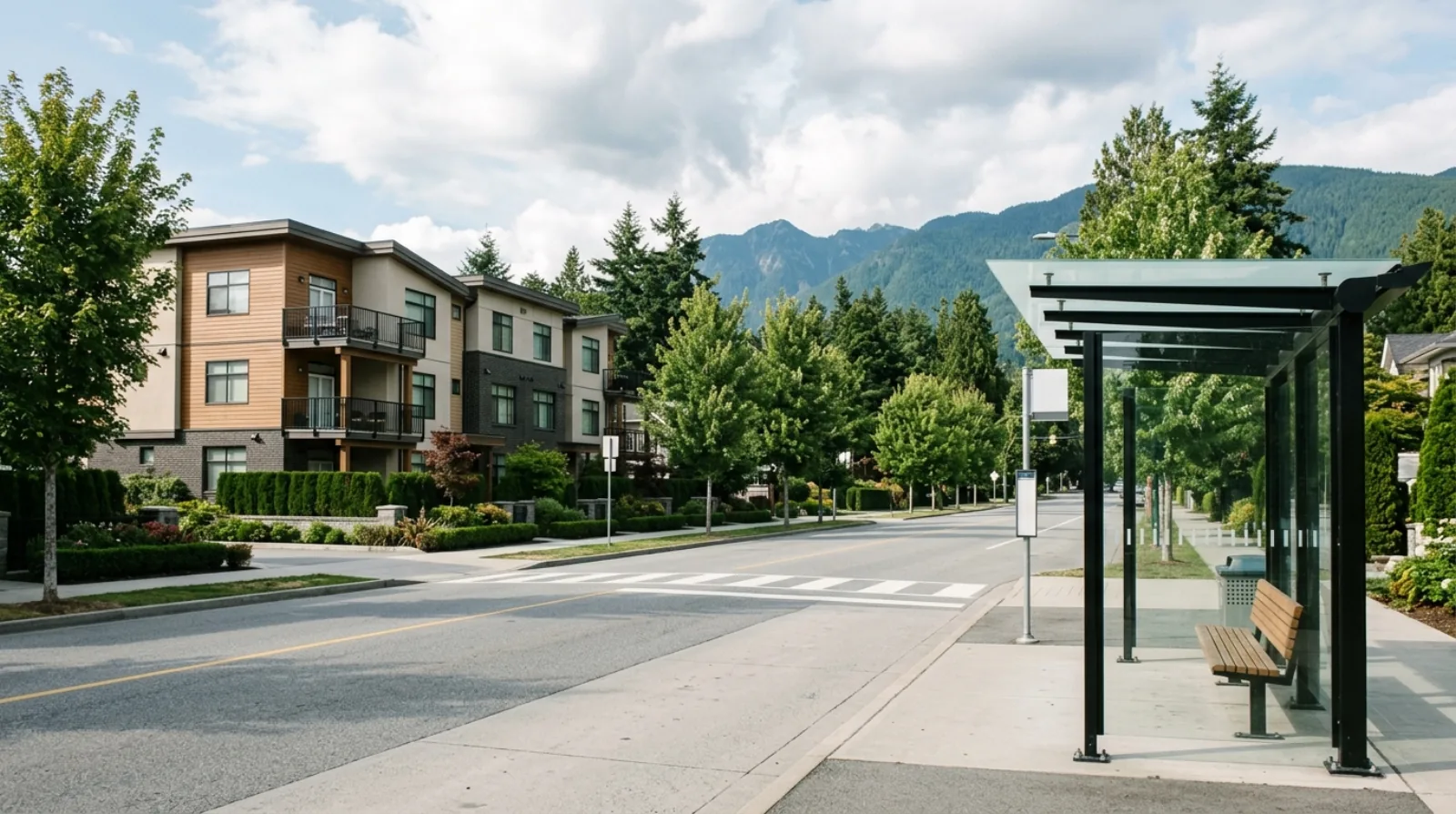
In short, BC's SSMUH framework requires municipalities to permit up to six units on eligible lots near frequent transit, but the rule depends on a bus stop meeting the provincial frequency test, and few do. The City of Coquitlam states that no bus stop in the city currently meets the provincial criteria for frequent service, so the six-unit provision does not apply there at this time. Delta ties its six-unit provision specifically to properties within 400 metres of frequent transit along Scott Road. The City of North Vancouver identifies the R2 and 240 routes. Landowners should verify the specific stop nearest a lot rather than assume proximity to any bus route qualifies.
Ask most people who have read about BC's small-scale housing rules what they allow, and you will hear some version of three to four units on a standard lot, six near frequent transit. That summary is accurate as a description of the provincial framework. It is a poor guide to what any particular lot can do.
The six-unit provision depends on a bus stop meeting the provincial test for frequent service. Read the municipalities' own pages and it becomes clear how few stops actually clear that bar.
Coquitlam says the provision does not currently apply
This is the most striking example, and it comes from the City itself rather than from anyone's interpretation. Coquitlam's small-scale housing page states that the city currently has no bus stops meeting the provincial criteria for frequent service, and that as a result the provincial requirement to allow up to six units on lots near frequent-service bus stops does not apply at this time.
That is a city of well over 100,000 people with SkyTrain service, and the frequent-bus provision does not reach it. The reason is that the test is about bus service frequency at a stop, which is a different question from whether a city has good transit overall.
Coquitlam instead sets unit maximums inside its own small-scale zones, adopted through Bylaw No. 5449 in June 2025. The number for a Coquitlam lot comes from which of those zones it sits in and how large it is, not from how close it is to a bus. Our Coquitlam area page goes through that zone structure in detail.
The question is not whether there is a bus near your lot. It is whether that specific stop meets the provincial frequency test, and in a lot of places it does not.
Delta ties it to a single corridor
Delta's rules are clear and unusually specific. The city permits a maximum of three units on properties up to 280 square metres, four on properties over that, and six on properties over 280 square metres that sit within 400 metres of frequent transit along Scott Road.
Scott Road, named explicitly. A lot in Ladner or Tsawwassen does not reach the six-unit provision no matter how convenient its transit happens to be, because the corridor Delta identifies runs elsewhere. Delta also exempts units on those Scott Road properties from its otherwise standard requirement of one parking space per unit, which is a second reason the corridor behaves differently from the rest of the municipality.
Delta is also worth watching for a separate reason. Staff reported to Council in April 2026 that they plan to explore a standalone houseplex zone for future Council consideration. That zone is proposed rather than adopted, so anything designed today works under the current rules. We track the status on our Delta area page.
Where the provision does have reach
Several municipalities do operate a usable frequent-bus path, and they state the distance.
- City of North Vancouver: identifies the R2 and 240 routes, using an area within 400 metres of a stop scheduled at least every 15 minutes on average.
- Maple Ridge: lots of at least 281 square metres within 400 metres of a stop with buses at least every 15 minutes on weekdays from 7 a.m. to 7 p.m.
- Port Moody: lots from 280 to 4,050 square metres within 400 metres of stops with frequent service of 15 minutes or less.
- Delta: the Scott Road corridor described above.
Note how specific Maple Ridge's wording is. Not simply every 15 minutes, but every 15 minutes across a defined weekday window. A stop that runs frequently at rush hour and thins out midday is a different thing from a stop that holds that frequency through the day.
The Langley exclusion nobody expects
The Township of Langley produces the most counterintuitive result of the group. The Township states that it has one transit area meeting the frequent-service criteria, at the proposed Willowbrook SkyTrain station, and that lots within a Transit Oriented Area are excluded from small-scale housing eligibility.
So the one place in the Township with qualifying transit is the one place where the small-scale framework does not apply. Those lots are not left without options, they fall under the separate Transit Oriented Area rules, which carry their own density and height provisions. But a landowner reasoning from the six-unit headline will reach the wrong conclusion about a Willowbrook-area property.
The Township also caps its small-scale unit counts at three units on lots up to 280 square metres and four above that, having adopted the provincial minimums as maximums. More detail sits on our Langley area page.
Two different rules that sound alike
Part of the confusion is that BC has two transit-related housing frameworks running at once, and people blend them together.
Transit Oriented Areas sit around designated stations and exchanges and carry their own rules about height and density. The frequent transit provision inside the small-scale housing framework is about bus service frequency near an ordinary residential lot. They come from different legislation, use different geography, and as the Langley case shows, can actively exclude one another.
When someone tells you a lot is near transit, that is not yet a zoning fact. The useful question is which framework, if either, actually applies to that address. We cover the general mechanics in how frequent transit areas unlock more homes.
Service levels are not fixed
One more thing landowners underestimate. Whether a stop qualifies depends on how often it is served, and service levels are set by the transit authority rather than written into a zoning bylaw.
Coquitlam's own phrasing carries this. It says the provision does not apply at this time, which is a statement about the present rather than a permanent exclusion. If service frequency on a route changes, the eligibility question changes with it. That cuts both ways, and it is a reason to confirm status close to the point of decision rather than relying on a check made a year earlier.
Qualifying and fitting are different questions
Suppose a lot does qualify. That removes a legal cap. It does not mean six units fit.
What actually fits comes out of setbacks, height limits, lot coverage, the parking requirement that survives after any exemption, servicing capacity at the street, and the plain shape of the parcel. We see lots that qualify on paper for a higher number and support fewer once the building envelope is drawn honestly, and we would rather show a landowner that at the feasibility stage than after a designer has been paid.
The reverse also happens. A lot capped at four units by its zone can still be the better project, because four well-planned units on a workable envelope beat six that require variances nobody will grant. Setbacks, height, and floor area is where that math actually gets decided.
What to confirm for a specific address
Three checks, in this order.
- Which zone the lot sits in, and what unit maximum that zone sets on its own terms.
- Whether the nearest stop meets the provincial frequency test, confirmed against the municipality rather than assumed from a route map.
- Whether any exclusion catches the lot: a hazard development permit area, a heritage designation, a restrictive covenant on title, servicing limits, or a Transit Oriented Area.
That third item catches more projects than the first two combined. The District of North Vancouver, for one, applies exemptions for lots over an acre, certain heritage designations, unserviced lots, land outside the Urban Containment Boundary, and hazardous conditions, and identifies the hazard exemption as the most significant locally. Pitt Meadows warns separately that provincial legislation and its zoning bylaw do not override restrictive covenants registered on title.
Frequently asked
Does the six-unit rule apply to any lot near a bus stop?
No. The provision depends on the stop meeting the provincial test for frequent service, which is a specific service frequency rather than any bus route. A lot can sit directly beside a bus stop and still not qualify, because the question is how often that stop is served, not how close it is.
Can I build six units in Coquitlam near transit?
Not at present, according to the City. Coquitlam's own SSMUH page states that the city currently has no bus stops meeting the provincial criteria for frequent service, and that as a result the provincial requirement to allow up to six units on lots near frequent-service bus stops does not apply at this time. Coquitlam's small-scale zones set their own unit maximums instead, so the number for a specific lot comes from the zone rather than from transit proximity.
Where does the six-unit rule apply in Delta?
Delta ties it to one corridor. The city permits a maximum of six units on properties over 280 square metres that are within 400 metres of frequent transit along Scott Road. A Delta lot outside that corridor falls under the three or four unit maximums instead, depending on lot size.
What distance is used for the frequent transit measurement?
Where a municipality states a distance, it is generally 400 metres from a qualifying stop. Delta, Maple Ridge, the City of North Vancouver, and Port Moody all state 400 metres on their own pages. Some municipalities describe the provision without naming a distance, which is a reason to confirm against the city rather than rely on a general figure.
How does a Transit Oriented Area differ from a frequent transit area?
They come from different pieces of provincial legislation and do different things. A Transit Oriented Area sits around a designated station or exchange and carries its own density and height rules. The frequent transit provision inside the small-scale housing framework is about bus service frequency near a lot. In the Township of Langley the distinction matters concretely, because the Township states its one qualifying transit area is a Transit Oriented Area, and lots inside a Transit Oriented Area are excluded from small-scale housing eligibility.
Can transit service change whether my lot qualifies?
Yes, and this is the part landowners underestimate. Qualification depends on the service frequency at a particular stop, and service levels are set by the transit authority rather than fixed in the zoning bylaw. Coquitlam's own wording, that the provision does not apply at this time, reflects that this is a current state rather than a permanent one.
Does qualifying for six units mean six units will fit?
No. Qualifying removes a legal cap. What actually fits comes from setbacks, height, lot coverage, servicing capacity, parking, and the shape of the lot itself. We regularly see lots that qualify on paper for a higher number and support fewer units once the building envelope is drawn properly.
How should a landowner verify this for a specific address?
Confirm three things with the municipality: which zone the lot is in and what unit maximum that zone sets, whether the nearest stop meets the provincial frequency test, and whether the lot is caught by any exclusion such as a hazard area, a heritage designation, or a Transit Oriented Area. A feasibility review does that verification in writing before a design is drawn around an assumption.
If you own a lot in Coquitlam, Delta, Langley, Maple Ridge, or on the North Shore and want the unit count confirmed against your actual address rather than a provincial summary, book a free consultation. We will tell you what the city confirms, and we will tell you plainly where the city's own pages leave a question open.
Sources
- City of Coquitlam, Small-Scale Multi-Unit Housing in Coquitlam
- City of Delta, Small-Scale Multi-Unit Housing
- City of North Vancouver, Bill 25 Provincial Alignment FAQ
- City of Maple Ridge, Small-Scale Multi-Unit Housing
- City of Port Moody, Small-Scale Multi-Unit Housing
- Government of BC, Small-scale multi-unit housing
Written by
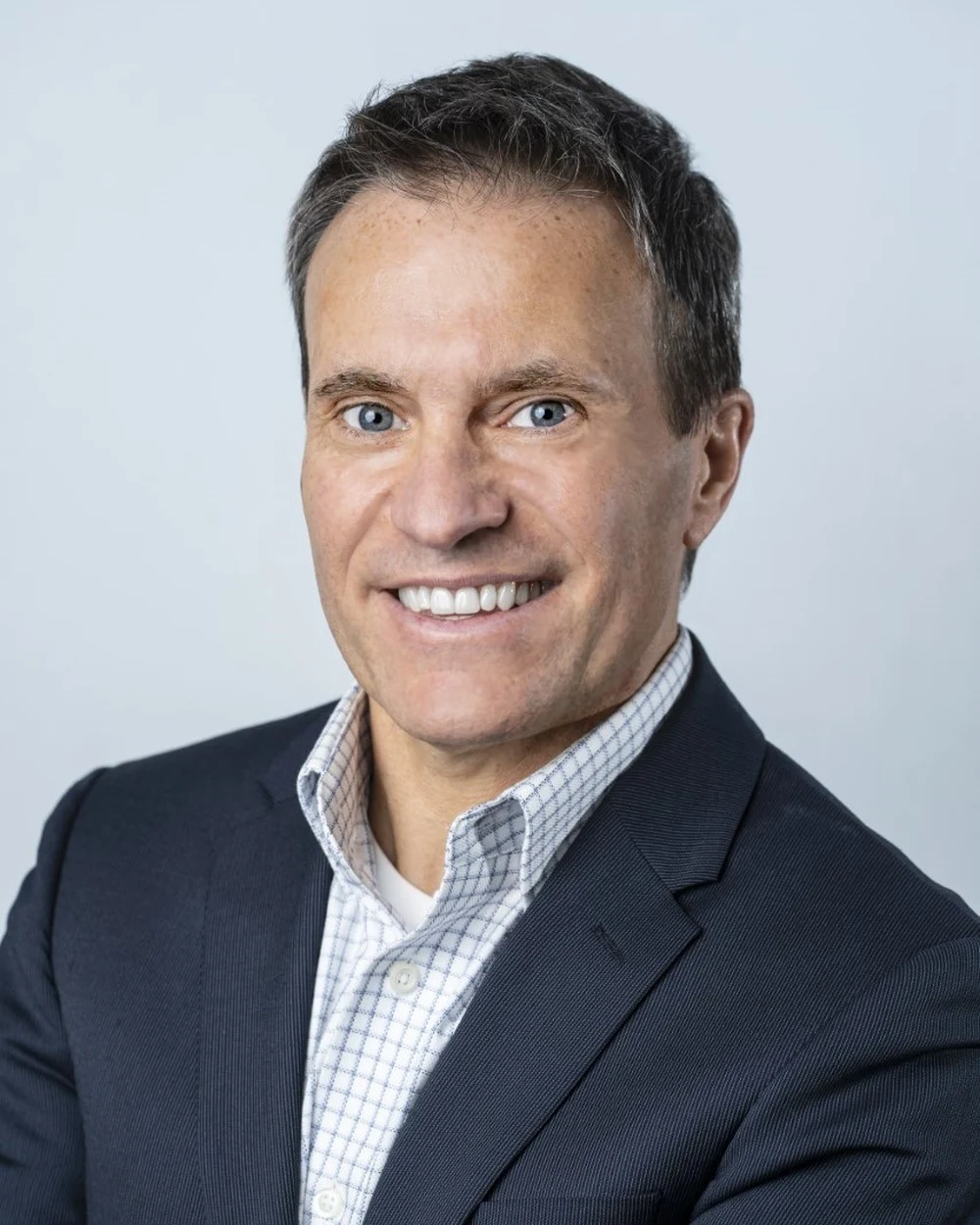
Acquisitions and Development
Trent Praski leads investment and development at Venture Pacific, sourcing missing-middle opportunities across Metro Vancouver and the Fraser Valley and structuring transparent homeowner and investor partnerships.
Full profile