
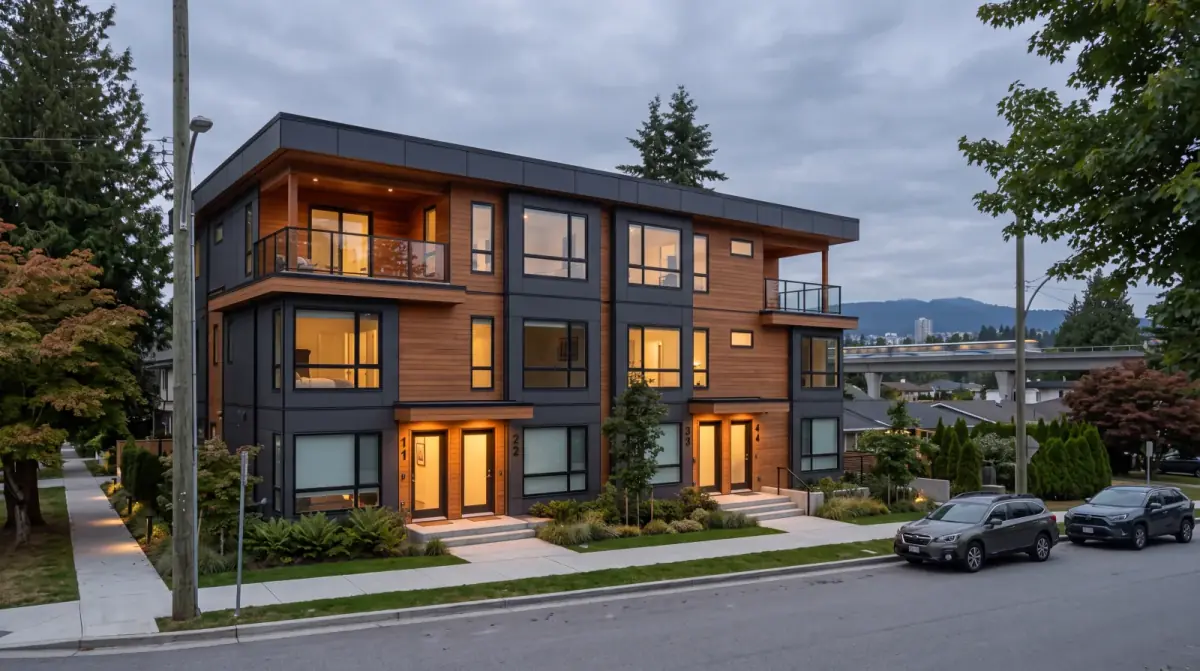
Coquitlam adopted its small-scale multi-unit housing rules on June 9, 2025. Most lots in the R-1, R-2 and R-3 zones can now hold 3 homes, or 4 on a lot larger than 280 m², through a Delegated Development Permit and then a building permit. Venture Pacific partners with Coquitlam and Tri-Cities homeowners to turn that new zoning into a finished, well-built multiplex.
- Zones
- R-1, R-2, R-3 (R-4 after rezoning)
- Units
- 3, or 4 on lots over 280 m²
- Six-unit transit rule
- Does not apply today
- In effect since
- June 9, 2025
In short, Coquitlam adopted small-scale housing zoning on June 9, 2025: up to 3 homes on lots of 280 m² or less and up to 4 on larger lots under 4,050 m² in the R-1, R-2 and R-3 zones, with R-4 after a rezoning approval. Each project needs a Delegated Development Permit, then a building permit. No Coquitlam bus stop meets the provincial frequent service test, so the six-home rule does not apply today. Port Coquitlam allows 6 homes near frequent bus service, generally along Lougheed Highway, and Port Moody near bus stops served every 15 minutes or less. Venture Pacific partners with Coquitlam and Tri-Cities homeowners on multiplex development through a GP/LP structure.
Hiring a multiplex construction company in the Tri-Cities: what each city allows
Most single-family lots in Coquitlam, Port Coquitlam and Port Moody can now hold 3 homes, or 4 on a lot larger than 280 m² (3,014 sq. ft.), under BC's small-scale multi-unit housing rules. We develop multiplexes in all three cities. The base numbers are the same, but each city sets its own zones, its own rule for six homes, and its own permit steps. So a Tri-Cities multiplex plan starts with the rules of the city the lot sits in.
In Coquitlam, the City's small-scale housing page lists four zones: R-1, R-2, R-3 and R-4. The City's application process sheet adds that R-4 applies only after a rezoning approval. The City says no Coquitlam bus stop meets the provincial test for frequent service, so the six-home rule does not apply there today. Land within 800 metres of eight SkyTrain stations is a Transit-Oriented Area with its own rules. Email the City's Development Services staff before you start if the lot is in one of those areas, if the house was built before 1945, or if a creek or steep slope is on or next to the lot. The steps are an optional enquiry meeting, a pre-application, a Delegated Development Permit, then a building permit, sent in with the City's fire flow form.
Port Coquitlam's small-scale housing page covers lots zoned RS1 to RS4. A lot larger than 280 m² within 400 metres of frequent bus service can hold 6 homes, and the City says that is generally along Lougheed Highway. Small-scale units are not allowed on RS lots inside a Transit-Oriented Area. Duplexes, accessory dwelling units and projects of 3 or more homes need a small-scale housing development permit before the building permit is issued. Cars generally reach the lot from the lane where there is one, and a lot within 15 metres of a watercourse may need a watercourse protection development permit.
For Port Moody, the City's small-scale housing page covers eleven RS and RT zones. A lot of 280 m² to 4,050 m² within 400 metres of a bus stop served every 15 minutes or less can hold 6 homes, with no minimum parking. Transit-Oriented Areas are exempt from these rules. City staff approve the form and character development permit, and the City recommends a pre-application. Check the title before any design work, because a building scheme registered on title takes precedence over the new zoning, and the City cannot process an application on a lot that has one. Our Port Moody multiplex page covers that city in more detail.
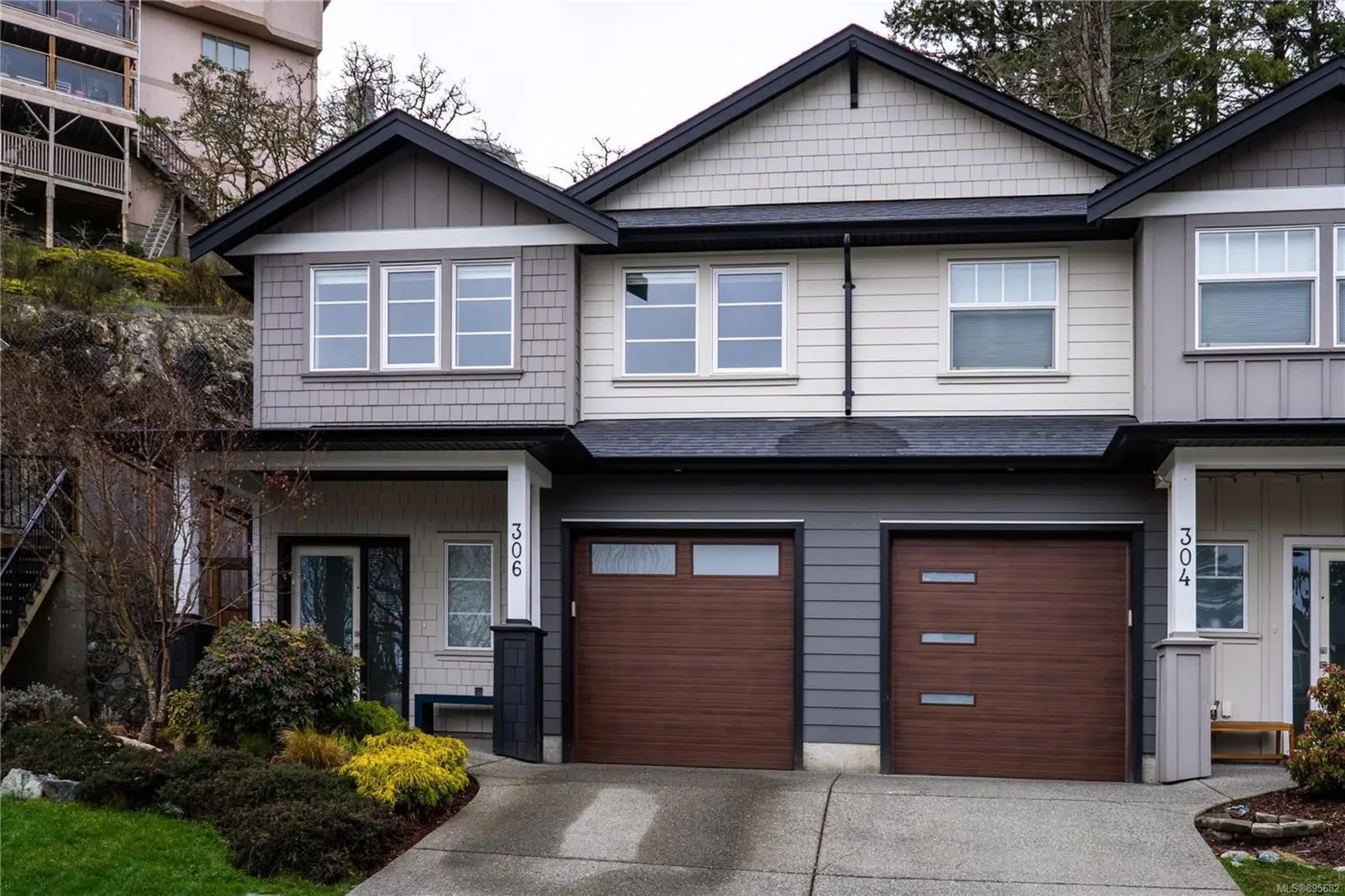
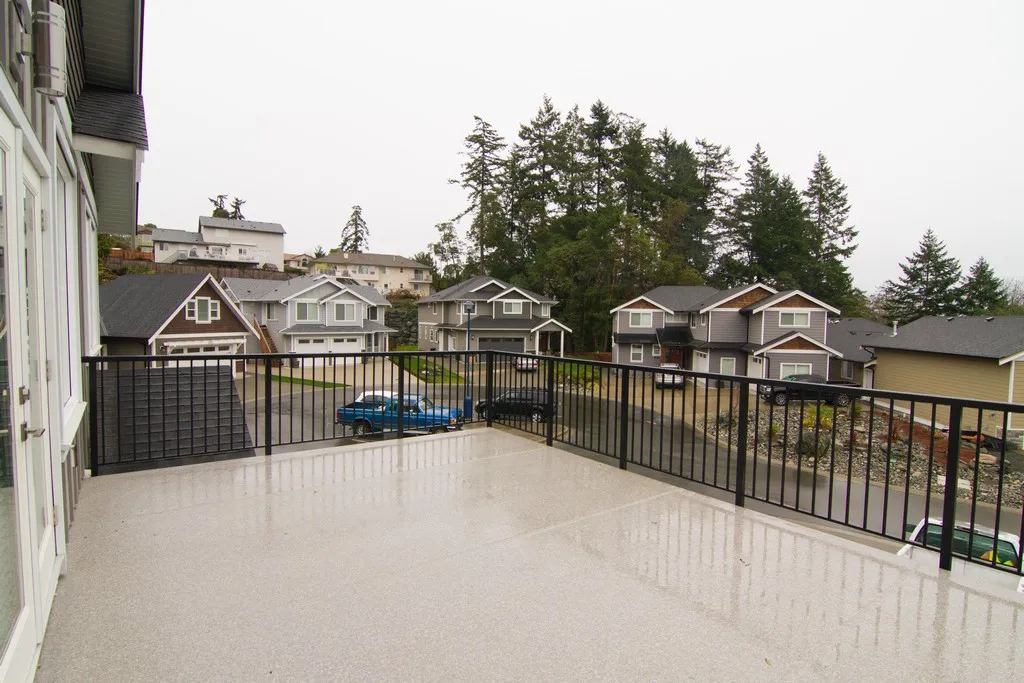
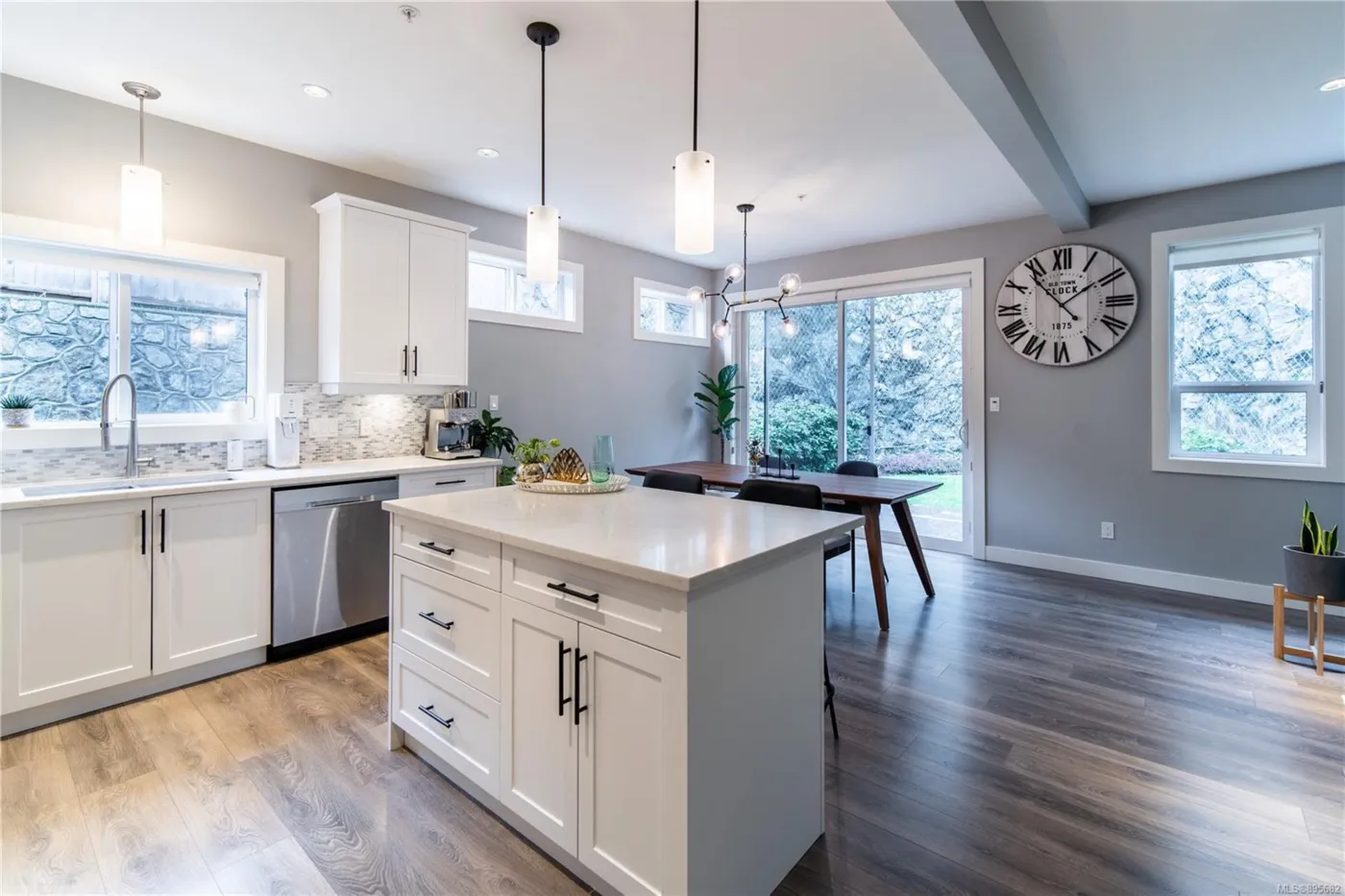
The photos below are from Selica Road in Langford, four homes on two duplex lots, completed in fall 2017. For how we run a project with a landowner from the first lot review to finished homes, see how we develop multiplexes. We read the City pages linked in this section on November 3, 2026.
Coquitlam
- Zones
- R-1, R-2, R-3; R-4 after a rezoning
- Lot of 280 m² or less
- Up to 3 homes
- Larger lot
- Up to 4 homes (lots under 4,050 m²)
- Six homes
- Does not apply today: no bus stop meets the frequent service test
- Near SkyTrain (Transit-Oriented Area)
- Within 800 m of 8 stations; email Development Services first
- Permits
- Pre-application, Delegated Development Permit, then building permit
Port Coquitlam
- Zones
- RS1 to RS4
- Lot of 280 m² or less
- Up to 3 homes
- Larger lot
- Up to 4 homes
- Six homes
- Lots over 280 m² within 400 m of frequent bus service, generally along Lougheed Highway
- Near SkyTrain (Transit-Oriented Area)
- Small-scale units not allowed on RS lots
- Permits
- Small-scale housing development permit, then building permit
Port Moody
- Zones
- Eleven RS and RT zones
- Lot of 280 m² or less
- Up to 3 homes (under 280 m²)
- Larger lot
- Up to 4 homes (280 m² to 4,050 m²)
- Six homes
- Within 400 m of a bus stop served every 15 minutes or less; no minimum parking
- Near SkyTrain (Transit-Oriented Area)
- Exempt from the small-scale rules
- Permits
- Staff approve the development permit; pre-application recommended
Source: City of Coquitlam, Small-Scale Multi-Unit Housing, Small-Scale Housing Development Application Process and Transit-Oriented Areas pages; City of Port Coquitlam, Small-Scale Multi-Unit Housing; City of Port Moody, Small-Scale, Multi-Unit Housing (SSMUH). All read November 3, 2026.
What changed in Coquitlam
On June 9, 2025, Coquitlam City Council adopted Zoning Bylaw changes that brought the city's residential zoning into line with BC's provincial small-scale multi-unit housing rules. Small-scale housing is permitted in the R-1, R-2 and R-3 zones, and in the R-4 zone after a rezoning approval. Lots of 280 m² or less can hold up to 3 homes, and larger lots under 4,050 m² up to 4. Each project goes through a Delegated Development Permit and then a building permit.
Coquitlam has no bus stops that meet the provincial test for frequent service, so the provincial rule for 6 homes near frequent buses does not apply in the city today. Land within 800 metres of eight SkyTrain stations (Braid, Burquitlam, Coquitlam Central, Inlet Centre, Lafarge Lake-Douglas, Lincoln, Lougheed Town Centre and Moody Centre) is a Transit-Oriented Area under separate provincial rules, and the City asks owners there to contact Development Services before they start.
The City estimates that approximately 22,131 lots qualify under the R-1 to R-4 zones for the four-unit baseline. With average lot sizes around 18,218 square feet, larger than most of Metro Vancouver, Coquitlam lots tend to offer generous building envelopes for triplex and fourplex design.
What this means for a Coquitlam homeowner
If you own a single-family lot in one of Coquitlam's older residential neighbourhoods, Maillardville, Ranch Park, Westwood Plateau, or the blocks around Burke Mountain, you are almost certainly sitting on four-unit potential. The bylaw did not come with a development pipeline that's already working through the lots. Most owners haven't yet tested what their property can support.
That said, a multiplex is still a construction project. Even in a city with 4 to 7 month permit processing times, faster than many Metro Vancouver cities, the design, permit, and construction phases run two to three years in total. Our role is to carry that work and the construction risk. You contribute the land through a clear, written GP/LP partnership. We handle feasibility, design, permit management, and construction end to end.
If you want more space in the house you already own, our Coquitlam custom homes and second storey additions page covers additions on post-war homes and new single houses.
- Highest-and-best-use review of your Coquitlam lot under the small-scale housing zones
- Confirming whether your lot falls inside a SkyTrain Transit-Oriented Area (800 metres)
- Triplex or fourplex design tuned to the R-1 to R-3 standards in force
- Permit management with the City of Coquitlam, currently processing in 4 to 7 months
- Construction and quality control to completion
Where the development activity is concentrated
Coquitlam's SkyTrain corridors are the obvious starting point. The Evergreen Extension runs through Burquitlam, Coquitlam Central, and Lafarge Lake-Douglas, connecting directly into Vancouver via Burnaby's Millennium Line. Land within 800 metres of those stations is a Transit-Oriented Area, where the City asks owners to contact Development Services before planning small-scale housing, and the demand fundamentals in transit-connected blocks are strong, renters and buyers alike pay a premium for walkable proximity to rapid transit.
But Coquitlam also has a large interior suburban fabric, the kind of wide, deep single-family lots on quiet cul-de-sacs in Ranch Park and Westwood Plateau, that suits four-unit projects very well. Those neighbourhoods were built out primarily in the 1970s through 1990s, which means the housing stock is aging and many owners are approaching the decision of whether to sell or develop. A fourplex on a lot with 18,000 square feet of land has room to work with.
Maillardville, the historic francophone community near Coquitlam Centre, has smaller lots and a distinct character. Projects there benefit from good proximity to transit and the town centre, but the lot geometry and neighbourhood scale favour careful design over maximum density. The first step on any Maillardville lot is confirming the exact zone and setback requirements rather than assuming the citywide four-unit rule applies without constraint.
Coquitlam's permit process under the new bylaw
Coquitlam's application process sheet sets out the order. An enquiry meeting with Development Planning staff is optional. Then comes a pre-application, whose response letter covers site grading and any road dedication, then an application for a Delegated Development Permit (with a subdivision application if road dedication is needed), and last a building permit, with any required off-site works completed through it. A project that needs a variance adds time, which is one reason our feasibility work focuses on designing to what the bylaw allows outright.
The BC Energy Step Code applies to new multi-unit residential construction in Coquitlam, and the 2-5-10 Homeowner Protection Act warranty covers every new home. These are province-wide requirements that don't change city by city, they are baked into how we design and build every project.
Questions about Coquitlam
How many homes can I build on my Coquitlam lot?
Most lots in Coquitlam's R-1, R-2 and R-3 zones can hold up to 3 homes on 280 m² or less, and up to 4 on a larger lot under 4,050 m². R-4 applies after a rezoning approval. A feasibility review confirms the number for your specific property.
When did Coquitlam's SSMUH bylaw come into effect?
City Council adopted the Zoning Bylaw changes on June 9, 2025, and further bylaw amendments to support them on June 23, 2025. We confirm which rules apply to your specific address during feasibility.
Do I need a rezoning to build a fourplex in Coquitlam?
Not on a lot already zoned R-1, R-2 or R-3. An R-4 project needs a rezoning approval first. Every small-scale project still needs a Delegated Development Permit before the building permit.
Which Coquitlam lots qualify for 6 units instead of 4?
None under the small-scale housing rules today. The provincial six-unit rule applies near bus stops with frequent service, and the City says no Coquitlam bus stop meets that test. Land within 800 metres of a SkyTrain station is a Transit-Oriented Area with separate rules, so contact the City's Development Services before planning there.
How large are typical Coquitlam lots, and does that affect what I can build?
Coquitlam's average residential lot is approximately 18,218 square feet, meaningfully larger than Metro Vancouver's average. That extra land generally gives a triplex or fourplex more room to work with: better unit separation, private outdoor space for each home, and more flexibility in massing. Lot size still matters under the bylaw, so the first step is a feasibility review of your specific property.
What's the first step if I'm considering developing my Coquitlam lot?
Book a free consultation. We review your lot, confirm its zone and size, check whether it sits in a Transit-Oriented Area or near a creek or steep slope, and give you an honest read on what's possible and what the numbers look like before you commit to design or financing.
Which Coquitlam zones qualify for a fourplex by right?
The City lists four small-scale zones: R-1 Small-Scale Residential, R-2 Compact Small-Scale Residential, R-3 Transitional Small-Scale Residential and R-4 Intensive Small-Scale Residential. A lot zoned R-1, R-2 or R-3 can hold up to 4 homes if it is larger than 280 m² and under 4,050 m², with a Delegated Development Permit and no rezoning. R-4 applies only after a rezoning approval.
Which SkyTrain stations have a Transit-Oriented Area in Coquitlam, and how do they affect unit counts?
The City lists eight: Braid, Burquitlam, Coquitlam Central, Inlet Centre, Lafarge Lake-Douglas, Lincoln, Lougheed Town Centre and Moody Centre. Land within 800 metres of them is a Transit-Oriented Area, where the Province sets minimum allowed heights and densities and the City has removed minimum residential parking, except accessible parking. Owners there should contact Development Services before planning small-scale housing. We check the measured distance from your lot to the nearest station during feasibility.
Related guides
- SSMUH in New Westminster and Coquitlam: what the eastern suburbs allow
- How SkyTrain proximity unlocks more units on your lot
- From single-family lot to fourplex: what the development timeline looks like
- How a feasibility review confirms whether your Coquitlam lot pencils out
- How Bill 44 and provincial SSMUH rules changed what you can build
Nearby areas
Sources
- City of Coquitlam, Small-Scale Multi-Unit Housing
- City of Coquitlam, Small-Scale Housing Development Application Process (PDF)
- City of Coquitlam, Transit-Oriented Areas
- City of Port Coquitlam, Small-Scale Multi-Unit Housing
- City of Port Moody, Small-Scale, Multi-Unit Housing (SSMUH)
- Government of BC, Small-scale multi-unit housing
Municipal rules, fees and timelines change. Confirm them with the city or district before you buy, design or sign. This page gives general information. A planner, a lawyer or the municipality itself can advise on your lot.
Let's talk about your property
A conversation, not a commitment.
Whether you're curious about the multiplex value of your land or looking to partner on a missing-middle build, we're here to start the conversation.