
Restoring a Heritage or Character Home in Vancouver: Process, Permits, and Cost Drivers
A heritage restoration runs on a different permit track and a different risk profile than an ordinary renovation. Here is what a Vancouver, New Westminster, or Burnaby heritage home actually involves, from the first status check to the final inspection.
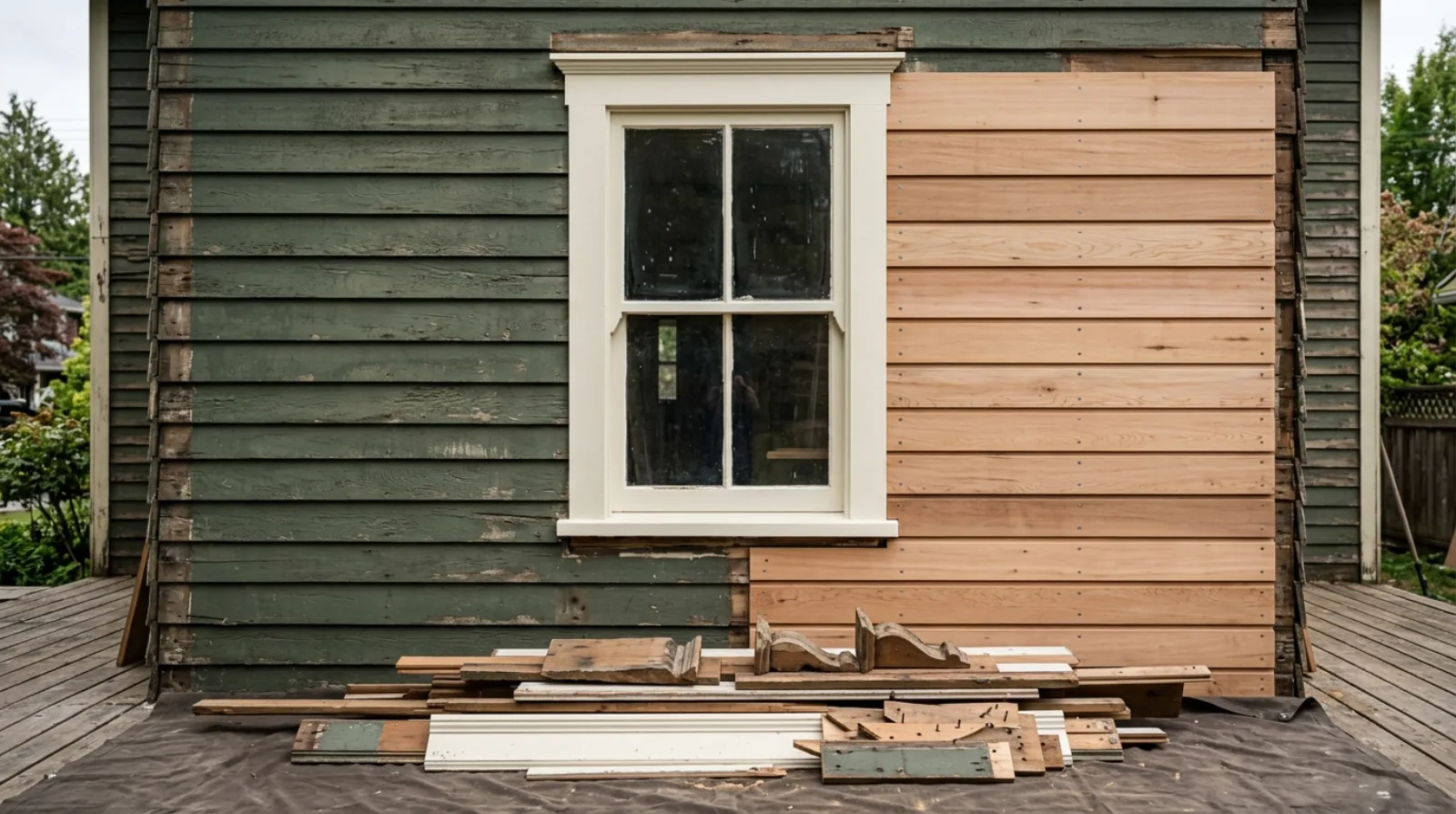
In short, Restoring a heritage or character home in Metro Vancouver starts with confirming the property's exact status, Vancouver Heritage Register listing, municipal designation, or unlisted character home, because each carries a different permit path. Designated properties need a Heritage Alteration Permit; some qualify for a Heritage Revitalization Agreement that trades restoration for a density bonus and a property tax exemption. Cost is driven far more by hidden conditions, knob-and-tube wiring, rubble foundations, structurally sound but undersized framing, than by finishes.
Every heritage restoration we take on starts the same way: not with a design conversation, but with a status check. What a property is legally allowed to become depends entirely on what it already is, listed or not, designated or not, and that answer changes the entire project before a single wall gets opened.
Homeowners usually come to us somewhere in the middle of that confusion. They know the house is old. They don't know if it's protected, and they definitely don't know what protected would mean for their renovation.
Start by confirming what you actually own
Vancouver keeps a Vancouver Heritage Register (VHR) of properties the city has identified as having heritage value. Being on that list is not the same as being legally protected. Some VHR properties carry a formal heritage designation, registered on title, that legally restricts alteration. Others are simply flagged as significant without that layer of protection.
Then there's a third category that catches a lot of Vancouver owners off guard: character homes. Many pre-1940 houses that have kept their original street-facing features qualify for character home retention incentives even when they've never been near the VHR. The city built these incentives specifically to give owners a reason to keep and restore an old house instead of tearing it down, and they can include bylaw relaxations and, in some cases, the potential to build additional structure in the backyard.
New Westminster runs a parallel but different system. Its Heritage Register lets the city temporarily withhold a demolition or building permit while a property is reviewed. Heritage Designation is a separate, stronger step: a bylaw registered on title that can protect the whole property or just specific features, interior, exterior, or landscape. Critically, a New Westminster designation on its own cannot change your zoning, land use, or density, that only happens through a negotiated agreement layered on top.
Three cities, three different answers to the same question. We run this check before we quote anything, because the permit path and the cost profile are entirely different depending on the result.
The Heritage Alteration Permit, when it applies
If your Vancouver property carries a formal designation, or sits inside a Heritage Conservation Area, you need a Heritage Alteration Permit (HAP) before altering it. This usually runs alongside a standard development permit, not instead of it, so the project carries two review tracks rather than one.
The HAP process exists to protect the character-defining elements of the building, the proportions, the original windows, the millwork, the roofline, while still allowing the house to be lived in and improved. Heritage staff review the proposal, and for anything beyond minor work, a heritage consultant is either required or strongly advisable. We've seen the difference a good consultant makes firsthand: a well-prepared HAP application moves through review in a predictable window, and a poorly prepared one turns into months of back-and-forth over details that could have been resolved up front.
The permit isn't the obstacle. Going into it without a heritage consultant who has actually negotiated with the city before is the obstacle.
The Heritage Revitalization Agreement, restoration in exchange for density
For properties that qualify, a Heritage Revitalization Agreement (HRA) is the most significant financial tool in Vancouver's heritage toolkit, and one most homeowners have never heard of. Under Section 396A of the Vancouver Charter, the city can offer a property tax exemption of up to ten years to owners who commit to conserving a heritage building, and an HRA can also vary density, use, and siting regulations on the site in exchange for that commitment.
That trade is real: restore and protect the heritage building to the city's standard, and the city gives you more building flexibility on the lot than the base zoning allows, plus a multi-year tax break. It is not a fast process. Expect 6 to 12 months of negotiation, a heritage consultant on your team from the start, and a higher construction quality bar on the restoration portion than a standard renovation would require.
An HRA is not the right tool for every heritage property. It makes the most sense when the site has real unused density to trade, a laneway home, a larger addition, additional floor area, and the property owner is planning to hold the property long enough to benefit from both the density and the tax exemption. We model that trade-off with real numbers before recommending the HRA path over a more straightforward restoration.
What actually drives the cost on a heritage project
Most of the heritage homes we work on across Vancouver, New Westminster, and Burnaby were built between the 1910s and the 1940s, and they share a recognizable set of conditions.
- Old-growth fir framing that is frequently in excellent structural shape, better than a lot of homes built decades later.
- Knob-and-tube wiring that is past its useful life and needs a full rewire, not a patch.
- Original single-pane sash windows that define the home's street character but perform poorly for heat and moisture.
- Foundations ranging from rubble stone to under-reinforced early concrete, which changes what the structure can support.
- Plumbing that has been partially updated over decades in ways that don't always work together.
None of that shows up in a walk-through. It shows up once the walls are open, which is exactly why the unknowns, not the finishes, tend to be the biggest cost driver on a heritage restoration. A homeowner comparing quotes on finishes alone is comparing the wrong number.
Bringing the electrical and mechanical systems up to current standards while preserving the picture rails, the built-in cabinetry, and the craftsman trim that make the house worth saving is a genuinely different discipline than a standard renovation. It asks a builder to protect what's original and rebuild what's failing, in the same rooms, often in the same week.
How this differs from an ordinary renovate-or-demolish decision
We've written before about how the renovate or demolish decision usually gets made for a home with no heritage complications. A heritage or character property changes that calculation in a specific way: demolition may not be available to you at all without going through a heritage review first, and the retention incentives can make keeping the house financially competitive with, or better than, a full teardown once the tax exemption and any density bonus are counted.
That's worth knowing before you assume a heritage home is simply a more expensive version of a normal renovation. On the right property, it's a different financial picture entirely, just one that takes longer to model.
Where a laneway home fits into a heritage restoration
One detail that surprises a lot of owners: retaining a character or heritage home in Vancouver can come with the ability to add a larger structure in the backyard than the base zoning would otherwise permit. A well-sited laneway home or coach house can add real living space and rental income to a property while the main house stays intact out front. Whether your lot qualifies depends on its specific status, and we check that as part of the same feasibility review that covers the main restoration.
What the first step actually looks like
Before any design work starts, we confirm three things: the property's exact heritage or character status, what that status legally requires or allows, and what condition the building is actually in behind the walls. That third one usually means opening a few strategic access points before pricing gets locked in, because guessing on a heritage project costs more than checking.
If you own a heritage or character home anywhere in Vancouver, New Westminster, or Burnaby and you're weighing a restoration, book a free consultation and we'll walk the property with you before you commit to a direction.
Related guides: how we handle heritage and character home restoration from assessment to approvals, and what a Vancouver heritage restoration involves.
Frequently asked
How do I find out if my Vancouver home is a heritage or character property?
Start with the Vancouver Heritage Register, which lists properties the city has identified as having heritage value. A listing on the register does not automatically mean legal protection, some listed properties carry a formal heritage designation and some don't, and pre-1940 homes that keep their original street-facing features can qualify for character home retention incentives even without being on the register at all. We confirm exact status as the first step of any heritage project, before pricing anything.
What is a Heritage Alteration Permit and when do I need one?
A Heritage Alteration Permit (HAP) is required to alter a designated heritage building or a building inside a Heritage Conservation Area, and it is often processed alongside a standard development permit. If your property carries a formal designation, the HAP is not optional, and exterior changes to the character-defining elements get reviewed by the city's heritage planning staff before work can proceed.
What is a Heritage Revitalization Agreement, and is it worth pursuing?
A Heritage Revitalization Agreement (HRA) is a legally binding agreement where an owner commits to restoring and protecting a heritage property, and the city in exchange varies density, use, or siting rules for the site, plus in many cases a multi-year property tax exemption under the Vancouver Charter. It is a real financial tool, but it takes 6 to 12 months to negotiate, requires a heritage consultant, and comes with a higher construction quality bar on the restoration work. It makes sense on some properties and not others, which is why we look at the numbers before recommending it.
Is heritage designation the same in New Westminster as in Vancouver?
No, and the difference matters if you own in both cities. New Westminster's Heritage Designation is a bylaw registered on the property's title, and it can apply to the whole property or just specific interior or exterior features, but it cannot vary zoning, land use, or density on its own the way a Vancouver HRA can. New Westminster's Heritage Register, separate from designation, lets the city temporarily withhold a demolition or building permit while it reviews a proposal. Confirm which one applies to your address before assuming either city's rules carry over.
What actually drives the cost of a heritage restoration?
Hidden conditions, not finishes. Most Metro Vancouver heritage homes date to the 1910s through the 1940s, and they share a predictable set of issues: knob-and-tube wiring that is past its useful life, single-pane sash windows that define the home's character but leak heat, and foundations that range from rubble to under-reinforced concrete. The framing itself is frequently in excellent shape, old-growth fir holds up. What moves the budget is bringing electrical, mechanical, and structural systems to current standards while keeping the visual features that make the home worth restoring in the first place.
Can I add a laneway home or coach house on a heritage lot?
Sometimes, and it is one of the more effective ways to add value on a heritage property. Character home retention incentives in Vancouver can include the potential to build a larger structure in the backyard as part of the trade-off for keeping the main house. Whether that applies to your lot depends on its specific status and zoning, which we check during the initial feasibility review.
Does a heritage designation block me from renovating at all?
No. Designation controls how you renovate, not whether you can. Interior work that doesn't touch character-defining elements is often straightforward. Exterior changes go through heritage review, but the process exists to guide changes, not to freeze the building in place. We've restored Vancouver and New Westminster heritage homes to modern performance standards while keeping them recognizable from the street.
What should the first step of a heritage restoration actually look like?
Confirming three things before any design work starts: the property's exact heritage or character status, what that status legally requires or allows, and the actual condition of the building behind the walls. That third step usually means opening a few strategic access points before pricing gets locked in, because guessing on a heritage project costs more than checking upfront.
Written by

Founder & President
Mark Van Ek is the founder and president of Venture Pacific, bringing more than 40 years of Metro Vancouver and the Fraser Valley construction management experience and multiple Georgie and HAVAN awards to every custom home, renovation, and multiplex project.
Full profile