
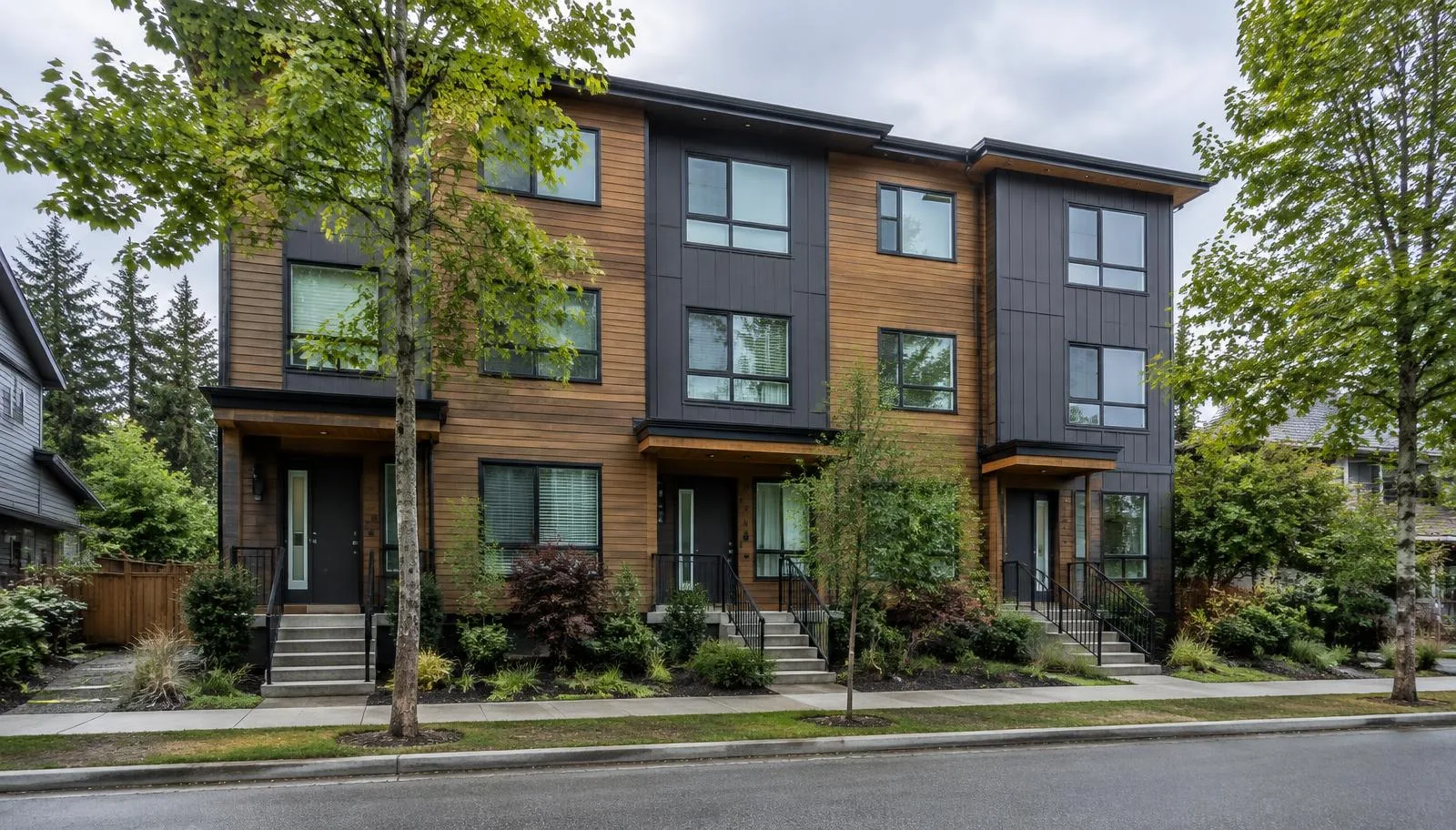
In short, Under BC's small-scale multi-unit housing rules, municipalities over 5,000 people inside urban containment boundaries must allow three units on lots of 280 m2 or less, four on larger lots, and six on lots over 281 m2 within 400 metres of frequent transit. More units usually mean more servicing, fire separation, design and permitting work.
When a landowner first asks us about a multiplex, the question is usually how many homes the lot can hold. It is the right first question. The second one matters just as much: what changes when the number goes up?
What the province requires
BC's small-scale multi-unit housing rules, passed in late 2023, set a floor for municipalities with more than 5,000 people, inside urban containment boundaries. On lots zoned for single-family or duplex use, cities must allow:
- Three units on lots of 280 square metres or less.
- Four units on lots larger than 280 square metres.
- Six units on lots larger than 281 square metres within 400 metres of a prescribed bus stop with frequent service.
That is the minimum. Each city writes its own bylaw on top, with setbacks, height, lot coverage and other limits, and some allow more. Always read your own city's rules before you plan around a number.
Triplex
- Lot size
- 280 m2 or less
- Location
- Any covered lot
- Units cities must allow
- 3
Fourplex
- Lot size
- Over 280 m2
- Location
- Any covered lot
- Units cities must allow
- 4
Sixplex
- Lot size
- Over 281 m2
- Location
- Within 400 m of frequent transit
- Units cities must allow
- 6
Source: BC Government, Provincial Policy Manual for SSMUH, December 2023
How the build changes with each step up
More homes on the same lot means a more involved building, not just a longer one. A few things tend to shift as unit count rises.
- Servicing. Water, sewer, storm and electrical service sized for three homes may not cover six. Upgrades to city connections can be a large cost line.
- Fire separation and sound. Every shared wall and floor needs a rated assembly. More units means more of them, and more detail to get right on site.
- Layout. Six homes on a typical lot often means stacked units, more stairs and more careful thought about entries, light and storage.
- Outdoor space and waste. Bins, bikes and private outdoor space all need room, and the lot does not get any bigger.
None of this makes a sixplex a bad idea. It means the budget and the design need to be built around the real count from day one.


How planning and approvals change
Cities vary a lot here. Some handle small multiplexes through a building permit only, once the zoning is in place. Others add design guidelines or extra review at higher unit counts. Parking rules also differ. Under the provincial legislation, cities cannot require off-street parking for the homes in a required six-unit project near frequent transit. For three and four units, each city sets its own approach.
The practical step is to check your lot against the bylaw and then talk to the city early. Checking this before design starts is a big part of our pre-construction work.
Choosing the right number for your lot
The highest allowed number is not always the best answer. A triplex with larger family homes might suit a lot better than six smaller units, depending on the street, the market and whether you plan to sell, rent or keep a home for your own family. We usually price two options side by side before anyone commits to drawings.
That is exactly what pre-construction is for, and you can hire us for it on its own. You can also read about our feasibility and equity review, or book a call to talk through your lot.
Frequently asked
Can every lot in BC have a sixplex?
No. The provincial rules require six units only on lots larger than 281 square metres within 400 metres of a bus stop with frequent service, in municipalities covered by the legislation. Your city's bylaw sets the exact rules.
Is a fourplex always better value than a triplex?
Not always. The fourth unit adds revenue or sale value, but it can also add servicing, fire separation and design cost. The right answer depends on the lot, the city's bylaw and your plan for the homes.
Where do I check what my lot allows?
Start with your municipality's zoning bylaw and its small-scale multi-unit housing page. The province publishes a policy manual that explains the minimum requirements.
Wondering what your lot could become? Book a free consultation with Venture Pacific to find out how many units you could build on your property, whether it's a feasible project, and how our GP/LP partnership structure works.
Written by
Acquisitions and Development
Trent Praski leads investment and development at Venture Pacific, sourcing missing-middle opportunities across Metro Vancouver and the Fraser Valley and structuring transparent homeowner and investor partnerships.
Full profile