
Budget 2026: Foreign Buyer Ban to 2029, New Homes Exempt, and What It Means for South Surrey and Langley Builds
Budget 2026 proposes to keep the federal ban on foreign buyers of existing homes until January 1, 2029 and to exempt new homes. For an owner planning a custom home, a duplex or a fourplex in South Surrey, Langley or the Fraser Valley, here is what changes, what stays, and the tax and financing help new homes already get.
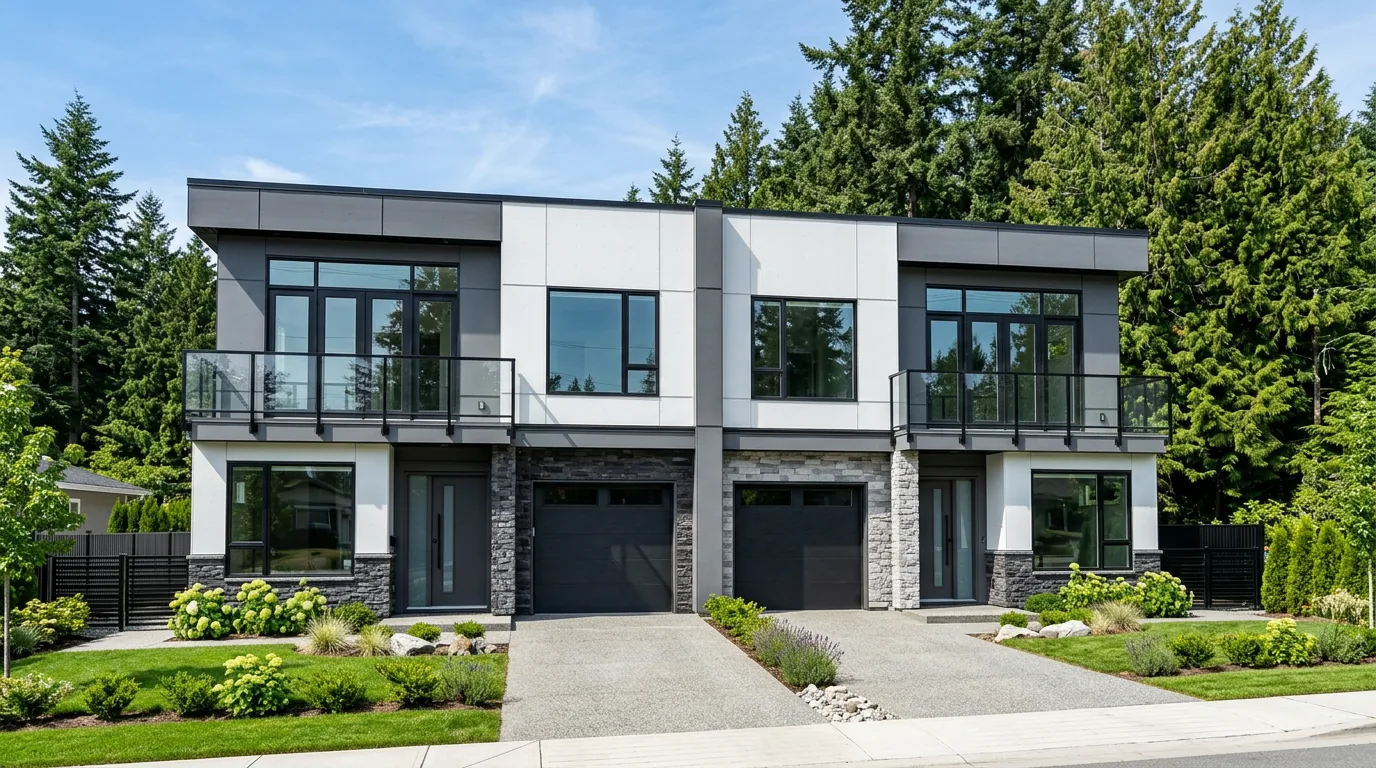
In short, Budget 2026, tabled November 5, 2026, proposes to extend Canada's ban on foreign buyers of existing homes to January 1, 2029 and to exempt new homes, and confirms insured construction financing for new three- and four-unit homes from February 1, 2027. In South Surrey, Langley and the Fraser Valley, BC's 20% additional property transfer tax still applies to foreign buyers, while Canadian buyers of new homes can use the first-time buyer GST rebate of up to $50,000 and BC's newly built home exemption up to $1,100,000.
Budget 2026, tabled in Ottawa on November 5, 2026, proposes to keep the federal ban on foreign buyers of existing homes for two more years, to January 1, 2029, and to let foreign buyers purchase new homes. If you own a lot in South Surrey, White Rock, Langley or the Fraser Valley and you are planning a custom home, a duplex or a fourplex, this post explains what the proposal changes for you, what it leaves alone, and the tax and financing help that new homes already get.
What the budget proposes
Chapter 3 of the Budget 2026 document says: "Budget 2026 proposes to extend the ban on foreign purchases of existing residential properties for two years, to January 1, 2029, while exempting new residential properties." The same paragraph says the federal government "will propose legislation and launch a regulatory process on this change in short order." The budget's list of planned laws confirms a bill to extend the Prohibition on the Purchase of Residential Property by Non-Canadians Act to January 1, 2029.
That is all the detail there is today. There is no bill, no start date for the exemption, and no definition of a "new residential property". It could mean a presale, a home nobody has lived in, or a home finished after a set date. We would not change a build or a sales plan on that phrase until the bill and the regulations are published.
What the ban covers today
The ban took effect on January 1, 2023, with a first end date of January 1, 2025. The Department of Finance extended it on February 4, 2024 to January 1, 2027, and that is still the end date in law.
Section 2 of the Act covers a detached house or similar building with not more than three dwelling units, and a semi-detached house, rowhouse unit or condominium unit. A non-Canadian is a person who is not a Canadian citizen, not a permanent resident and not registered under the Indian Act. The fine for breaking the ban is up to $10,000. The regulations let a non-Canadian buy residential property for the purposes of development, and let a work permit holder buy one home if the permit has 183 days or more of validity left on the day of purchase.
Law today
- Existing house, duplex or triplex
- Banned until January 1, 2027
- Existing condo or townhouse unit
- Banned until January 1, 2027
- New home
- Banned like any other home
- Lot bought to develop
- Allowed
Budget 2026 proposal
- Existing house, duplex or triplex
- Banned until January 1, 2029
- Existing condo or townhouse unit
- Banned until January 1, 2029
- New home
- Exempt once a bill and rules pass
- Lot bought to develop
- No change proposed
Source: Budget 2026; Prohibition on the Purchase of Residential Property by Non-Canadians Act and Regulations
BC's 20% tax applies across our build areas
BC's additional property transfer tax charges foreign nationals, foreign corporations and taxable trustees 20% of the fair market value of their share of a residential property in five regional districts. Two of them cover the areas we build in: the Metro Vancouver Regional District, which includes Surrey, White Rock and Langley, and the Fraser Valley Regional District, which includes Abbotsford, Chilliwack and Mission.
The budget says the federal government will keep supporting measures "levied by other levels of government" against speculation, and nothing in it changes this tax. On a $1,200,000 new home, a foreign buyer would pay $240,000 in additional tax on top of the regular property transfer tax. In our view, that cost limits how many foreign buyers the exemption brings to new homes here, even after it becomes law.
If you are building to sell
If you build a duplex or a fourplex and sell the homes as strata units, each unit is covered by the federal ban today. The exemption could open those sales to some buyers who are not citizens or permanent residents. We suggest planning your sales, and any presale count your lender asks for, around Canadian buyers. If foreign buyers become possible later, treat them as extra demand.
If you are selling an existing house, the proposal keeps it inside the ban until January 1, 2029. The people who can buy it to live in stay the same.
The tax help Canadian buyers of new homes already get
Two tax breaks for new homes are law today, and both affect what a buyer can pay for what you build.
The federal first-time home buyers' GST rebate returns all of the GST on a new home up to $1 million, to a maximum of $50,000, and shrinks to zero at $1.5 million. Bill C-4, which carries it, received royal assent on March 12, 2026. The Canada Revenue Agency says the buyer must be 18 or older, a citizen or permanent resident, and must not have lived in a home they or their spouse owned as their primary residence in the year of the purchase or the four years before. For a home bought from a builder, the agreement must be signed on or after March 20, 2025 and before 2031.
BC's newly built home exemption removes property transfer tax on a new home worth up to $1,100,000 and gives a partial break up to $1,150,000. The buyer must be a citizen or permanent resident and live in the home as a principal residence. The buyer does not need to be a first-time buyer.
Put together, these two rules matter at the pricing stage of a build. A new strata home priced at or under $1,000,000 can carry no GST and no property transfer tax for a buyer who qualifies for both. Between $1,000,000 and $1,150,000, the transfer tax break shrinks and then ends. Above $1,500,000, the GST rebate is gone too. On a duplex or fourplex in South Surrey or Langley, where the price of each home decides who can buy it, it makes sense to check these limits before the unit sizes and finishes are settled.
- Most GST a first-time buyer can get back on a new home
- $50,000
- Home value limit for BC's full newly built home exemption
- $1,100,000
- BC additional property transfer tax on a foreign buyer's share
- 20%
- Most of a new 3 or 4 unit home's value an insured construction loan can cover from February 1, 2027
- 90%
Source: Canada Revenue Agency; Province of BC; Budget 2026
If you are building or renovating your own home
The GST rebate also covers a home you build, or hire someone to build, on land you own. The CRA says construction must begin on or after March 20, 2025 and before 2031, the home must be substantially completed before 2036, and the first-time buyer must be the first person to live in it. An owner who already lives in a home they own will not pass the first-time test. An adult child building a first home on family land may.
A substantially renovated home can qualify for the GST rebate too. The CRA's guide RC4028 says a substantial renovation generally means at least 90% of the building, other than the foundation, external walls, interior supporting walls, floors, roof and staircases, has been removed or replaced. A kitchen and bath update does not reach that line. A full interior rebuild may. BC's newly built home exemption is narrower: its list of qualifying homes covers new construction and conversions from non-residential use, and a renovated house is not on it.

BC's page also says that if you paid property transfer tax when you bought vacant land, and you now have a newly built home on it, you may be eligible for a refund. Ask your lawyer or notary to check this before you file.
Financing changes for buyers and for small builds
The budget proposes to raise the home price limit for optional mortgage insurance from $1 million to $1.5 million and to allow 30-year amortizations on those insured mortgages, "provided that at least one borrower is a first-time home buyer or the home is newly built." An amortization is the number of years it takes to pay off a mortgage. This one is a proposal.
The second change has a date. The budget says new mortgage insurance rules for "missing middle" homes take effect on February 1, 2027:
- Insured construction financing for newly built three- and four-unit homes, for up to 90% of the property's value.
- No maximum property value, and no rule that the builder lives in one of the units.
- Once built, the homes can be kept and rented with an insured mortgage amortised over up to 30 years, or sold to individual buyers.
- Private mortgage insurers may insure loans on five- to fifty-unit residential properties.
The budget's own example is a $3 million fourplex that does not qualify under the current rules, because its value is over the $1.5 million cap and the builder would have to live in one unit. Under the new rules it could. For an owner who wants to hold a fourplex as a rental, that changes the financing plan. Talk to a mortgage broker about how lenders will apply the rules before your design is final. Our post on how we evaluate multiplex feasibility covers the questions we ask about a lot first.
What we would check now
- Who in your household could pass the first-time buyer test, if you are building a home to live in.
- Whether your planned renovation reaches the 90% line for a substantial renovation, or stays a renovation.
- Whether the homes you plan to sell will be priced under $1,100,000, the limit for BC's full transfer tax exemption.
- Whether a three- or four-unit design could use the insured construction financing from February 1, 2027.
- Whether any buyer or co-owner is not a citizen or permanent resident, in which case wait for the bill.
Frequently asked
Is the foreign buyer ban extended to 2029?
Budget 2026, tabled on November 5, 2026, proposes to extend the federal ban on foreign purchases of existing homes to January 1, 2029. It is a proposal. Until Parliament passes a bill, the law still ends the ban on January 1, 2027, the date set in February 2024.
Can a foreign buyer purchase a new home in South Surrey or Langley now?
Not under the law today. Budget 2026 proposes to exempt new residential properties, but the exemption needs a bill and regulations, and the budget does not define a new home. BC's 20% additional property transfer tax would still apply to a foreign buyer's share in Metro Vancouver and the Fraser Valley Regional District.
Does BC's 20% foreign buyer tax apply in Abbotsford and Chilliwack?
Yes. BC's additional property transfer tax applies in the Fraser Valley Regional District, which includes Abbotsford, Chilliwack and Mission, and in the Metro Vancouver Regional District, which includes Surrey and Langley. A foreign national pays 20% of the fair market value of their share of a residential property.
Can I get the first-time buyer GST rebate on a home I build on my own lot?
Yes, if you are a first-time home buyer. The Canada Revenue Agency says an owner who builds, or hires someone to build, a home on their own land may qualify if construction begins on or after March 20, 2025 and before 2031, the home is finished before 2036, and they are the first to live in it.
Does a whole-home renovation qualify for the first-time buyer GST rebate?
Only if it is a substantial renovation. The CRA's guide RC4028 says that generally means at least 90% of the building, other than the foundation, external walls, interior supporting walls, floors, roof and staircases, has been removed or replaced. The buyer must also pass the first-time buyer test.
What changes for fourplex construction loans on February 1, 2027?
Budget 2026 says a builder of a newly built three- or four-unit home will be able to get an insured construction loan for up to 90% of the property's value, with no maximum value and no rule to live in one of the units. Once built, it can be kept and rented with an insured mortgage of up to 30 years.
Can two buyers share the first-time buyer GST rebate?
Only one of them claims it. The CRA's guide RC4028 says that when more than one person buys, at least one must be a first-time home buyer, the home must be that person's primary residence, and only that person can claim the rebate, which is up to $50,000.
If you own a lot in South Surrey, Langley or the Fraser Valley and want to know which of these rules fit your plans, book a free consultation. For the permit side of a new home in Langley, see our Township of Langley building permit guide.
Sources
- Department of Finance Canada, Budget 2026, Chapter 3 and legislative annex (November 5, 2026)
- Department of Finance Canada, two-year extension to the ban on foreign ownership of Canadian housing (February 4, 2024)
- Prohibition on the Purchase of Residential Property by Non-Canadians Act
- Prohibition on the Purchase of Residential Property by Non-Canadians Regulations
- Canada Revenue Agency, First-time home buyers' GST/HST rebate: who can apply
- Canada Revenue Agency, Guide RC4028, GST/HST New Housing Rebate
- Parliament of Canada, Bill C-4 (45-1), royal assent March 12, 2026
- Province of BC, Additional property transfer tax for foreign entities and taxable trustees
- Province of BC, Newly built home exemption
Written by
Acquisitions and Development
Trent Praski leads investment and development at Venture Pacific, sourcing missing-middle opportunities across Metro Vancouver and the Fraser Valley and structuring transparent homeowner and investor partnerships.
Full profile