
Does your lot's frontage qualify for 5 or 6 units? Vancouver's real thresholds
Lot area alone does not decide whether a Vancouver lot reaches five or six units under R1-1. A second number, frontage, has to clear its own bar, and most standard 33-foot lots fall short of it before area is even a question.
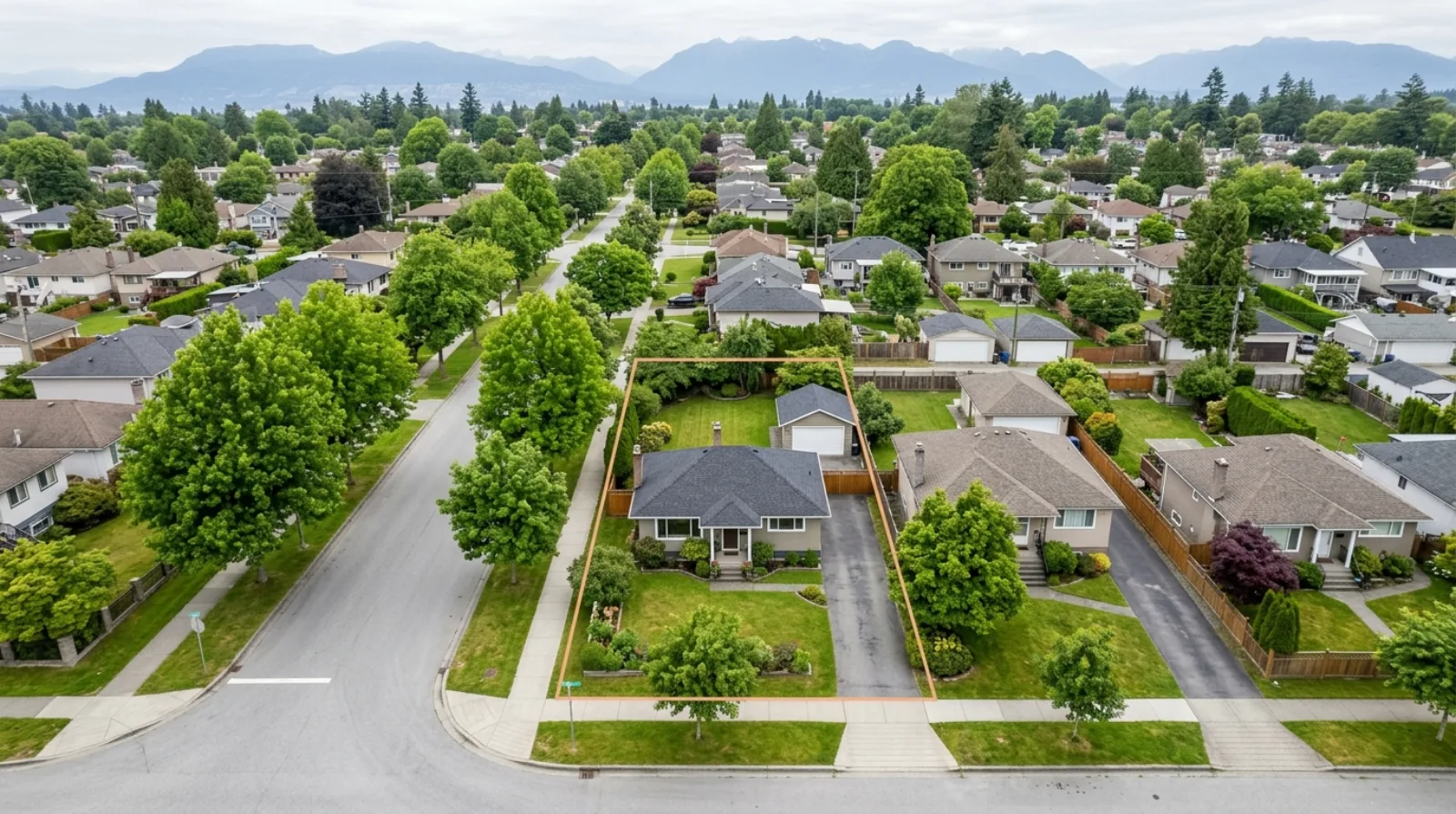
In short, Vancouver's R1-1 District Schedule sets paired minimums of site area and site frontage for each unit-count band: 306 m² and 10.0 m frontage for 3 to 4 units, 464 m² and 13.4 m frontage for 5 units, and 557 m² and 15.1 m frontage for 6 units (up to 8 units where 100% secured rental tenure is registered). A lot must clear both numbers, not just one, so a standard 33-foot (about 10-metre) Vancouver lot can fail the 5 or 6-unit frontage bar even when its total area is large enough, most often on a narrow, deep lot shape.
"My lot is bigger than my neighbour's. Why does theirs qualify for six units and mine only gets four?"
We hear a version of this question often enough that it deserves its own answer, separate from the general zoning explainers. The short version: Vancouver's R1-1 zoning does not decide unit count from lot area alone. It tests a second, independent number, site frontage, and a lot can pass the area test and still fail the frontage test.
The two numbers, side by side
Vancouver's R1-1 District Schedule sets minimum site area and minimum site frontage together, as a pair, for each unit-count band. Both have to be met. Neither substitutes for the other.
- 3 to 4 units: minimum site area 306 m², minimum site frontage 10.0 m
- 5 units: minimum site area 464 m², minimum site frontage 13.4 m
- 6 units (market strata, the standard ceiling): minimum site area 557 m², minimum site frontage 15.1 m
- Up to 8 units where the project is registered as 100% secured rental tenure, on a lot that already clears the 6-unit thresholds
A standard Vancouver lot, the classic 33-foot frontage, measures roughly 10.06 metres at the street. That clears the 10.0-metre minimum for the 3 to 4-unit band comfortably. It does not come close to the 13.4 metres needed for 5 units, and it is nearly 5 metres short of the 15.1 metres needed for 6.
This is the part that surprises people: a 33-foot lot with a long, deep run can have plenty of total square footage, sometimes enough to clear the 557 m² area minimum for 6 units on paper, and still not qualify, because the frontage number never moves no matter how far back the lot runs.
Why area and frontage are tested separately
Area describes how much land there is. Frontage describes how wide the lot is where it meets the street, and that width is what actually determines whether homes can be arranged side by side with their own entries, their own light, and workable separation between units.
Two lots can share an identical area and produce very different buildings. A wide, shallow lot has room to line units up across the front. A narrow, deep lot has to stack that same square footage differently, and past a certain point there simply is not enough width at the street to fit another home beside the ones already there, regardless of how much depth is available behind them. The zoning schedule tests both numbers because area alone would let a narrow sliver of land claim a unit count it cannot physically support at the street.
What actually changes the answer
Lot assembly
Combining two adjoining lots increases both figures together, area and frontage, which is one legitimate way a pair of narrower individual lots can reach a higher band than either could alone. Assembly is its own process. It requires a subdivision or consolidation application with the city before the combined frontage exists as a single legal parcel that a permit application can rely on. It is not something a feasibility review can assume; it has to be confirmed and processed on its own timeline.
Secured rental tenure
Registering a project as 100% secured rental tenure raises the ceiling from 6 units to 8 on a lot that already clears the 6-unit area and frontage minimums. It is a bonus on top of qualifying, not a way around the underlying thresholds. A lot that fails the 15.1-metre frontage test for 6 units does not reach 8 by going rental; it is still evaluated against the band its actual frontage supports.
Corner lots need their own check
A corner lot has two street-facing sides, and it is tempting to assume the longer of the two counts as frontage. The zoning bylaw defines site frontage on its own terms, with its own diagrams, and that definition does not automatically track whichever side measures longer. Corner lots come up often enough in our reviews that we treat the frontage figure as something to confirm against the bylaw specifically, not infer from the lot's shape on a map.
Where the real number comes from
A lot's frontage is a matter of survey record, held with the subdivision plan at the Land Title and Survey Authority of BC. It is not the number on a real estate listing, and it is not always the number a tax assessment implies. We confirm the surveyed frontage as one of the first steps in a feasibility review, because it is one of the two numbers that decides which band a lot is actually in, before any design work starts.
The practical takeaway
If you own a standard 33-foot Vancouver lot, plan around the 3 to 4-unit band unless assembly with a neighbouring lot is realistically on the table. If your lot is wider than standard, at 40, 44, or 50 feet, it is worth having the exact frontage measured against the 13.4 and 15.1-metre thresholds before assuming a higher unit count is automatically available. Area gets most of the attention in casual conversation about multiplex zoning. Frontage is the number that actually gates the top two bands, and it is worth knowing before it becomes a surprise midway through a design.
Related guides: the full R1-1 zoning breakdown for Vancouver, how setbacks, height, and floor area combine with frontage to set your building envelope, and how a multiplex, duplex, or townhouse fits your lot once the unit count is confirmed. You can also check your lot's minimum unit count with our multiplex calculator, or read the full lot requirements chapter of our multiplex design guide for the access and eligibility checks that come before frontage even applies.
Frequently asked
What is the minimum lot frontage for a 5-unit multiplex in Vancouver?
Vancouver's R1-1 District Schedule requires a minimum site frontage of 13.4 metres alongside a minimum site area of 464 square metres to reach 5 units. Both numbers have to be met at once. A lot with enough area but a narrower frontage than 13.4 metres does not qualify for the 5-unit band, regardless of total square footage.
What is the minimum lot frontage for a 6-unit multiplex in Vancouver?
The R1-1 schedule sets a minimum site frontage of 15.1 metres and a minimum site area of 557 square metres for 6 units. This is the top market-strata band; reaching it past that scale requires 100% secured rental tenure instead, which raises the ceiling to 8 units under the same schedule.
Can a standard 33-foot Vancouver lot reach 5 or 6 units?
A standard 33-foot lot measures roughly 10.06 metres of frontage, which clears the 10.0-metre minimum for the 3 to 4-unit band but falls short of the 13.4 metres needed for 5 units and well short of the 15.1 metres needed for 6. A 33-foot lot on its own, without an assembly of adjoining frontage, is generally sized for a triplex or fourplex rather than a 5 or 6-unit building.
Why does frontage matter separately from total lot area?
A narrow, deep lot and a wide, shallow lot can have the same total area but very different frontages. Vancouver's R1-1 schedule tests both numbers because frontage controls how many homes can realistically line up side by side with their own entries and light, while area alone says nothing about the lot's shape. A lot can pass the area test and fail the frontage test on the same parcel.
Does assembling two lots help meet the frontage minimum?
Combining two adjoining lots increases both the combined area and the combined frontage, which is one way a narrower individual lot can reach a higher unit-count band. Any lot assembly changes the site's legal description and has to go through its own subdivision or consolidation process with the city before the combined frontage can be used in a permit application.
Does secured rental tenure change the frontage requirement?
Registering a project as 100% secured rental tenure raises the maximum unit count from 6 to 8 under Vancouver's R1-1 schedule, but it does not lower the underlying area and frontage minimums for the band the lot is already qualifying under. The rental bonus adds units on a lot that already clears the 6-unit thresholds; it does not substitute for meeting them.
Where do I find my lot's actual frontage, not an estimate?
A lot's registered frontage is set out on its subdivision plan, held at the Land Title and Survey Authority of BC, not on a real estate listing or tax assessment. A property survey or a feasibility review confirms the surveyed number, which is the figure that actually gets tested against the R1-1 schedule.
Does a corner lot measure frontage differently?
A corner lot has two street frontages, but the R1-1 schedule tests the site frontage as defined in the zoning bylaw's own diagrams, which is not automatically the longer of the two street-facing sides. Corner lots need their frontage confirmed against the bylaw definition specifically, since the general rule for a mid-block lot does not always transfer directly.
Wondering what your lot could become? Book a free consultation with Venture Pacific to find out how many units you could build on your property, whether it's a feasible project, and how our GP/LP partnership structure works.
Written by

Acquisitions and Development
Trent Praski leads investment and development at Venture Pacific, sourcing missing-middle opportunities across Metro Vancouver and the Fraser Valley and structuring transparent homeowner and investor partnerships.
Full profile