
Bathroom renovation in Surrey: the permits, the fan and the waterproofing
In Surrey, the City issues all three permits a bathroom renovation can need: building, plumbing and electrical. Here is when each applies, what the BC Building Code asks of the exhaust fan and the shower walls, and the inspections that come before the tile goes on.
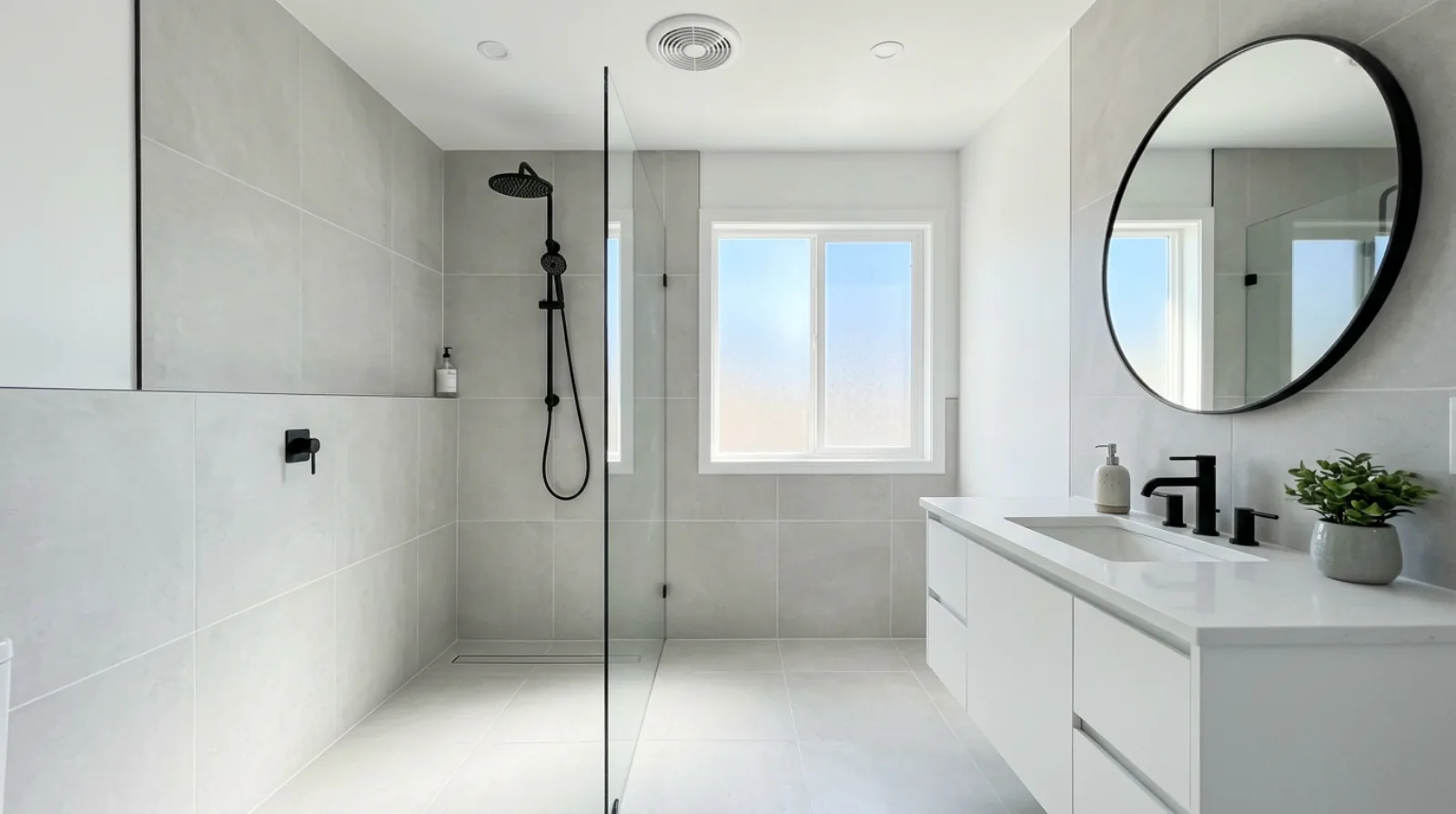
In short, A bathroom renovation in a Surrey house can need three City of Surrey permits: an interior renovation building permit, a plumbing permit under Plumbing Bylaw No. 6569, and an electrical permit, which Surrey issues to a licensed electrical contractor or, for work at the owner's residence, as a homeowner electrical installation permit. Replacing fixtures and repairing leaks need no plumbing permit. The BC Building Code 2024 requires a bathroom exhaust fan of at least 23 L/s intermittent or 9 L/s continuous (Article 9.32.3.6) and a waterproof finish to about 6 ft in a shower stall (Article 9.29.2.1).
A bathroom renovation in Surrey can need three permits, and the City of Surrey issues all three: a building permit for the renovation, a plumbing permit for new drain and supply lines, and an electrical permit for wiring, lights and the fan. In Abbotsford, by comparison, electrical permits come from Technical Safety BC. This post explains when each permit applies in Surrey and South Surrey, the two BC Building Code rules that shape every bathroom, and the inspections that come before the tile. We read the City's pages and the code on 13 November 2026.
The building permit
Surrey's Interior Renovation Permit page opens with one sentence: "You need building permit for an interior renovation project in a single family dwelling or detached home." The Surrey Building Bylaw, 2012, No. 17850, backs this up. Section 21 says every owner must obtain a permit before carrying out any construction, and the bylaw defines construction as work by which a building is "erected, repaired, altered, renovated, added to, installed, demolished, removed or moved". The consolidation we read runs to Bylaw 22145 of October 5, 2026.
Surrey's bylaw has no list of renovation work that is exempt from a permit, like the one in Abbotsford's bylaw. Its only general exemption, in section 7, is for buildings exempted by the BC Building Code itself. So in Surrey we treat a bathroom renovation as permitted work and ask the City before treating any part of it as exempt. Our post on renovation permits in Abbotsford shows how the other city draws the line.
The renovation permit asks for the application form, an owner authorization form if someone else applies, a current title search, and one set of plans with the site plan, floor plans and construction details. The page adds that most interior renovations involve some structural work, and where structural elements change, sealed structural drawings and schedules from a Registered Professional may be needed. An enlarged or added window or door needs an elevation drawing and a wall cross-section. The fee is a flat amount based on the cost of work, collected during review, with the balance due before the permit is issued.
The plumbing permit
Surrey's Plumbing Permits page says a plumbing permit is required under the Plumbing Bylaw, No. 6569. The same page lists the work that needs no plumbing permit:
- Repairing leaks in pipes.
- Replacing a plumbing fixture, as long as the new fixture and its installation meet Surrey's plumbing and building bylaws and the plumbing code.
- Clearing a stoppage in a sewer or water pipe for cleanout, without cutting any sewer or drain pipe.
So a new toilet in the same place, or a new vanity tap, needs no plumbing permit. Moving the toilet, turning a tub into a walk-in shower with a new drain, adding a second sink or running new supply lines is plumbing work, and it needs the permit. The page says issued plumbing permits are owned by the registered trade qualified plumbing contractor, and residential fees are a flat amount for the first fixture plus an amount for each extra fixture.
The BC Building Code ties this together. Article 9.31.2.1 says the construction, extension, alteration, renewal or repair of a plumbing system must conform to Part 7, the plumbing part of the code. A shower moved by 3 ft is plumbing alteration under that article, even if the room looks the same size on the plan.
The electrical permit
Surrey runs its own electrical permits. Its page on Homeowner Electrical Installation Permits describes a permit for performing electrical work at your residence. The application has an eligibility checklist in Section E, and the page says that if you answer yes to any of those questions, you are not eligible. The other route, in the page's words, is to hire a licensed electrical contractor.
Two details from that page affect a bathroom. A homeowner permit is active for 180 days after it is issued, and the first inspection adds another 180 days. Without an inspection request within 180 days, the permit expires. And some equipment must be installed by a registered electrical contractor, so the page tells owners to check the manufacturer's instructions first. A heated floor, a new circuit for a steam shower or a jetted tub are the items we check.
When the bathroom is part of a bigger job
A bathroom is often one room in a larger renovation, and the larger job changes the paperwork. Surrey's homeowner electrical page says that if the project includes an HVAC system, an EV charger or an electrical service upgrade, the application must also include a Demand Load Calculation form, which shows the house's electrical service can carry the new load. A heat pump added during the same renovation is the usual trigger.
Surrey's renovation page also says the approved drawing set must be on site at all times during construction. On a job with several trades, we keep one printed set in the house for the inspector and give each trade the sheets for their own work, so no one builds from an old copy.
The exhaust fan rule
Article 9.32.3.6 of the BC Building Code 2024 requires an exhaust fan in every bathroom or water-closet room, unless the room is served by the house's principal ventilation exhaust fan. Table 9.32.3.6 sets the minimum air flow for a bathroom fan at 23 L/s for a fan that runs when needed, or 9 L/s for one that runs all the time. The rating is measured at 50 Pa of external static pressure, which is the resistance a fan meets when it pushes air through a real duct.
That last detail decides the fan you buy. A fan rated at a high number with no duct attached can fall below 23 L/s once it pushes through a long duct run to an outside wall. We size the fan to the duct route, and plan the route before the ceiling is opened, because a short, straight duct to the outside keeps the fan at or above its rated air flow.
The waterproof finish rule
Article 9.29.2.1 sets how high the waterproof finish must go around water:
- At least about 6 ft above the floor in a shower stall.
- At least about 4 ft above the rim of a bathtub equipped with a shower.
- At least about 15.5 in above the rim of a bathtub without a shower.
Article 9.29.2.2 lists what counts as a waterproof finish: ceramic, plastic or metal tile, sheet vinyl, tempered hardboard, laminated thermosetting decorative sheets, or linoleum. Those are the minimums. In a walk-in shower with tile to the ceiling, we put a waterproof membrane behind the tile across the whole wet area, because grout and tile shed water at the surface and the wall behind them still has to stay dry.
If grab bars go in, Article 9.31.2.3 says they must resist a load of at least 1.3 kN applied vertically or horizontally. That load needs solid blocking in the wall behind the bar, which is easy to add while the wall is open and hard to add after the tile is on. We add the blocking during the rough-in whether or not the bars go in on day one.
- 01
Plan and apply
Interior renovation permit, plumbing permit and electrical permit, all from the City of Surrey.
- 02
Demolition and rough-in
Old finishes out; new drains, supply lines, wiring, fan duct and grab bar blocking in.
- 03
Rough-in inspection
Rough plumbing and rough wiring inspected before insulation or finishes cover them.
- 04
Insulation and membrane
Insulation and vapour barrier inspected before finishes; waterproofing behind the tile.
- 05
Tile and fixtures
Waterproof finish to about 6 ft in a shower stall; fan of at least 23 L/s intermittent.
- 06
Final inspections
Building, plumbing and electrical finals before the room is used.
Source: City of Surrey Building Bylaw No. 17850, section 65; BC Building Code 2024, Articles 9.29.2.1 and 9.32.3.6
Inspections before the walls close
Section 65 of Surrey's Building Bylaw lists the stages at which the City inspects. Two matter in a bathroom. The first comes when the framing, rough wiring, gas venting and rough plumbing are done, before insulation or any finish conceals them. The second comes when the insulation and vapour barrier are installed, before the finish that covers them. The bylaw says no work listed in section 65 may be concealed until the building official has accepted it, and section 66 asks for at least 24 hours' notice, one working day, when booking an inspection on a simple building.
This step can delay the whole job. The tile setter is booked, but the rough-in inspection has not passed, so the walls cannot be boarded. We book the inspection the day the rough-in is finished and hold the tile setter's start until the City has signed off.
Before you start in Surrey
Three things are worth settling before demolition. Confirm with the City which permits your plan needs, with a sketch of what moves. Decide who holds the plumbing and electrical permits, since each permit belongs to the person or contractor who will do that work. And check your home insurance, because a policy can change once a renovation starts; our post on insurance during a renovation explains what to ask.
Frequently asked
Do I need a permit to renovate a bathroom in Surrey?
Usually yes. Surrey's Interior Renovation Permit page says you need a building permit for an interior renovation in a single family dwelling, and the Building Bylaw defines construction to include renovating and altering. Plumbing and electrical work in the bathroom need their own permits, which Surrey also issues.
Can I replace a toilet or a vanity tap in Surrey without a plumbing permit?
Yes. Surrey's Plumbing Permits page says no permit is needed to repair a leak or to replace a plumbing fixture, as long as the new fixture and its installation meet Surrey's bylaws and the plumbing code. Moving a fixture or running new drain and supply lines does need a plumbing permit.
Who can get a plumbing permit in Surrey?
Surrey's page says issued plumbing permits are owned by the registered trade qualified plumbing contractor, and applicants register with the City's plumbing team before using the online portal. Ask the City about your own case before you plan to do plumbing work yourself.
Can I do the electrical work in my own Surrey bathroom?
Possibly, with a homeowner electrical installation permit from the City of Surrey for work at your residence. The application has an eligibility checklist, and a yes to any of its questions means you are not eligible. The other route is to hire a licensed electrical contractor.
How big does a bathroom exhaust fan have to be in BC?
Article 9.32.3.6 of the BC Building Code 2024 requires an exhaust fan of at least 23 L/s for intermittent use, or 9 L/s for continuous use, in every bathroom, unless the room is served by the house's principal ventilation exhaust fan. The rating is measured at 50 Pa of external static pressure.
How high does shower tile have to go under the BC Building Code?
Article 9.29.2.1 requires a waterproof finish at least about 6 ft above the floor in a shower stall, about 4 ft above the rim of a bathtub with a shower, and about 15.5 in above the rim of a bathtub without one. Article 9.29.2.2 lists the materials that count, including ceramic, plastic or metal tile.
When does the inspector see a Surrey bathroom renovation?
Before the walls are closed. Surrey's Building Bylaw lists an inspection after rough wiring and rough plumbing are in, before insulation or finishes cover them, and another after insulation and vapour barrier, before finishes. Work listed for inspection may not be covered until the City has accepted it.
If you live in Langley, the rules there differ, and our post on bathroom renovation permits in Langley covers the Township. We renovate bathrooms and whole homes in Surrey, South Surrey and White Rock, and our Surrey page and renovations service show the work. To plan a Surrey bathroom with the permits sorted from the start, book a free consultation. This post is general information based on the City's pages and the code on the date above. Check the City's current requirements before you start.
Sources
- City of Surrey, Interior Renovation Permit (read 13 November 2026)
- City of Surrey, Surrey Building Bylaw, 2012, No. 17850, consolidated to Bylaw 22145, October 5, 2026
- City of Surrey, Plumbing Permits (read 13 November 2026)
- City of Surrey, Homeowner Electrical Installation Permits (read 13 November 2026)
- Province of BC, British Columbia Building Code 2024, Division B, Articles 9.29.2.1, 9.29.2.2, 9.31.2.1, 9.31.2.3 and 9.32.3.6 (Revision 2)
Written by

Founder & President
Mark Van Ek is the founder and president of Venture Pacific, bringing 40+ years of construction experience in Metro Vancouver and the Fraser Valley, a 2026 HAVAN Award and several Georgie and HAVAN finalist placements to every custom home, renovation, and multiplex project.
Full profile