
How a strata council actually works in a small multiplex
In a strata with fewer than four lots, there's no election, every owner sits on the council automatically. That single rule shapes how fast a triplex or fourplex strata can move, and how much a disagreement can slow it down.
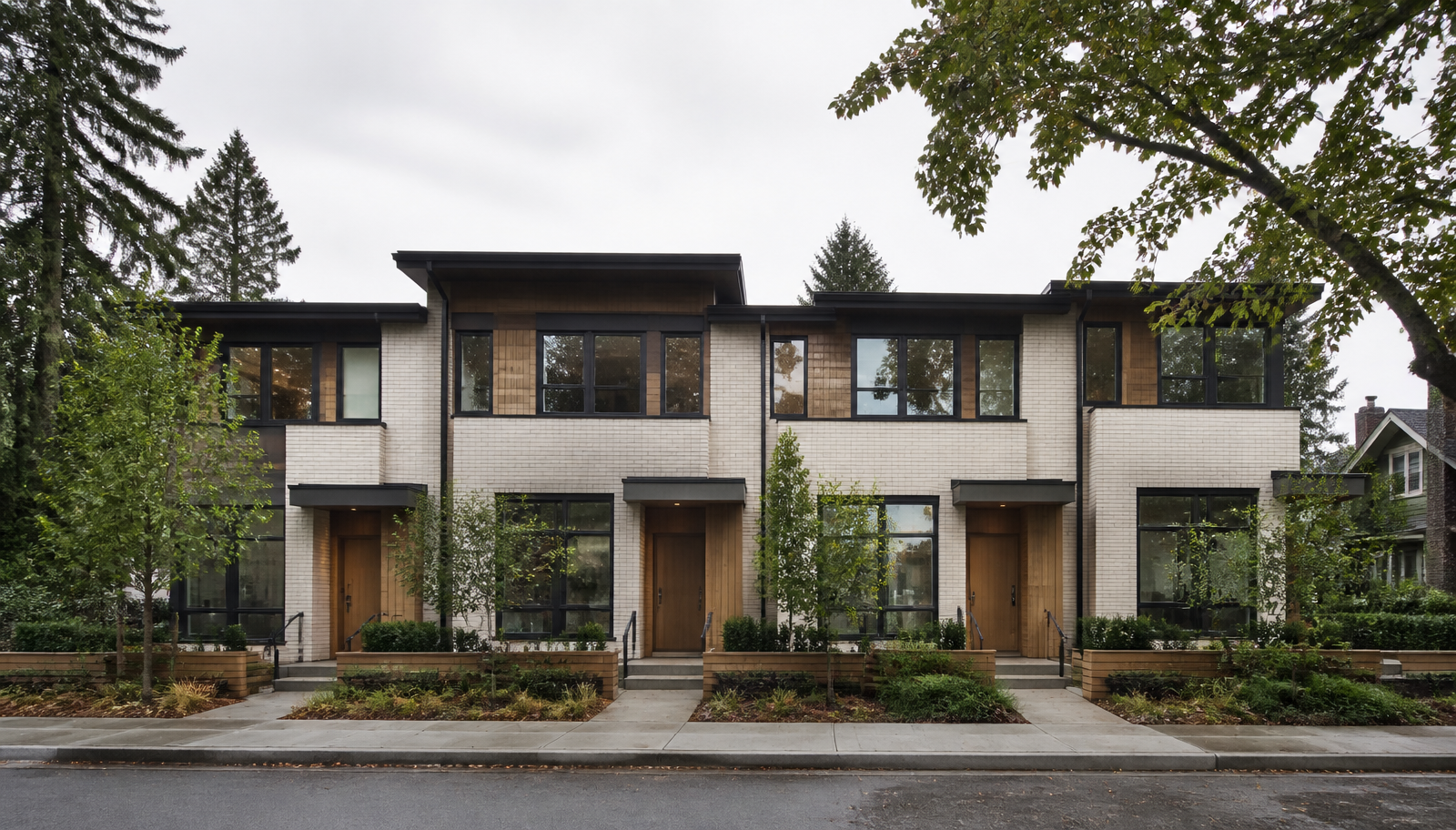
In short, In a BC strata corporation with fewer than four lots, all owners sit on the strata council automatically with no election required, under Section 9(2) of the Strata Property Act's Schedule of Standard Bylaws. This applies directly to most triplex and fourplex multiplex stratas, meaning governance decisions are made by the owners themselves rather than an elected subset, which speeds up simple decisions but leaves fewer neutral votes when owners disagree.
Almost nobody explains this before someone buys into a new triplex or fourplex: there's no strata council election. Buy a unit in a three-owner strata and you don't elect a council, you become one-third of it, whether or not you wanted the job.
The rule: fewer than four lots, every owner is on council
Under Section 9(2) of the Strata Property Act's Schedule of Standard Bylaws, if a strata corporation has fewer than four strata lots or fewer than four owners, all the owners are on the council. There's no election, no nomination process, no opting out. A triplex strata's council is its three owners. A fourplex right at the threshold works the same way if it has fewer than four owners, though most fourplex stratas, once they cross to four separately owned units, move into the standard election process that larger stratas follow.
This isn't a quirky exception, it's the default rule for the majority of new Metro Vancouver multiplexes, since most SSMUH and municipal multiplex projects land exactly at three or four homes.
Why this makes small decisions move faster
In a strata where every owner already sits on the council, there's no gap between "the ownership wants this" and "the council approved this." A majority of three, meaning two owners agreeing, is enough to pass most routine council decisions. There's no waiting for an annual general meeting to seat new council members, and no procedural distance between the people living in the building and the people making decisions about it.
That speed is a genuine advantage for the day-to-day running of a small building, approving a landscaping contractor, agreeing on a repair timeline, signing off on routine maintenance, decisions a larger strata's formal process can take weeks to move through a small strata's owner-council in a single conversation.
Why it can also stall harder
The same structure that speeds up agreement removes the safety valve larger stratas have for genuine disagreement. A large condo strata with a contentious issue can be settled by dozens of relatively neutral owners voting at a general meeting. A triplex owner in a real standoff with a neighbour is negotiating directly, one-on-one or two-against-one, with no larger, disinterested pool of votes to break the tie.
That risk is worth naming honestly rather than glossing over. A small strata works well when the owners generally get along and agree on priorities. It works poorly when they don't, because there's genuinely nowhere else for a disagreement to go.
The legal structure underneath the council
Regardless of size, creating a strata means depositing a strata plan at the land title office under Part 14 of BC's Strata Property Act, subdividing the building into separately titled homes plus a shared interest in common property, the roof, the exterior walls, the foundation, and any shared systems. A small strata follows the exact same legal creation process as a much larger one; the only thing that changes at the small end is how the council itself gets formed.
The council, meaning the owners, remains directly responsible for the strata corporation's finances: collecting strata fees, maintaining a contingency reserve fund for future repairs, and calling a general meeting to pass a resolution on any major expenditure affecting common property, like a full envelope replacement. Many small stratas hire a professional management company to handle the administrative load, but the legal decision-making authority stays with the owner-council either way.
What this means before you buy into, or build, a small strata
For a buyer, it means understanding that a small strata isn't a lighter-weight version of a large one, it's a direct governance partnership with two or three neighbours, for as long as everyone owns their unit. For a landowner developing a multiplex, it means the unit count decision carries a governance consequence most homeowners never think to ask about: three or four owners will be running this building together, with no larger, neutral pool of votes to fall back on.
Related guides: strata vs freehold multiplex ownership explained, which covers the separate question of strata versus fee-simple title, and strata or rental, choosing the tenure for your multiplex.
Frequently asked
How many owners sit on a strata council in a triplex or fourplex?
All of them. Under Section 9(2) of the Strata Property Act's Schedule of Standard Bylaws, if a strata corporation has fewer than four lots or fewer than four owners, every owner sits on the council automatically, with no election. A triplex strata council is its three owners; a fourplex strata council is its four.
Do small strata councils in BC still hold elections?
No, not when the strata has fewer than four lots or fewer than four owners. The Strata Property Act's Schedule of Standard Bylaws removes the election step entirely for stratas that small, since there's no larger pool of owners to choose a council from in the first place, every owner is automatically the council.
What happens when two owners in a small strata council disagree?
Decisions typically require a majority, so in a triplex with three owners, two agreeing is already enough to pass most council decisions, which can move faster than a larger strata's formal council process. The tradeoff is that a genuine three-way split, or a persistent disagreement between two owners in a fourplex's even-numbered council, has fewer neutral voices available to break the deadlock than a larger strata would.
Does a small multiplex strata still need a strata plan and common property?
Yes. Creating any strata, regardless of size, means depositing a strata plan at the land title office under Part 14 of BC's Strata Property Act, which subdivides the building into separately titled homes plus a shared interest in common property like the roof, foundation, and shared walls. A three or four-unit strata follows the same legal creation process as a much larger one; only the council composition rule changes at the small end.
Who manages a small multiplex strata's finances?
The owners themselves, acting as the council, are directly responsible for managing the strata corporation's finances, including collecting strata fees, maintaining a contingency reserve fund, and deciding on any special levy for major repairs. Many small stratas hire a professional strata management company to handle the administrative work, but the legal decision-making authority still sits with the owner-council.
Can a small strata council decide on major repairs without a full owners' vote?
Routine council decisions can generally be made by the council itself, but major expenditures affecting common property, like a full building envelope replacement, typically require a resolution passed at a general meeting under the Strata Property Act, not just a council-level decision. In a small strata, the council and the ownership are largely the same people, so the practical difference is mostly procedural, but the formal vote still has to happen.
Is a small strata council easier or harder to run than a large one?
Both, depending on the situation. A small strata council moves faster on routine, agreed-upon decisions since there's no election process and every owner already has a direct say. It can also stall harder on genuine disagreements, since there's no larger pool of neutral owners to outvote a persistent dispute the way a larger strata's council can.
Does the small strata council rule apply to a Metro Vancouver multiplex specifically?
Yes. Any BC strata corporation with fewer than four lots falls under this rule, which covers the vast majority of triplex and fourplex multiplexes built under Metro Vancouver's SSMUH and municipal multiplex zoning, since most of these projects are exactly three or four homes. A fourplex that reaches four separately titled owners moves out of this automatic-council rule and into the standard election process a larger strata follows, so the exact unit count and ownership split on a specific project decide which set of bylaws applies.
Wondering what your lot could become? Book a free consultation with Venture Pacific to find out how many units you could build on your property, whether it's a feasible project, and how our GP/LP partnership structure works.
Written by

Acquisitions and Development
Trent Praski leads investment and development at Venture Pacific, sourcing missing-middle opportunities across Metro Vancouver and the Fraser Valley and structuring transparent homeowner and investor partnerships.
Full profile