
Heritage Home Restoration in Vancouver: What Owners Should Know
Restoring a character or heritage home means balancing what should be preserved against what needs to be replaced. Here is how owners in Vancouver approach that decision without losing the house or the budget.
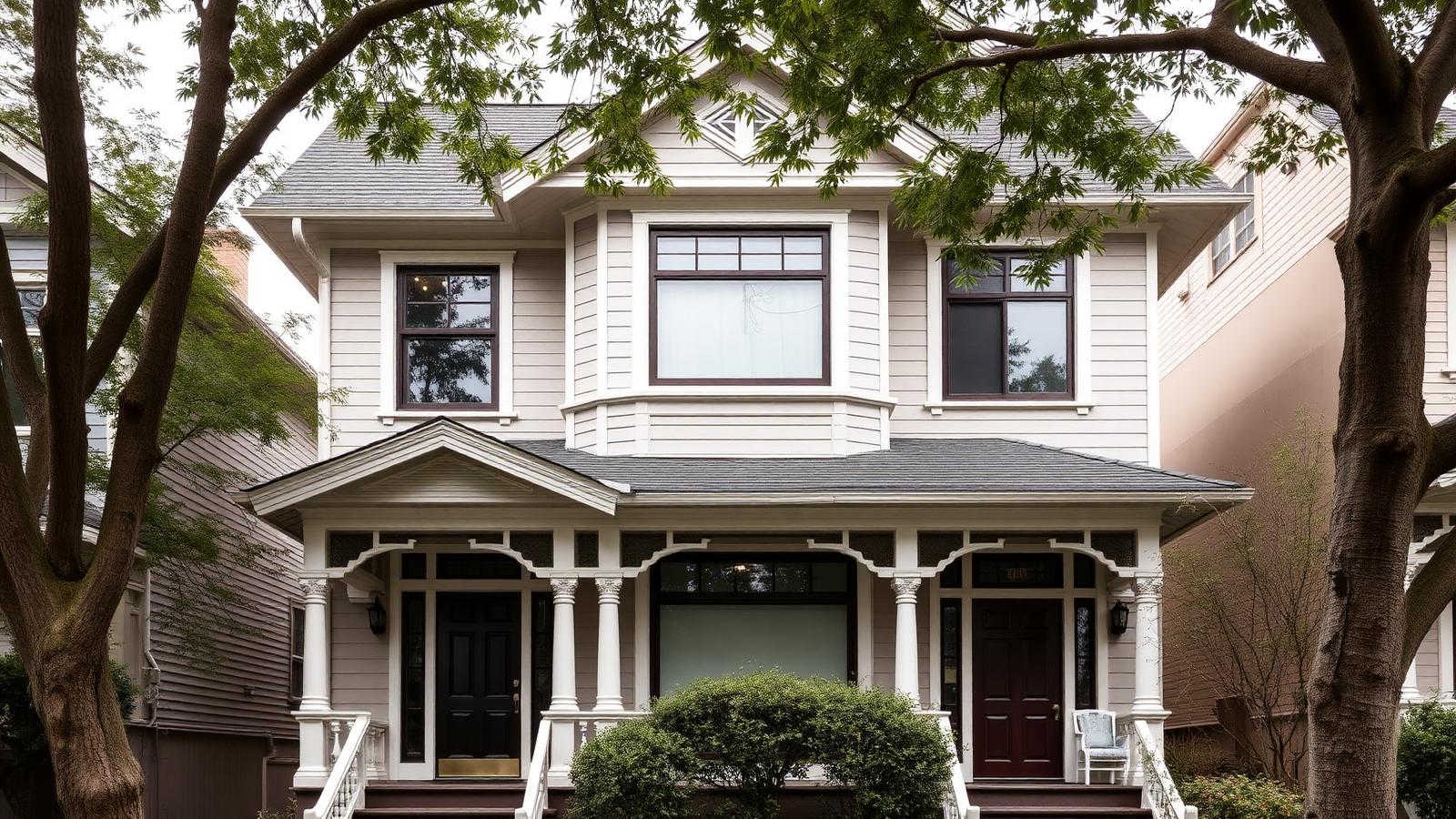
In short, Heritage home restoration in Vancouver combines conservation of significant exterior and interior features with modern structural, seismic, envelope, and mechanical upgrades. Costs are driven by hidden conditions, hazardous materials, custom millwork, and the approvals process for protected properties.
Older homes in Vancouver were built with materials that are hard to buy today, by people who expected the house to last. That is the argument for restoring one. The argument against is everything hiding behind the plaster.
Good restoration work is mostly about telling those two things apart early.
First, find out what you own
Character home and heritage home are not the same. A character home is simply older, usually pre-1940, with the detailing of its era. A heritage home is listed on a register or formally designated, which adds a review process to exterior changes.
That status determines how much flexibility you have and what the approval path looks like. It is a one-afternoon question, and it should be answered before design starts.
Decide what is actually significant
Not every old thing in an old house is worth saving. The items that usually carry the character are narrower than owners expect.
- The front elevation: porch, columns, roof lines, and the rhythm of the windows.
- Original wood windows, where the sashes and glass are intact enough to restore.
- Interior millwork: baseboards, casings, staircases, and built-ins.
- Fireplaces, leaded glass, and original hardwood, where present.
Everything else, the wiring, the plumbing, the insulation, the roof, the foundation, is a system that has reached the end of its life and should be replaced without sentiment.
The conditions that drive the budget
Restoration budgets move for reasons that have little to do with taste.
- Hazardous materials. Pre-1990 homes require testing, and asbestos or lead findings add abatement scope before demolition can proceed.
- Structure. Post and beam floors that have sagged, undersized joists, and foundations poured without rebar.
- Seismic. Bolting the house to its foundation and bracing cripple walls is standard practice in this region.
- Envelope. Making an old wall assembly airtight and insulated without trapping moisture takes design attention, not just more insulation.
- Custom work. Matching a profile that has not been milled since 1925 means having knives made.
Sequence matters more than in new construction
On a new build, the order is known. On a restoration, opening the house changes the scope, so the schedule has to allow for discovery. We plan investigative openings early, before finishes are ordered, so the surprises land while there is still room to respond.
This is also why the contract structure matters. Restorations sit uncomfortably in a rigid fixed price, because either the contingency is enormous or the change orders are constant. We explained the tradeoff in the truth about cost plus contracts.
Restoration paired with a lift
Many heritage projects include a house lift, because the original foundation is at the end of its life and the basement is unusable. Doing both at once is disruptive but efficient: one mobilization, one permit process, and one round of finishing.
What owners tell us afterward
The comment we hear most is that the house feels solid in a way a new one does not, and that the parts they fought hardest to keep, the staircase, the front porch, the original glass, are the parts guests notice.
If you own a character or heritage home and want an honest assessment of what it needs, book a free consultation and we will walk through it with you.
Frequently asked
Is my character home legally protected?
Not necessarily. Many older Vancouver homes are character homes without any formal heritage designation, which leaves owners more flexibility. Homes on a heritage register or with a designation carry additional review. Confirming your property's status is the first step.
What usually costs the most in a heritage restoration?
The parts nobody sees: structural repairs, foundations, envelope work, and hazardous material abatement. Custom millwork and window restoration add up too, but they are at least visible and can be phased.
Can a heritage home be brought up to modern energy performance?
Substantially, yes. Insulation strategies have to respect how the original assemblies dry, so the approach differs from a new build, but airtightness, insulation, and mechanical upgrades all deliver real comfort gains in older homes.
Written by

Founder & President
Mark Van Ek is the founder and president of Venture Pacific, bringing more than 40 years of Metro Vancouver and the Fraser Valley construction management experience and multiple Georgie and HAVAN awards to every custom home, renovation, and multiplex project.
Full profile