
Where do you live while your lot is redeveloped?
If you're partnering on a multiplex on the lot you live on, you'll need somewhere to stay during construction. Here are the real options, the timeline that sets how long, and the costs that drive each one.
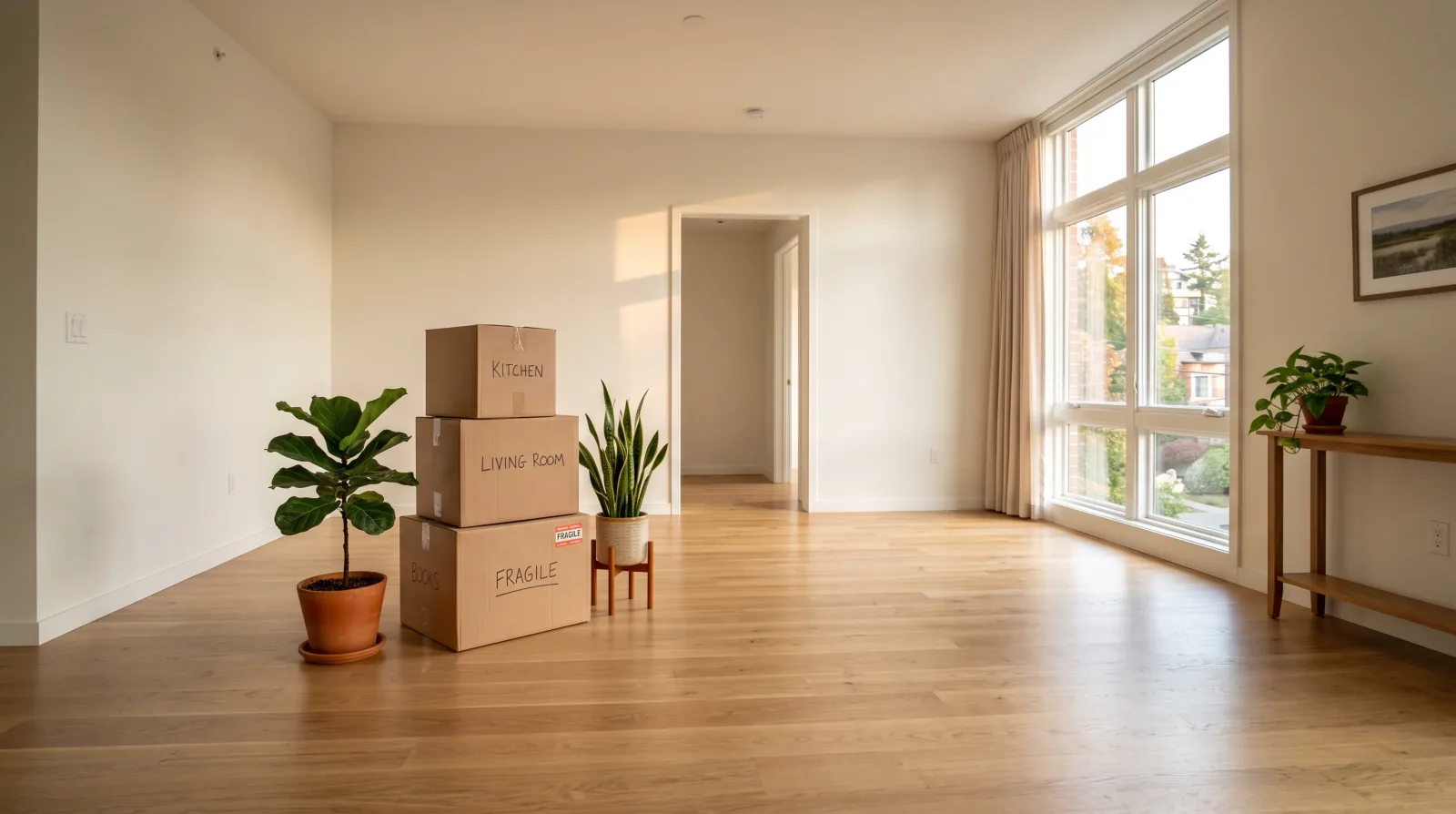
In short, Homeowners who live on a lot they're redeveloping into a multiplex must vacate for the full construction period, you cannot live on an active site, and there is no version where you stay in the house through framing. The main interim-housing options are renting nearby, staying with family, or a short-term furnished rental, and many owners plan a staged move back into a retained unit in the finished building. How long you're out depends on unit count, lot conditions, and weather. In a GP/LP partnership, who carries the relocation cost should be settled in the partnership agreement before construction starts.
We've sat across the table from homeowners who've worked through the zoning, understood the partnership, and accepted the construction timeline, and then gone quiet on one question: where do I actually live while my house is gone? For someone who's lived in the same Marpole house for two decades, that's not a logistics problem. It's the kids' school, the commute, the dog, the whole shape of daily life.
It's also completely solvable, as long as you plan for it before construction starts instead of scrambling once the excavator shows up. Here are the real options, how long you're likely to be out, and what drives the choice between them.
Yes, you do have to move out
Let's clear up the basic question first. If your project means tearing down the existing house to build a multiplex, which most do, then you have to vacate. The lot gets cleared, and an active construction site is no place to live. There's no version where you stay in the house through framing.
This is where a multiplex differs from adding a laneway house behind a home you keep living in. With a multiplex, the main house usually comes down, services get disconnected, the ground is excavated, and cranes and crews take over the whole lot. You can't carve out a corner to live in while that happens, it isn't safe and it isn't permitted. Plan on the entire lot being off-limits for the duration.
So the real questions aren't whether you move, but where, for how long, and who pays. The "how long" depends on the project: a clean fourplex on a flat Killarney lot moves faster than a six- or eight-unit build on a sloped North Vancouver site that needs retaining work. We give every partner a project-specific schedule so you can plan around real milestones rather than a guess.
How long you'll really be out, the phases that set the clock
Owners want a single number, and we won't invent one, because the honest answer is a range that depends on your lot and the project. But you can plan intelligently if you understand the phases that stack up between moving out and moving back. Vacating comes first, then demolition and site clearing, then excavation and foundations, then framing, then the envelope, then mechanical and interior work, then inspections and occupancy. Each phase has to finish before the next can really begin.
Two things stretch that clock more than owners expect. The first is the lot itself, a sloped site, soft soils, or a lot that needs retaining walls or extra drainage adds real time before anything vertical goes up. The second is Metro Vancouver and the Fraser Valley weather: heavy rain during excavation and foundation work can slow a site, and our region gets plenty of it. A build that starts in the wet season carries risk a summer start doesn't. We schedule around that where we can, and we tell you where we can't.
The practical takeaway is to plan your interim housing against the schedule we give you, plus a cushion at the end. The last stretch, final inspections, deficiencies, and the occupancy permit, is the phase most likely to move by a few weeks, and it's the phase where an owner counting on a hard move-in date gets caught. Build a buffer in and you avoid paying for two homes at once or, worse, having nowhere to go.
Owners don't get burned by the eighteen months they planned for. They get burned by the three weeks at the end they didn't.
Option one: rent nearby and stay in your neighbourhood
The most common choice is to rent something close by. The appeal is obvious, you keep your routines, your kids stay in the same school, and you're a short drive from the site if you want to watch progress. In a neighbourhood like Renfrew-Collingwood or Kitsilano, staying local matters to people who've built their lives there.
The trade-off is cost and the Metro Vancouver and the Fraser Valley rental market, which is tight and not cheap. A family-sized rental for the duration of a build is a real expense, and it competes for the same dollars as the project. That's exactly why it needs to be in the financial plan from the start, not treated as an afterthought.
There's a practical wrinkle here too: start your search early. In a tight market, the right-sized rental in the right catchment doesn't appear on demand, and lining up a lease to begin the week you vacate takes lead time. We flag the projected move-out window as soon as the schedule firms up so you're searching with a runway, not scrambling because demolition is booked for next month.
Option two: stay with family
Some homeowners move in with family for the duration. If you've got a relative with space in Burnaby or Coquitlam, this can take the single biggest interim-housing cost off the table, which changes the math of the whole project. It frees up capital that would otherwise go to rent.
It also asks a lot of everyone involved, and a multiplex build isn't a two-week stay. We mention it not because it suits everyone, but because for the right family it's the option that most improves the project's numbers. Worth an honest conversation before you rule it in or out.
Option three: a furnished short-term bridge
A furnished short-term rental rarely makes sense as your home for a whole build, the nightly rates stack up and beat a conventional lease only over very short stays. But it earns its place as a bridge. Two moments come up often: the gap between leaving your old home and a longer lease starting, and the tail end of the project, when you'd rather not commit to another six-month lease just to cover the last few weeks before you move into a finished unit.
Used that way, a furnished unit keeps you from being trapped between a lease that ended and a home that isn't quite ready. We plan those bridges into the relocation picture so you're not booking week to week under pressure while the final inspections clear. It's a tool for the edges of the timeline, not the middle of it.
Option four: a staged move into the finished building
Here's the option a lot of homeowners don't realize is on the table: keep one of the new units and move into the finished multiplex. This is exactly what the provincial small-scale multi-unit housing rules opened up, replacing one house with several homes on the same lot, and many of the landowners we partner with don't want to leave their neighbourhood at all. They want a brand-new, low-maintenance home on the same piece of land, and a multiplex lets them have exactly that.
In this scenario you live elsewhere only during construction, then move into a new home on your own lot. Whether it pencils out depends on the project structure, how many units there are, and the equity math. It's one of the first things a Feasibility & Equity Review tests, because for a lot of homeowners it's the whole reason to develop rather than sell.
The staged move does need sequencing, and it's worth knowing what that looks like. You still have to be out for the full build, you don't move into the retained unit until it has passed its inspections and can be legally occupied. So even on this path you'll spend the construction period in one of the options above, then make a final, permanent move into the completed home. The reward is that the last move is the one that counts: back onto your own land, into a home that's yours to keep.
Who carries the relocation cost, settle it in the agreement
Here's the part that turns a housing question into a partnership question. In a GP/LP structure, interim housing is a real cost, and it needs to be assigned to someone clearly and in writing. Does it come out of the project budget? Do you carry it personally and recover it from your equity at the end? Is it shared?
There's no single right answer, but there's a very wrong way to handle it: leaving it vague until you're three months into construction and the rent bill is straining the household. We put relocation on the table during the feasibility and partnership-structuring stage, write it into the agreement, and make sure everyone knows who carries what. Surprise is the enemy of a good partnership.
The cost isn't only rent, either. There's the move itself, possibly two moves if you bridge the end, plus storage for the furniture that won't fit in a smaller interim place, and the deposits and utility setups that come with any new address. None of these are large next to the project, but left off the plan they arrive as unwelcome surprises. We'd rather name them up front so they sit in the budget where they belong.
If you're weighing whether to develop the lot you live on, the housing question deserves a real answer alongside the financial one. A Feasibility & Equity Review is where we work through both, the numbers and the practical reality of where you'll be while your Metro Vancouver and the Fraser Valley lot becomes something new. Bring us your situation and we'll map the options against your specific project.
Frequently asked
Do I have to move out to redevelop my Vancouver lot into a multiplex?
If you're tearing down the existing house to build a multiplex, yes, the lot has to be cleared and you can't live on an active construction site. The real questions are where you go, for how long, and who carries the cost, which is something we settle in the partnership agreement before construction starts.
Can I get one of the new units when the multiplex is finished?
Often, yes. Because SSMUH lets a homeowner replace one house with several homes on the same lot, many of the owners we partner with keep a unit in the finished building and stay in their neighbourhood, say, in Renfrew-Collingwood or Marpole, rather than leaving the area. Whether that works depends on the project structure and the numbers, which is part of what a Feasibility & Equity Review sorts out.
How long will I be out of the house?
It depends on unit count, lot conditions, and weather, so we don't quote a guaranteed number. A straightforward fourplex on a flat Killarney lot moves faster than a six- or eight-unit project on a sloped Burnaby site that needs retaining work. We give every partner a project-specific schedule so you can plan interim housing around real milestones, not a guess.
Should I sign a long lease or go month-to-month while my Vancouver lot is built out?
Match the lease to the schedule we give you, with a cushion. A multiplex build runs many months, so a short lease means moving twice, but a rigid long lease can trap you paying rent past completion. In Vancouver's tight rental market we usually suggest a fixed term aligned to the projected finish plus a buffer, since finishing and occupancy permits can shift by weeks.
Is a furnished short-term rental a realistic option during construction?
For a few weeks it can be, but for a full multiplex build the nightly rates add up fast and rarely beat a conventional lease. Furnished units make more sense as a bridge, covering a gap between selling or leaving your old home and a longer rental starting, or at the very end while you wait to move into a retained unit. We plan those bridges so you're not booking week to week under pressure.
Can I stay in the house while only part of the lot is built on?
Almost never for a multiplex. Unlike adding a single laneway house behind an occupied home, a multiplex usually replaces the main house, so the whole lot becomes an active site with excavation, cranes, and services shut off. Living beside that isn't safe or permitted. If your project genuinely allowed a phased approach, we'd tell you, but plan on vacating the whole lot.
Who pays for my interim housing in a GP/LP partnership?
There's no single default, it can come out of the project budget, be carried by you and recovered from your equity at the end, or be shared. What matters is that it's decided in writing before construction, not left vague. We put relocation on the table during feasibility and partnership structuring so nobody is surprised three months into the build.
Wondering what your lot could become? Book a free consultation to find out how many units you could build on your property, whether it's a feasible project, and how our GP/LP partnership structure works.
Written by

Real Estate Developer
Trent Praski leads investment and development at Venture Pacific, sourcing missing-middle opportunities across Metro Vancouver and the Fraser Valley and structuring transparent homeowner and investor partnerships.
Full profile