
What is your land worth to a developer?
A Vancouver lot is worth more to a developer than its listing price, because a developer values what can be built on it. Here is how that calculation actually works, and why no honest answer comes without a property-specific analysis.
In short, Explains how a Metro Vancouver and the Fraser Valley multiplex developer values residential land, the residual land value method, the inputs that drive it (zoning and unit count, lot size and shape, servicing, soils and slope, frequent-transit proximity, build cost, and sale value), why highest-and-best-use governs the number, and why a real figure requires a property-specific feasibility study. Frames a GP/LP partnership as an alternative to selling outright.
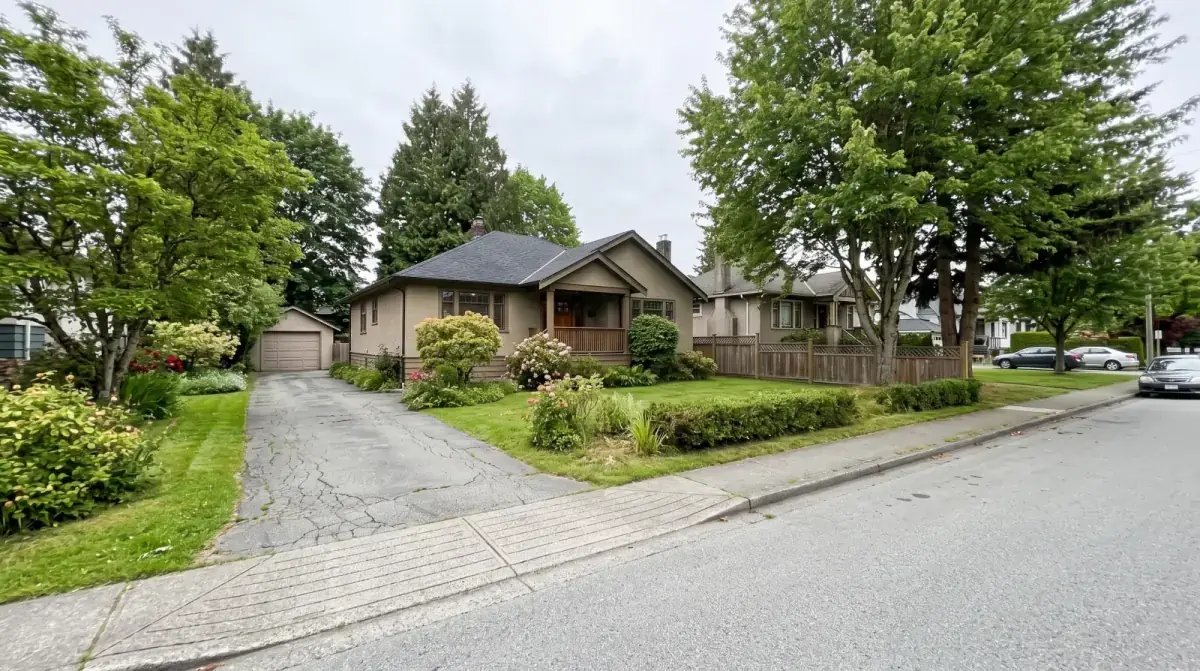
A homeowner in Renfrew-Collingwood called us last spring with a printout from a real estate portal. His lot, the site said, was worth a certain amount. A developer up the street had offered him noticeably more, and he wanted to know whether he was being played or whether the portal was simply wrong. The answer was neither. The two numbers were measuring different things.
The portal valued his lot the way a family looking for a house would, as land with a tear-down on it, priced against what similar houses sold for nearby. The developer valued it as a site for four homes instead of one. That gap, between what a lot is worth to a resident and what it's worth to someone who can build on it, is the whole subject of this post.
A developer values the building you don't see yet
When we look at a lot in Vancouver or Burnaby, we aren't really pricing the dirt. We're pricing what the dirt allows. Since BC's small-scale multi-unit housing rules took effect, most residential lots across the province permit three to six units where they used to allow one or two. The Government of BC sets the floor: lots up to roughly 280 square metres must allow at least three units, larger lots at least four, and larger lots within about 400 metres of frequent transit can support up to six.
That shift changed the math under every single-family lot in the city. A site that could legally hold one house can now hold a fourplex, sometimes with a coach house on the lane. The sellable floor area roughly multiplies, and with it the income the land can produce. A developer who can deliver that is willing to pay for the potential, not just the existing house.
But potential is not the same as value. Plenty of lots permit four units and still don't pencil out as a project, because the cost to build those units eats the upside. This is where the real calculation begins.
Highest and best use is the frame behind every number
Before a developer works out a single figure, there's a question sitting underneath it: what is the most valuable thing that can legally, physically, and financially be built on this lot? Appraisers call that highest and best use, and it's the frame every land number hangs on. A lot isn't worth what you'd like to build. It's worth what the best realistic project on it can support.
Under the old single-family zoning, highest and best use for most Vancouver lots was one house. The provincial small-scale housing rules moved that line. For a great many lots the best use is now a triplex or fourplex, and for lots near frequent transit it can be a sixplex. When the best use changes, the land value changes with it, not because the lot got bigger, but because the rules let it hold more. This is why a lot that felt fully priced as a single-family site three years ago can be worth more today as a multiplex site, even in a flat housing market.
It cuts the other way too. A lot with a shape, a slope, or a constraint that stops it from reaching the unit count the zoning technically allows has a lower best use than the zoning implies. The rules are the ceiling; the site decides how close you get to it.
The method: working backwards from the finished project
Developers don't price land from the bottom up. We price it from the top down, using what's called residual land value. The logic runs in one direction: start with what the finished multiplex could sell or rent for, subtract everything it costs to get there, and whatever is left is the most the land can justify.
The costs we subtract are real and they stack up: construction (hard costs), design and engineering and permits and financing (soft costs), the carrying cost of time, a contingency for the things that go wrong, and a return that compensates the project's capital for taking on risk. Strip all of that out of the projected end value, and the remainder is residual land value. That's the number a disciplined developer can actually pay for your lot.
Notice what this means. If construction costs climb, or interest rates rise, or the unit count is lower than hoped, the land value falls, even though your lot hasn't changed. The same physical site is worth different amounts in different markets and under different zoning. The dirt is constant; the math around it is not.
How the unit count moves the number more than anything else
Of all the inputs, the one that swings land value hardest on a small lot is how many units the site can actually deliver. Three units, four units, six units, each step adds sellable floor area, and sellable area is the top line the whole residual calculation flows from. This is why we spend so much of a feasibility review on unit yield before we touch cost.
The provincial rules set the permitted count, but permitted and achievable aren't the same thing. A lot might be allowed four units on paper and only design cleanly for three once setbacks, the building envelope, parking, and a protected tree are all accounted for. Or a lot near frequent transit might be allowed six, but its shape or a servicing limit caps the realistic build at four. The gap between what's permitted and what's buildable is often where the real land value is won or lost.
So when someone tells a Vancouver or Coquitlam homeowner their lot is "worth six units," the honest follow-up is: says who, and has anyone tested whether six units actually fit? A unit count that hasn't been drawn against the real lot is a hope, not a value.
Why two lots on the same block value differently
We've studied lots one door apart that came back with materially different development value. Here's what moves the answer.
- Unit count: whether the lot's size and transit proximity clear the thresholds for three, four, or six units changes how much sellable space the land carries.
- Lot conditions: slope, soil bearing capacity, drainage, and rock all drive the cost of getting out of the ground. A sloped Burnaby lot with soft soils starts deeper in the hole than a flat one.
- Servicing: where water, sewer, and electrical service sit, and whether the lot needs upgrades, can add real cost before a single wall goes up.
- Access and shape: corner lots and lane-accessed lots open up layouts, parking, and coach-house options that a narrow interior lot can't match.
- Existing structure: a house that has to be carefully deconstructed or that hides hazardous materials adds to the front-end cost.
None of these show up on a portal estimate. All of them show up in a feasibility study. That's the difference between a guess and a number you can act on.
Why we won't quote you a figure over the phone
People sometimes find it evasive when we decline to name a number on a first call. It isn't. It's discipline. A figure pulled from "typical Vancouver land values" is worth exactly nothing when you're deciding what to do with the largest asset most families own. Worse, a too-high number from an eager buyer can talk a homeowner into a deal that quietly falls apart at feasibility, after months of lost time.
The number for your address is an output of analysis, not an opinion. We'd rather study the lot, pull the zoning, sketch a realistic unit yield, rough out the costs against current Metro Vancouver and the Fraser Valley trade availability and 2026 conditions, and then talk in real terms. BC Assessment can tell you the assessed value the province uses for taxation, but that figure is built for a different purpose and rarely reflects development potential.
Where the market fits into the picture
Land value doesn't sit still, because the numbers feeding it don't. The end value of the finished units moves with the housing market. Build cost moves with trade availability and material prices. Financing cost moves with interest rates. A lot studied in one quarter and again a year later can return two different land values without a shovel ever touching it, because the market around it shifted.
That's worth keeping in mind if you're weighing offers over time. A developer isn't lowballing you when a number comes in below what a neighbour got last year; the inputs may simply have moved. Regional housing supply and demand data, like the material Metro Vancouver and the Fraser Valley publishes on its regional planning and housing pages, gives a sense of the direction of travel, but it's context, not a substitute for a number built on your specific lot. The only figure that matters for a decision is the one calculated against your address, in today's conditions.
Selling outright versus partnering on the build
Once you know what your lot can support, you have a choice most homeowners don't realize they have. You can sell the land and take a clean, one-time payment. Or you can contribute the lot as equity into a development partnership and share in the finished project's proceeds.
We structure these as a general-partner / limited-partner (GP/LP) arrangement for a reason. In that structure, you become a limited partner who contributes the lot as equity; the general partner runs the project, design, permitting, financing, construction, and risk and proceeds are shared according to the partnership agreement. Selling is simpler and the money lands sooner. Partnering can return more, but it carries the project's risk and a longer horizon, and you should read the agreement closely before you contribute anything.
Your land is worth whatever can profitably be built on it. The number isn't an opinion we hold, it's an output we calculate, lot by lot., Venture Pacific
Nothing here is financial advice or an offer to enter a partnership; it's an explanation of how land value gets calculated. If you want to know what your Vancouver or Burnaby lot could actually support, that starts with our Feasibility & Equity Review, we study the zoning, the realistic unit yield, and the cost side for your specific address, then show you both the sell and the partner paths in plain numbers. You can also run a first-pass scenario through our multiplex calculator before you ever pick up the phone.
Frequently asked
Why would a developer pay more for my lot than the market price?
A buyer who wants a house values your lot as a place to live. A developer values it as a site for several homes. In Vancouver, where most residential lots now allow three to six units under provincial rules, the land can support far more sellable space than a single house, and that potential is what a developer is really buying. The catch is that the extra value only shows up if a profitable project can actually be built there.
Can you tell me what my Vancouver lot is worth without seeing it?
No, and you should be wary of anyone who does. Two lots on the same Vancouver block can carry very different development value depending on lot size, slope, soil, services, and how many units the zoning allows. A real number comes out of a feasibility study on your specific address, not a rule of thumb.
Is selling to a developer my only option?
It is the most common one, but not the only one. Through a general-partner / limited-partner (GP/LP) partnership, you can contribute your lot as equity instead of selling it, and share in the finished project's proceeds rather than taking a one-time cheque. Which path makes more sense depends on your goals, your timeline, and your tolerance for risk.
Does a corner lot or a bigger lot in Burnaby change the value?
It can, significantly. Larger lots may clear the size thresholds for more units under the provincial small-scale housing rules, and corner or lane-accessed lots can open up unit layouts and parking that interior lots cannot. In Burnaby's R1 zone, those physical details often decide whether a site pencils out as a fourplex or something larger.
What is residual land value, in plain terms?
It is what a developer can pay for the land after everything else is accounted for. You start with what the finished multiplex could sell or rent for, subtract every cost to build it and a return for the risk, and whatever remains is what the dirt can justify. It is worked out backwards from the finished project, which is why the same lot is worth different amounts in different markets.
Does being within 400 metres of frequent transit really change my land value?
It can, because in Vancouver and across Metro Vancouver and the Fraser Valley a lot close to frequent transit may be allowed up to six units under the provincial rules, where a lot further away tops out at three or four. More permitted units usually means more sellable area, and more sellable area lifts what the land can support. It is one of the single biggest swing factors on a small lot.
Why is my BC Assessment value different from what a developer would offer?
BC Assessment produces a value for property taxation, on a mass-assessment basis, as of a set date each year. It is not built to measure what your lot is worth as a multiplex site. A developer's number reflects the specific project the zoning allows and the cost to build it today, so the two figures are answering different questions.
Does a heritage designation or protected tree reduce what my lot is worth to a developer?
Often, yes. A retained character house, a protected tree, or a designated heritage status can limit how much of the lot is buildable and add cost or constraint to the design, which pulls down what the land can support. In Vancouver and New Westminster especially, these site conditions belong in the feasibility study before anyone talks numbers.
Wondering what your lot could become? Book a free consultation to find out how many units you could build on your property, whether it's a feasible project, and how our GP/LP partnership structure works.
Written by
Real Estate Developer
Trent Praski leads investment and development at Venture Pacific, sourcing missing-middle opportunities across Metro Vancouver and the Fraser Valley and structuring transparent homeowner and investor partnerships.
Full profile