
Vancouver reversed the gas ban. Here is what it actually means for your multiplex.
Vancouver City Council voted 7 to 4 on May 27, 2026 to allow natural gas heating in new homes again. For homeowners building multiplexes, the real impact isn't the heating equipment, it's shorter BC Hydro timelines and fewer mid-design reversals.
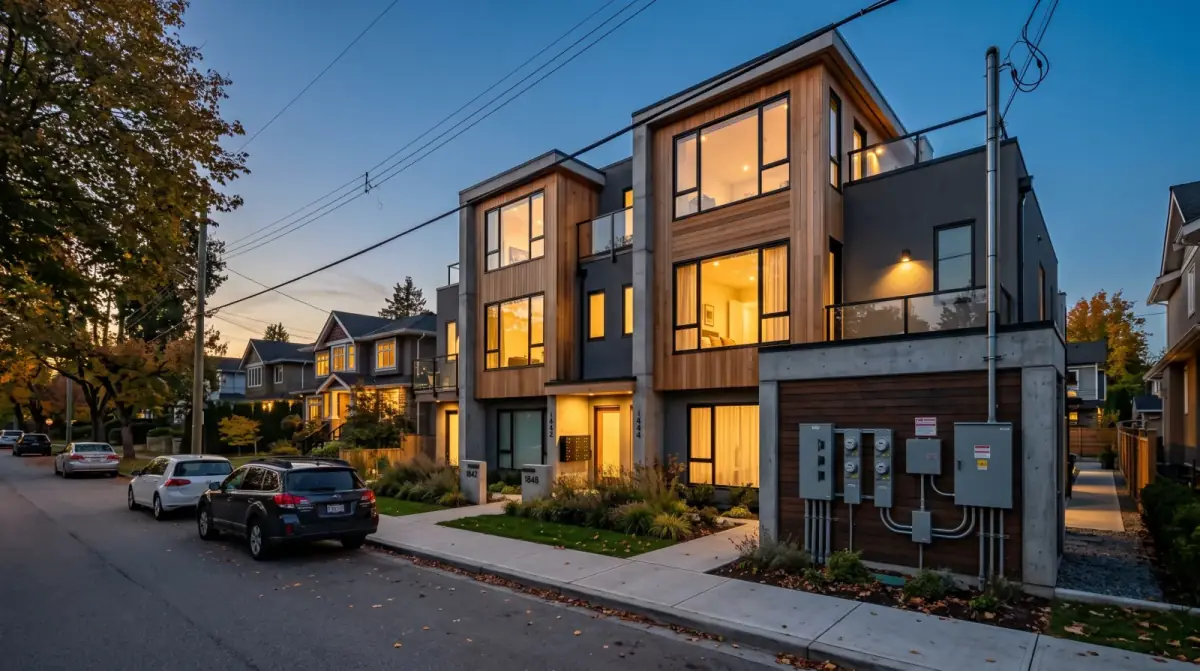
In short, On May 27, 2026, Vancouver City Council voted 7 to 4 to allow natural gas heating in new homes, reversing the all-electric mandate. The practical impact for multiplex developers is on BC Hydro electrical service timelines, not on heating equipment choice. A separate Motion 9 policy review, passed May 20, 2026, is examining multiplex massing, height, lot coverage, and tree retention rules.
Vancouver City Council voted 7 to 4 on May 27, 2026 to allow natural gas heating in new residential construction again. The all-electric mandate that had been in place is reversed, gas is now permitted, not required. Most of the public reaction focused on the political split and the fuel-source debate. For anyone actively building a multiplex in Vancouver, the headline is almost a distraction from the part of the decision that actually changes your project timeline.
The BC Hydro connection most coverage missed
When a new building goes fully electric, BC Hydro has to verify and provision a substantially larger electrical service than a project that uses gas for space heating or hot water. That load-verification process became a real schedule constraint for Vancouver multiplex projects during the all-electric mandate, service timelines were running four to six months in many cases, creating a bottleneck that sat between building permit approval and the start of construction.
With gas permitted again, projects that are not going all-electric do not require the same electrical load verification step. That is expected to reduce BC Hydro service wait times to roughly two to three months for mixed-fuel projects. On a project where the full design and permitting sequence already takes anywhere from six to twelve months, a two-to-four-month reduction in one stage is meaningful schedule compression, not a minor detail.
This matters most for homeowners who are in early design now and have not yet committed to a mechanical system. The gas-versus-electric decision was previously forced by policy. It is now a genuine design choice again, and the right answer depends on your specific lot, your energy modeller's analysis, and whether the net-zero FSR bonus changes the calculus for your project.
What the gas reversal does not do
The vote did not change the BC Energy Step Code. Step Code requirements are set by the Province, not by Vancouver City Council. Whatever energy performance standard was enforced before May 27 is still enforced after it. Gas-heated buildings still need to meet the applicable Step Code level for their project type, the reversal changes which fuel is allowed, not how efficient the building has to be.
- Step Code targets are provincial, unchanged by Vancouver's Council vote.
- Building envelope requirements (insulation, air-tightness, windows) are still enforced.
- The 19% FSR bonus for net-zero multiplexes is still available, and is unaffected by your fuel choice.
- Gas appliances are now permitted, but they are not required.
That last point is worth being clear about. The reversal restores optionality. A homeowner who wants to build all-electric and qualify for the net-zero FSR bonus can still do so, the bonus pathway is intact. A homeowner who wants to use gas heating and accept a smaller electrical load on the BC Hydro side can now do that too. The two decisions are independent of each other.
Motion 9: the multiplex policy review you should be watching
At the same May 2026 meeting, Council passed Motion 9, co-submitted by Councillors Zhou and Meiszner. Motion 9 is not a policy change, it is a direction to city staff to conduct a review of Vancouver's multiplex policies. The areas under review include massing rules, height limits, lot coverage, tree retention requirements, and view corridor impacts. The review must align with Bill 25, the provincial legislation that sets the framework for much of Vancouver's multiplex rules.
The outcomes of this review are unknown. Staff could return with recommendations that tighten some rules, loosen others, or leave the current framework largely in place. The important thing is that the policy environment for Vancouver multiplexes is actively in motion. Projects in very early planning, say, a lot in Renfrew-Collingwood or Sunset that's currently going through a feasibility review, may find that some of the rules they're designing around shift before they reach the building permit stage.
We don't think this is a reason to pause or delay. The current rules are the rules you need to design to. But it is a reason to watch for the staff report, which is most likely to appear in Q4 2026, and to make sure your design team is aware that massing and lot coverage guidance could change.
The net-zero FSR bonus is a separate lever
Vancouver's R1-1 zone allows multiplexes to access a 19% FSR exclusion, meaning 19% of the building's floor area does not count against the FSR cap, when the project meets the net-zero energy standard. This is sometimes called the net-zero bonus density. It exists independently of the gas-versus-electric question.
You can build with gas appliances and still qualify for the net-zero FSR bonus, provided your building envelope meets the net-zero standard. The bonus is tied to the building's energy performance, its insulation, air-tightness, and mechanical efficiency as a whole, not to which fuel the appliances burn. An energy modeller can tell you whether a gas-heated design can still achieve the envelope standard that unlocks the bonus. Some can; it depends on the specific mechanical configuration and envelope detailing.
How this affects decisions right now
If you are in early design on a Vancouver multiplex and your mechanical system is not yet committed, you now have a real choice again. The considerations on each side are different than they were before May 27.
An all-electric project still carries the longer BC Hydro provisioning timeline, but it may also be more straightforwardly positioned to qualify for the net-zero FSR bonus depending on your envelope design. A mixed-fuel project, gas heating or hot water, may have a shorter BC Hydro wait and a simpler path to mechanical system approval, but requires more careful energy modelling to confirm it can still meet the Step Code level and, if you're pursuing it, the net-zero bonus.
The right answer is not the same for every lot. A north-facing lot in Mount Pleasant with limited solar gain has a different analysis than a south-facing lot in Dunbar. Run it with your energy modeller before the mechanical system is locked in. The decision has real downstream effects on schedule, and schedule is where money gets lost on a Vancouver multiplex.
One vote, two separate things to track
The May 27 Council meeting produced two things that matter for anyone building a multiplex in Vancouver: the gas reversal, which gives you a meaningful schedule benefit if you're not going all-electric, and Motion 9, which sets up a policy review that could affect massing and lot coverage rules later in 2026. Neither of these changes the underlying economic case for a well-sited multiplex in Vancouver's R1-1 zone. But both change specific inputs in the design and schedule math, and that's the work we do on every project before a single permit application goes in.
How other Metro Vancouver and the Fraser Valley cities are responding to the gas reversal
Vancouver's vote applies only to the City of Vancouver, Burnaby, Richmond, Surrey, and other Metro Vancouver and the Fraser Valley municipalities have their own energy bylaws and are not bound by Vancouver's Council decision. Burnaby, for example, has continued to require high-efficiency gas or heat pump systems depending on the building type and location. If you are comparing a lot in Vancouver against a lot in Burnaby or Richmond, the energy requirements you'll face at the permit stage differ by city, and the fuel-source decision is made against each city's specific rules.
The BC Energy Step Code is the provincial floor across all cities, each municipality must enforce at least the provincial minimum, and many require higher Steps. Vancouver's Step Code minimum is currently Step 3 for most residential construction. Burnaby has moved to Step 3 as well. The cities can enforce higher Steps, and some are doing so. Your project's energy performance target is set by the city where the lot sits, not by Vancouver's May 27 vote.
Practical guidance for projects currently in design
If your Vancouver multiplex project is already in design and your mechanical system has been specified, you do not need to revisit it unless you want to. The reversal restored optionality, it did not invalidate existing all-electric designs or create an obligation to switch. If you specified an all-electric mechanical system, it still meets the current code and is still eligible for the net-zero FSR bonus path if the envelope qualifies.
- Projects already in design with all-electric mechanical: no change required. Continue on the current plan.
- Projects in early design with mechanical system not yet committed: the gas option is now genuinely available. Get your energy modeller to run both scenarios before the mechanical is locked.
- Projects in Burnaby or Richmond: Vancouver's vote does not apply. Check your municipality's current energy bylaws.
- Projects pursuing the net-zero FSR bonus: the bonus is tied to envelope performance, not fuel type. Discuss both scenarios with your energy modeller.
What Motion 9 could change about your project's form
Motion 9 is a policy review, not a decision, no rule changes have been made yet. But the scope of what staff are reviewing is broad enough that it could affect projects in design right now. The review is looking at massing (how the building is shaped and how it relates to neighbours), height limits, lot coverage (how much of the lot footprint can be built on), tree retention standards, and view impacts. These are the form rules, they don't change what you're allowed to build in terms of unit count, but they can change how that building sits on the lot.
The most likely outcome is that staff make targeted adjustments to address specific concerns, complaints about six-storey multiplexes shadowing neighbours, for instance, rather than fundamentally restructuring the R1-1 zone. But that is speculation. The honest position is that we do not know what staff will recommend, and we do not know when Council will act on those recommendations. What we do know is that projects already in the permit queue before any rule change takes effect are generally subject to the rules in place at the time of permit submission. Getting into the permit queue sooner rather than later is one of the few concrete responses to regulatory uncertainty.
Frequently asked
Does the gas reversal mean Step Code targets changed?
No. The BC Energy Step Code is a provincial standard, not a Vancouver Council decision. The vote on May 27 changed what fuel sources are permitted in new homes, it did not lower or raise the energy performance targets your building envelope must meet. You still need to hit the Step Code level your city enforces.
Can I still build all-electric and get the FSR density bonus?
Yes. The 19% FSR bonus for multiplexes that meet the net-zero energy standard is tied to the building's energy performance, not to whether it uses gas or electricity. Choosing gas appliances is a separate design decision. You can use gas for heating and still qualify for the bonus, as long as the building envelope meets the net-zero standard.
What is Motion 9 and when will we know the outcome?
Motion 9 was passed by Vancouver City Council on May 20, 2026. It directs city staff to review multiplex policies, including massing rules, height limits, lot coverage, tree retention, and view impacts, with outcomes that must align with Bill 25. The review is in progress as of mid-2026. Timelines are not confirmed but Q4 2026 is the most likely window for staff to report back to Council.
Wondering what your lot could become? Book a free consultation to find out how many units you could build on your property, whether it's a feasible project, and how our GP/LP partnership structure works.
Written by
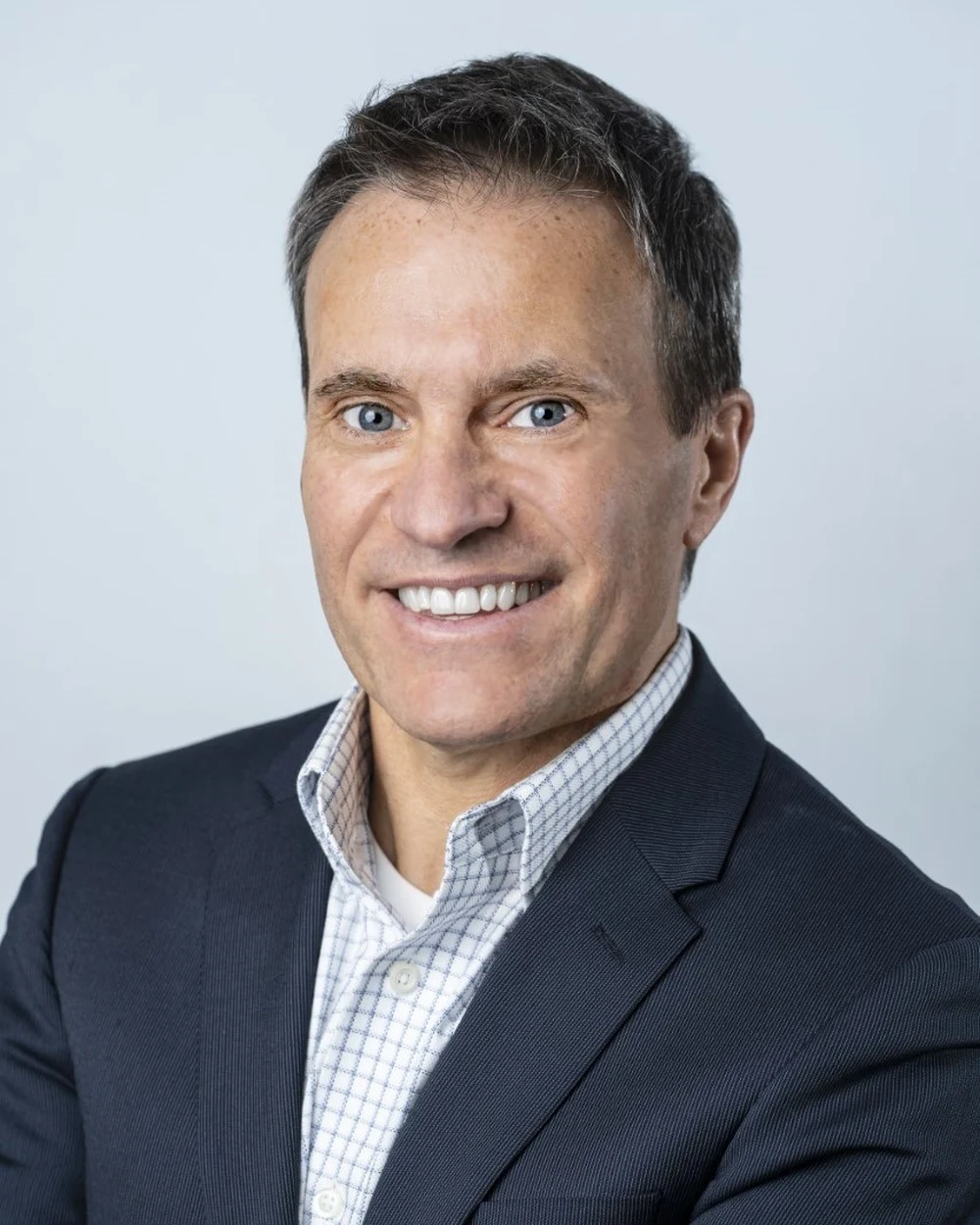
Real Estate Developer
Trent Praski leads investment and development at Venture Pacific, sourcing missing-middle opportunities across Metro Vancouver and the Fraser Valley and structuring transparent homeowner and investor partnerships.
Full profile