
Moving a House Instead of Demolishing It: How It Works in BC
Relocating a house sounds extreme until you compare it to demolition. Here is what makes a house moveable, what the permit path looks like in BC, and when relocation is genuinely the better option.
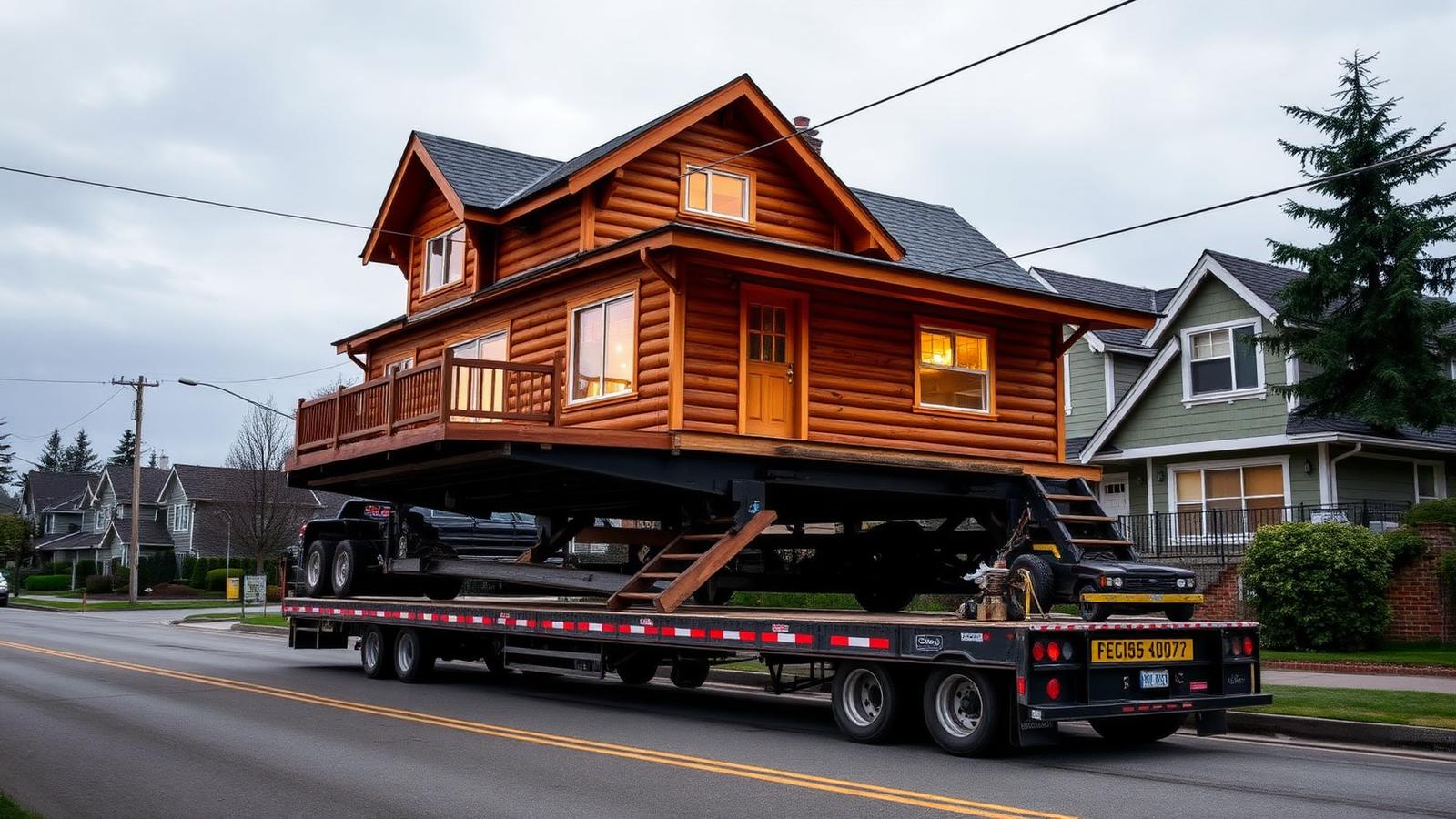
In short, House moving relocates an intact structure to a new foundation, either elsewhere on the same lot or to a different property. Feasibility depends on structure type, size, route clearances, overhead utilities, and receiving-site readiness. It is used to retain character homes, avoid demolition waste, and free up a lot for redevelopment.
Every year, houses in Metro Vancouver get loaded onto trailers in the middle of the night and driven to a new lot. It happens quietly, and most people never see it. For the right house on the right site, it is a real alternative to the landfill.
Two very different kinds of move
The first is moving a house within its own lot, usually to make room for a new foundation, a laneway building, or a better siting. The house travels a short distance and never leaves the property.
The second is relocating to an entirely different site. That version involves public roads, and the complexity jumps: route surveys, traffic management, and coordination with utilities for overhead wires.
What makes a house moveable
- Structure. Wood frame in reasonable condition, able to be braced and lifted without coming apart.
- Dimensions. Width and height determine whether a route exists at all. A tall roof is often the limiting factor, not the footprint.
- Route. Turns, overpasses, trees, poles, and wire heights along the entire path.
- Receiving site. A prepared foundation, services, and municipal approvals waiting at the other end.
- Timing. Moves usually happen overnight, and the receiving site cannot sit unfinished while the house waits.
The permit picture
A relocation touches more than one approval. There is the demolition or relocation approval at the origin, a building permit for the new foundation at the destination, transport permits for the route, and coordination with utilities. Municipalities differ, and a house crossing a boundary deals with both.
None of it is unusual for a structural moving company that does this work regularly. It does mean the schedule is set by approvals, not by how fast the trailer can travel.
Why owners choose it
Three reasons come up most.
The house has value. A well built pre-war home with old-growth framing is not something you can buy new. Someone with a rural or acreage lot will often take it.
The lot has a better use. Owners looking at redeveloping a lot sometimes prefer moving the existing house off it to demolishing it, particularly where deconstruction or waste-diversion rules apply.
Heritage. Where a home has recognized heritage value, relocation can be the option that keeps the building standing when the site itself cannot be preserved.
When it does not work
If the framing is rotten, the route is blocked, or nobody has a prepared site to receive it, relocation stops being a plan and becomes a wish. It is a feasibility question first: someone measures the house, walks the route, and confirms the destination is real. That review is inexpensive compared with what follows.
If you are facing a demolition decision and want to know whether the house could be lifted, moved, or kept in place, book a free consultation. We will give you a straight answer, including when the answer is no.
Frequently asked
What kinds of houses can be moved?
Wood-frame houses in sound structural condition are the usual candidates. Size, roof height, and whether the structure can be braced matter more than age. Concrete and masonry buildings are rarely practical to relocate.
Who pays for a house move?
It varies. Sometimes the owner pays to relocate their own home within the same lot. Sometimes a buyer takes the house for the cost of the move because they want the structure. Either way, the receiving site has to be ready with a foundation and services.
Is moving cheaper than demolition?
Not always in direct cost, but the comparison should include demolition, disposal, and the value of the building itself. On character homes and on sites with recycling or deconstruction requirements, relocation can come out ahead.
Written by

Founder & President
Mark Van Ek is the founder and president of Venture Pacific, bringing more than 40 years of Metro Vancouver and the Fraser Valley construction management experience and multiple Georgie and HAVAN awards to every custom home, renovation, and multiplex project.
Full profile