
How We Structure Development Deals: GP/LP Partnerships in Plain Language
Most multiplex projects in Metro Vancouver are built through a partnership between the people who bring the land and the people who bring the capital and construction expertise. Here is how a general partner and limited partner arrangement actually works.
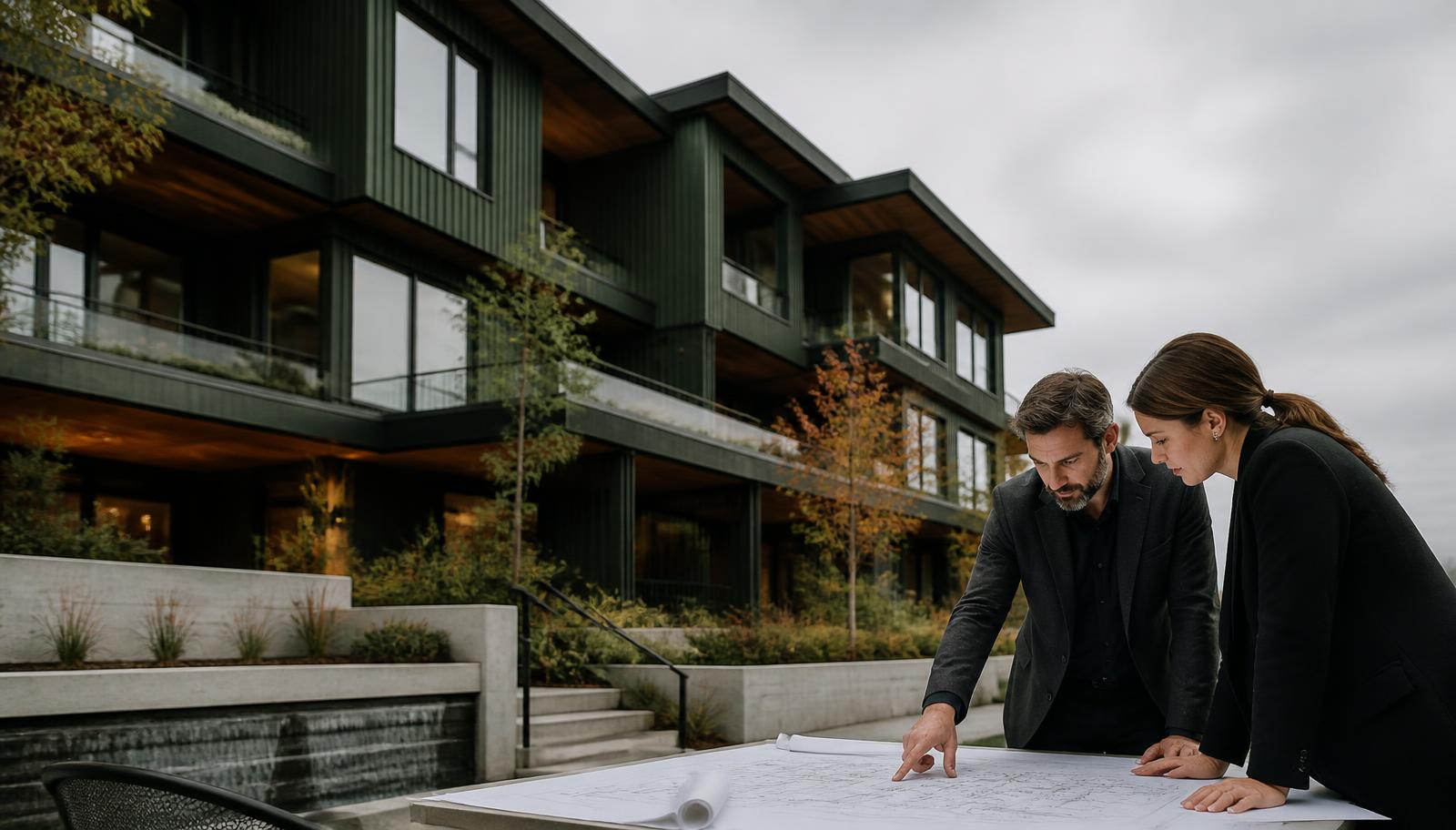
In short, A general partner / limited partner (GP/LP) structure is the most common way multiplex developments are organized in British Columbia. The general partner runs the project day to day and carries operational responsibility. Limited partners contribute land or capital and are passive, with liability generally limited to what they contribute.
If you own a lot in Metro Vancouver or the Fraser Valley, you have probably had a letter or two from someone who wants to buy it. Selling is one option. Partnering on a development is another, and it is the one most owners understand the least.
Almost every multiplex project we work on is organized as a partnership. The structure has a name that sounds more complicated than it is: a general partner and limited partner arrangement, usually shortened to GP/LP. This article explains what those two roles mean and who does what, without the legal shorthand.
Why a partnership exists at all
A development needs three things that rarely sit with one person: land, money, and the ability to actually get a building designed, permitted, and built.
A homeowner may have a well located lot and no interest in managing a construction project. An investor may have capital and no site. A builder may have four decades of construction experience and no appetite to buy every lot outright. A partnership puts those pieces into one project company so the work can proceed with each side doing what it is best positioned to do.
What a limited partnership is
A limited partnership is a legal entity created for a specific purpose, in this case one development project. It has two kinds of participants.
- The general partner, or GP. This is the operator. The GP makes the day to day decisions, signs the contracts, and is responsible for running the business of the partnership.
- The limited partners, or LPs. These are the passive participants. They contribute land or capital, receive reporting, and do not manage the project.
The word limited refers to liability. A limited partner's exposure is generally capped at what they contributed, as long as they stay out of managing the partnership's business. That protection is one of the main reasons the structure is used for real estate in British Columbia. Your own lawyer and accountant should confirm how it applies to you.
What the general partner actually does
In a Venture Pacific project, we act as the general partner. That means the work list below sits with us, not with the landowner.
- Site analysis and the feasibility review that determines whether the project should proceed
- Assembling the consultant team: architect or designer, structural and civil engineers, arborist, surveyor, energy advisor
- Permitting with the city, including Vancouver's multiplex permitting process or the equivalent in Burnaby, Richmond, and New Westminster
- Arranging construction financing and managing draws
- Contracting, scheduling, budgeting, and construction management through to occupancy
- Warranty enrolment, strata or rental setup, and reporting to the partners throughout
The general partner also carries the risk that comes with those responsibilities. If a schedule slips or a trade has to be replaced, that is the operator's problem to solve.
What the limited partner does
Much less, by design. A limited partner contributes, then receives reporting.
For a homeowner, the contribution is usually the lot. You are not writing cheques for excavation or chasing a plumber. For an investor, the contribution is capital, and the appeal is exposure to a real project without running it.
Limited partners still get information. In our projects that means regular updates on permitting, construction progress, budget position, and schedule. Passive should mean uninvolved in management, not kept in the dark.
Where the land fits
The most common question we get from owners is whether they have to sell their property to participate. They do not.
In a partnership, the land is contributed to the project and its value is recognized at the outset. The owner becomes a limited partner rather than a seller. That is a meaningfully different position: instead of taking today's land value and stepping away, the owner stays in through the project. It is also a different risk profile, because a development is not a guaranteed outcome the way a completed sale is. Both paths are legitimate. Which one is right depends on the site, your timeline, and your tolerance for that difference. We wrote about that trade off in Sell, develop, or hold.
How the terms get set
We do not publish standard terms, and you should be cautious about anyone who does.
Every deal is structured around the specifics of that project and that partner. A corner lot near frequent transit in Burnaby with six units of potential is a different project from a standard interior lot in Richmond with a fourplex on it. A partner contributing land free and clear is in a different position from one carrying a mortgage. Timelines differ, financing differs, and what each side wants out of the project differs.
The terms are written into a limited partnership agreement prepared by lawyers, and both sides should have their own advisors review it before anything is signed. That is normal and we encourage it.
Questions worth asking any development partner
- Who is the general partner, and what have they actually built?
- Who carries construction risk if costs move?
- How and how often will I be updated?
- What happens if the project does not proceed after the feasibility work?
- Who are the consultants and trades, and have they worked together before?
Good answers to those questions tell you more than any projection ever will.
Talk it through
If you own a lot in Metro Vancouver or the Fraser Valley and want to understand what a partnership could look like for your specific property, we are happy to walk through it with no obligation. Book a free consultation with our team.
Frequently asked
What is the difference between a general partner and a limited partner?
The general partner runs the project: design, permitting, financing, construction, and reporting. The general partner also carries the operational responsibility that comes with those decisions. A limited partner contributes something of value, usually land or capital, and stays passive. Liability for a limited partner is generally limited to what they put in, provided they do not take part in managing the business.
Can I contribute my lot instead of cash?
Yes. Land is the most common contribution we see from homeowners. In a partnership, the value of the lot is recognized when the partnership is formed, and the owner participates in the project rather than simply selling and walking away.
How are the terms of a partnership decided?
Every deal is structured around the specifics of that project and that partner: the site, the timeline, the financing, and what each side is bringing. There is no standard template we apply to everyone. The right way to find out what a partnership could look like for your situation is a conversation.
Written by

Real Estate Developer
Trent Praski leads investment and development at Venture Pacific, sourcing missing-middle opportunities across Metro Vancouver and the Fraser Valley and structuring transparent homeowner and investor partnerships.
Full profileReady to get started?